Platform on new construction, renovation, restoration and transformation
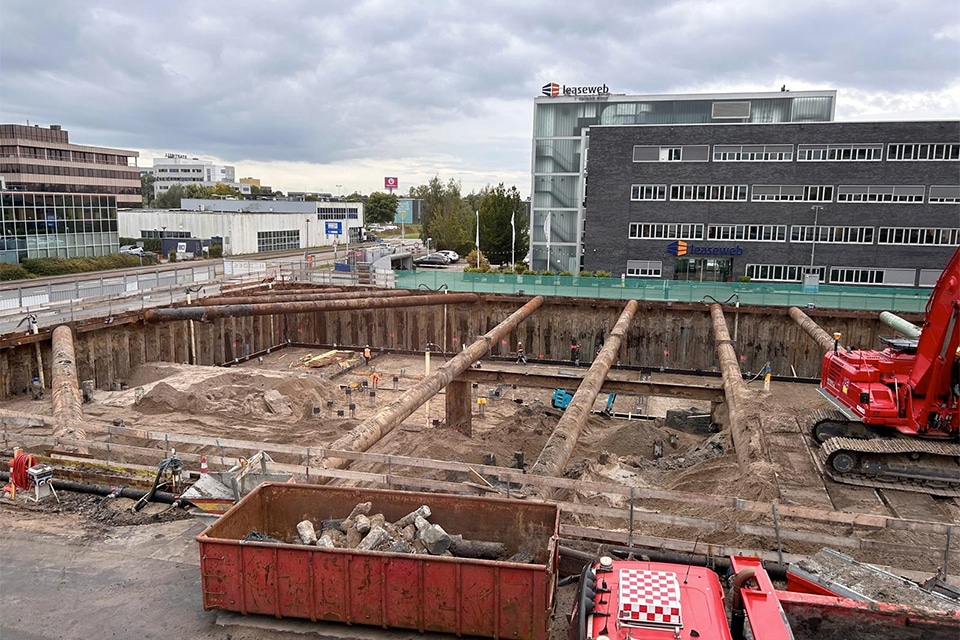
For the realization of Hessenbergweg 109-119 a carefully designed drainage system was indispensable. On behalf of Heddes, Mos Grondwatertechniek took care of the entire process: from advice and permit application to implementation and monitoring. The project is an important part of the area development Amstel III, where large-scale transformation goes hand in hand with complex underground tasks.
Manager Bram Bakker looks back on a process in which Mos joined early on. “We like that, because it allows us not only to ensure proper execution, but also to provide specialist advice at the front end.” That early role allowed Mos to optimally tune the drainage to the changing soil layers on site, an area where standard solutions simply don't work.
The company started with an extensive pumping test to precisely determine the permeability and capacity of the soil on site. The results formed the basis for a differentiated drainage plan: parts of the construction pit ran at full capacity, while others were limited. This way of working fits the profile of Mos, which built up expertise in large and technically complex projects such as the Delta Works, the North/South Line, parts of the HSL and numerous Dutch tunnel projects. That experience translates directly to projects such as Hessenbergweg 109-119, where precision and predictability are crucial.
The pumped groundwater at this location is brackish and should not be discharged. Therefore, Mos applied return drainage, where previously constructed return fields could be efficiently reused. “We are very active in this street, so the return fields are used optimally. That's sustainable and efficient,” says Bakker. Dewatering was continuously monitored via monitoring wells and a digital portal where clients watched live. “That monitoring is one of the most important aspects of our work.” That transparency is important in densely built-up areas, where environmental impact must remain minimal. “Openness, clarity and sincerity: that's Mos Grondwatertechniek,” he says.”