Platform on new construction, renovation, restoration and transformation
The best facade design. Optimal monitoring of quality and budget. And: collaboration with the right partners. Facédo likes to be involved in projects right from the design phase. For example, to optimize manufacturability and affordability. But also to guarantee safe execution. “We like to develop our designs in 3D/BIM, so that details can be coordinated in advance,” says tender manager Maikel van Wijk. “This ensures smooth and fast implementation. In collaboration with all manufacturing parties, a realistic and efficient (lean) schedule is also coordinated.”
“We regularly receive requests to discount the architect’s facade design,” says Van Wijk. “When this is done at a relatively late stage in the design process, optimizations are often no longer possible. That’s such a shame. Because when we are allowed to review and contribute ideas to a project at an early stage, we can uphold the architect's visual quality plan and design ideas, while at the same time creating optimal details. This benefits the technical quality of the façade and contributes to the feasibility, affordability, and rapid implementation of a project.”
“We know the power of our products,” emphasizes calculation manager Erik van der Weerd. “By using these products as intelligently as possible in projects, we can offer enormous added value. This also applies to the contractor. For example, construction times can be shortened and construction costs reduced. By deviating from the request, for example by using high-insulation and extra sun-resistant glass, savings can also be made on cooling capacity (and costs). We therefore seek the optimum for each project, involving other manufacturing partners from the industry if necessary or desired.” Van Wijk: “Where other parties often offer integrated window frames, timber frame elements, and cladding, we deliberately source this expertise from our specialized partners, ensuring perfect coordination.”
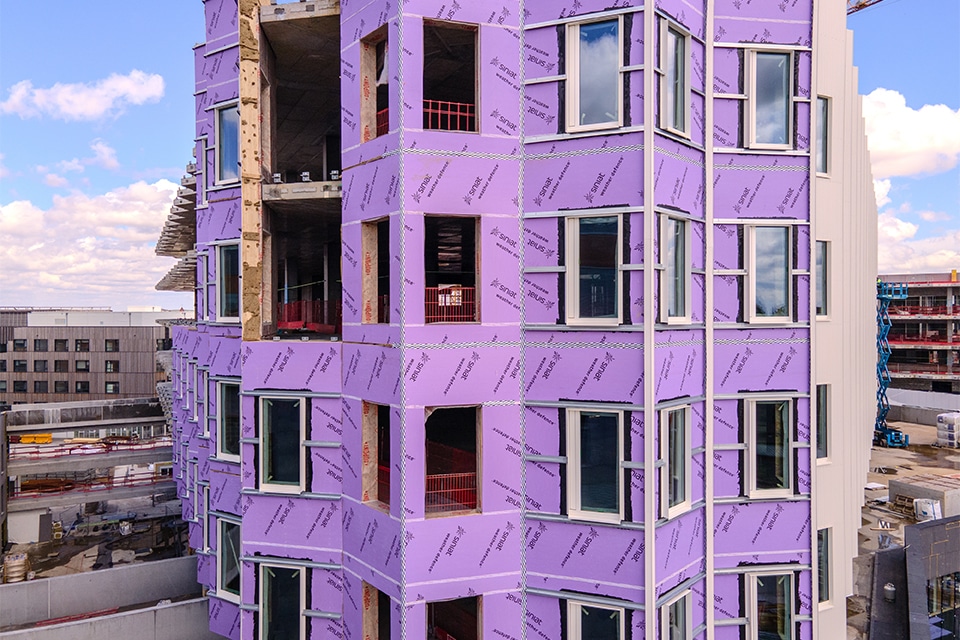
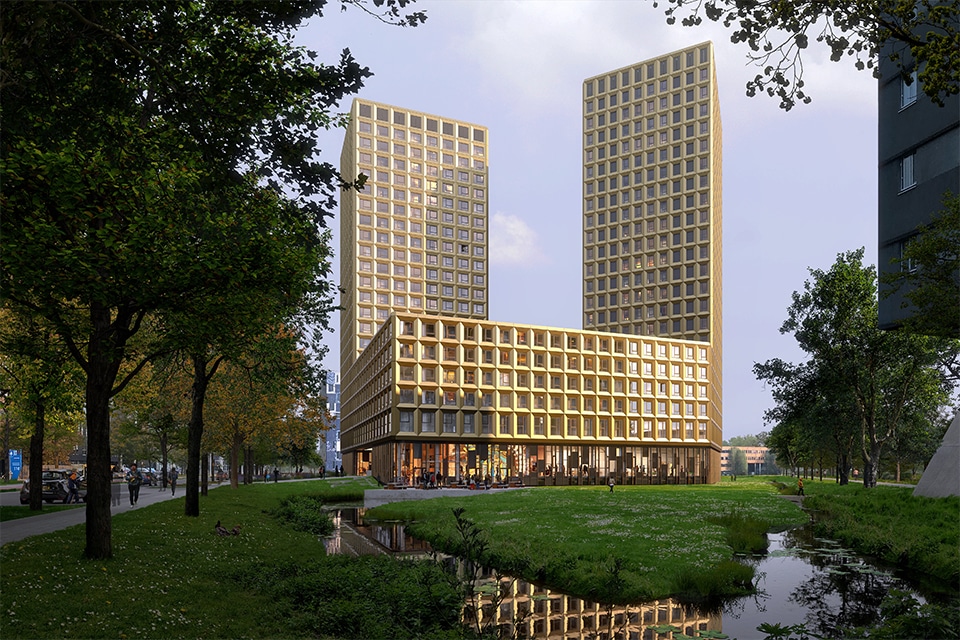
A good example of this is the High Five project in Utrecht, which consists of two towers with student housing that, according to the VORM22050 ambition of developer VORM, had to be built cheaper and faster. For this reason, the main supporting structure, bathrooms, and facade elements, for example, were prefabricated. Facédo joined forces with facade construction partners Vianen and Sorba Projects for this project. “On behalf of VORM, we produced and delivered 4,670 m² of window frames and 200 m² of fire-resistant aluminum window frames, which were already built into the HSB elements at the Vianen factory,” says Van Wijk. “The facade cladding was also pre-assembled, after which all elements were transported to the construction site complete and just-in-time. Here, the contractor was able to assemble all facades at a rapid pace of approximately eight elements per day without the use of scaffolding.”
“In projects such as High Five, good coordination is essential,” says Van der Weerd. “Both technically and financially. This is where our estimator plays an important role, having taken care of both the cost-related aspects and the demarcations in this project.” Van Wijk: “Another strength of our estimation department is that it thinks in terms of opportunities. For example, to save costs and/or increase energy efficiency. On our advice, the aluminum window frames in High Five were replaced with plastic ones. In addition, the window dimensions were reduced from 1.40×1.40 to 0.80×1.20 meters and a different type of fitting was used, resulting in lighter window sashes that can be operated ergonomically and meet all energy requirements.”
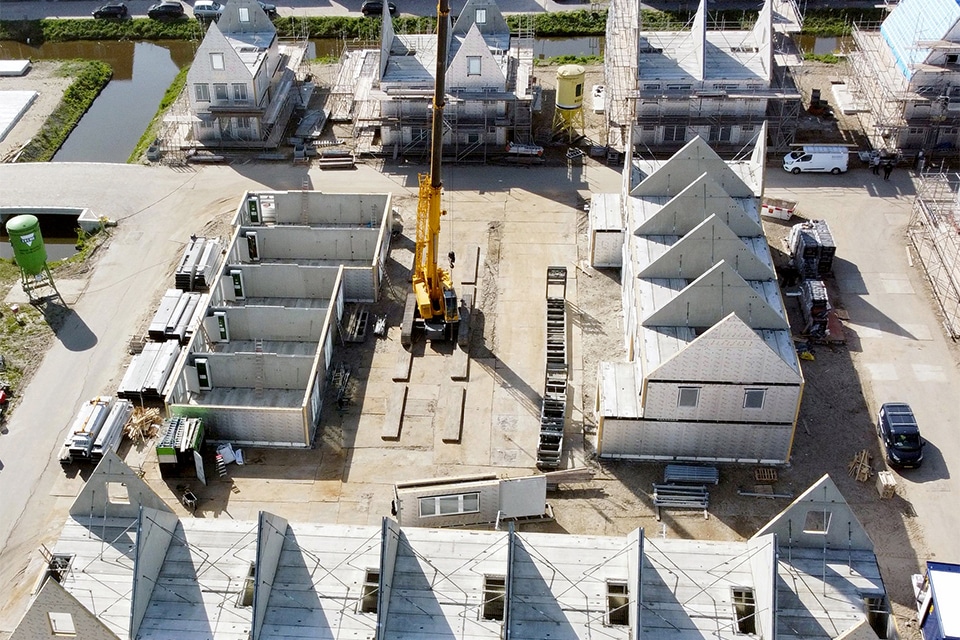
Van Wijk emphasizes that prefabrication can significantly reduce construction lead times. “All facade elements are assembled in the factory under the best climate and working conditions, resulting in high and consistent quality. In addition, significant savings can be made on transport and hoisting movements, which also allows us to make an important contribution to CO2 reduction on projects.”
“In 2025, many projects are under financial pressure. As a result, the calculation phase takes considerably more time,” notes Van Wijk. “In combination with the growth Facédo is experiencing, we are looking for calculators to strengthen our team.” It is important that these calculators have good analytical skills, says Van der Weerd. “You have to be able to read projects in such a way that the question behind the question becomes clear. Because that's the only way we can positively surprise our customers. Our calculators must be familiar with the subject matter and legislation and regulations and be able to assess opportunities and risks in order to provide our customers with the best possible advice. In short: they must be able to see the bigger picture.” In exchange, the estimators will work for an innovative and dynamic company with great colleagues, plenty of opportunities for growth, and excellent terms of employment.