Platform on new construction, renovation, restoration and transformation

The imposing building has an impressive track record. Once, Estate De Klokkenberg was the largest tuberculosis sanatorium in the Netherlands. Then the place acquired a name for itself because of the extraordinary heart surgeries performed here. Now the time has come to transform De Klokkenberg into housing, but with respect for its extraordinary past.
National Monument Estate The Clock Mountain was built in 1953 and consists of several wings. On the east side are the Sister's House and the Women's Wing, phase 1 of the development. The Sister's House will be transformed into fourteen homes and the Women's Wing into fifteen homes. On the west side, the Economy Building (phase 2) will be transformed into sixteen residences and the Men's Wing (phase 3) into fifteen residences. The centrally located Main Building (phase 4) will soon have twenty apartments. The total transformation, including the new-build apartments of the Class pavilions and the ground-level homes on the site of the Berkenhof School and Hoeve Schoondonck, is being commissioned by Schonck, Schul & Compagnie.
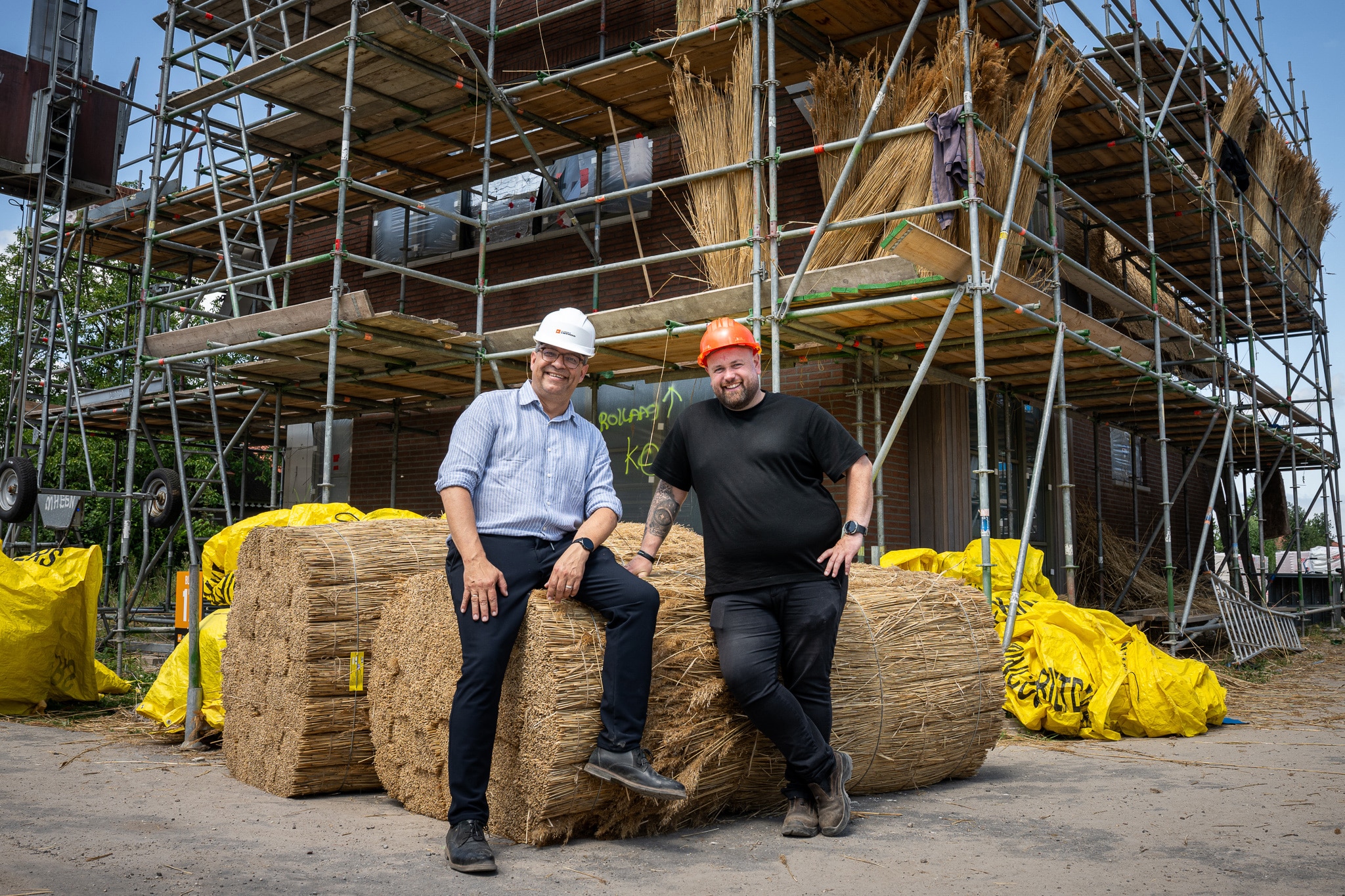
When the first plans for De Klokkenberg were forged, the world of transformation was still new to contractor Aan de Stegge. But the enthusiasm for taking on the challenge was great - "Who wouldn't want to attach their name to a project like this?", which was also true of the confidence in the know-how of its regular cooperation partners. "The plans were still constantly changing at the time," recalls Bas Moens, director of Aan de Stegge. "In the end, the project developer chose to preserve the original situation of the national monument as much as possible and to demolish only when necessary."
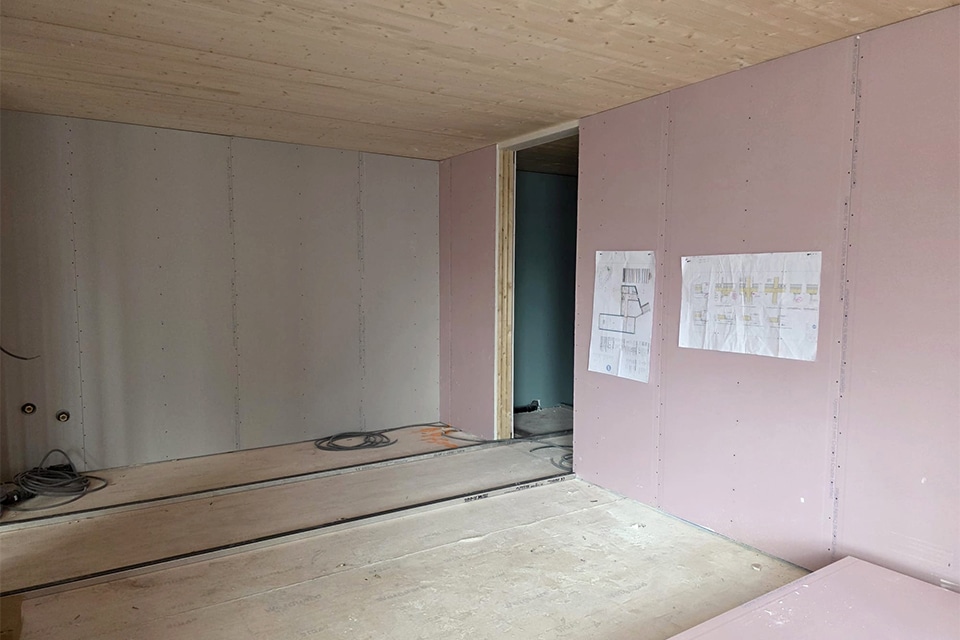
Still, the Sisterhouse had to change drastically. Moens: "It was a square building with a courtyard. To make it suitable for habitation, it had to be opened up and the structural functionality of the building had to be turned 90°. Despite this major intervention, the national monument was treated with respect. One side of the building was demolished and the remaining portion was fitted with new residential separating walls. With a new foundation on the existing concrete floor and many tons of steel, the spaces were prepared for their new function. Roofs, window frames, facades and floors have been insulated and/or totally renewed."

Chapel back.
The 15 townhouses in the Women's Wing will be ultra-luxury and have three times the area of an average family home. "Here, even an entire stairwell was demolished to create a home in it," Moens says. "Then all the homes were given their own front doors." To preserve the original image, the doors that retained their original location are painted in classic yellow. New passages are surrounded with a black frame. In this way, the building forever tells its own history.
The transformation of the Economy Building is much the same as that of the Sister House, and it is noticeable. "In the prior period, we were constantly looking for the smoothest running train. You want the construction activities to follow each other smoothly. But regularly it turned out that we had misjudged the work anyway. Since the start of the Economy Building, the construction process has been running like a well-oiled machine."
Meanwhile, the first results are visible, and Moens can only be proud of the results. "Despite the transformation, each house breathes the atmosphere of De Klokkenberg. In one house the arch of a corridor has remained visible, another has a jug cupboard and through the third runs a staircase with the original wooden railing. The people who will live in this national monument will end up in a special place in the middle of nature."