Platform on new construction, renovation, restoration and transformation
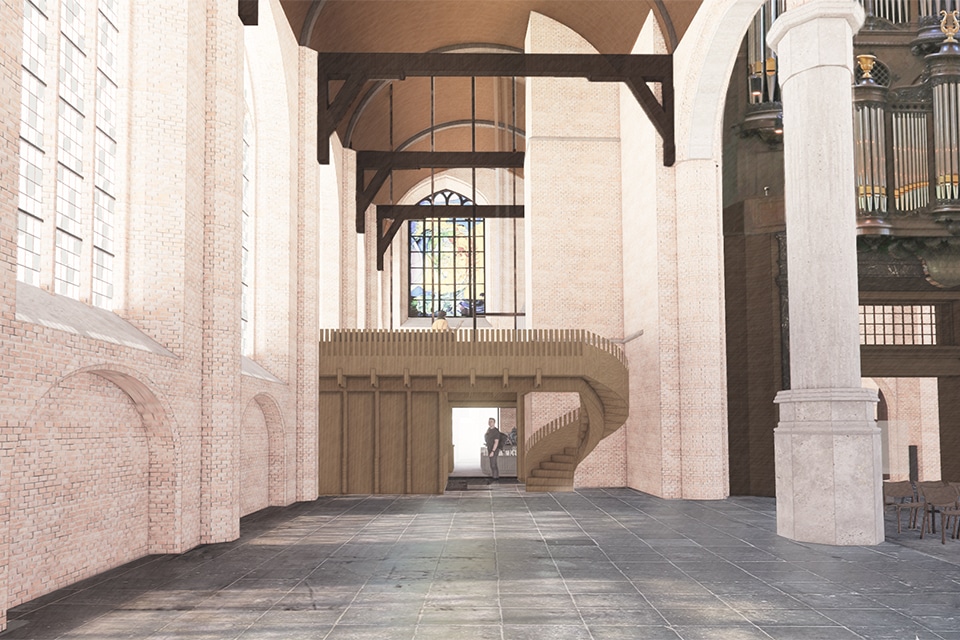
A design that is of essential value to this place, the city and its inhabitants. But also: a rediscovery of craftsmanship, care and refinement. With his design for the Nieuwe Kerk in Delft, Ron Verduijn, architect and co-founder of Buro STIEL, hopes not only to reposition the church building as a place for the city, but also to initiate a social debate about quality and beauty.
After the intensive renovation of the Nieuwe Kerk in 2017 and 2018, the necessary facility facilities, such as halls, toilets, a kitchenette and a storage room, were still missing. “Based on this, an ongoing process developed in which the right space was sought outside the church,” says Verduijn, who founded Buro STIEL with Jos Snoek in 2019. “Both above ground and below ground. Ultimately, infill was used, with the Protestant Church of Delft (PGD) accommodating the desired program within the Nieuwe Kerk.” Buro STIEL gave further shape to this, creating a beautiful interaction between intermediate design, program, building and use over time. “In doing so, the church as a sacred, cultural and shared place was designed with extra focus and coherence.”
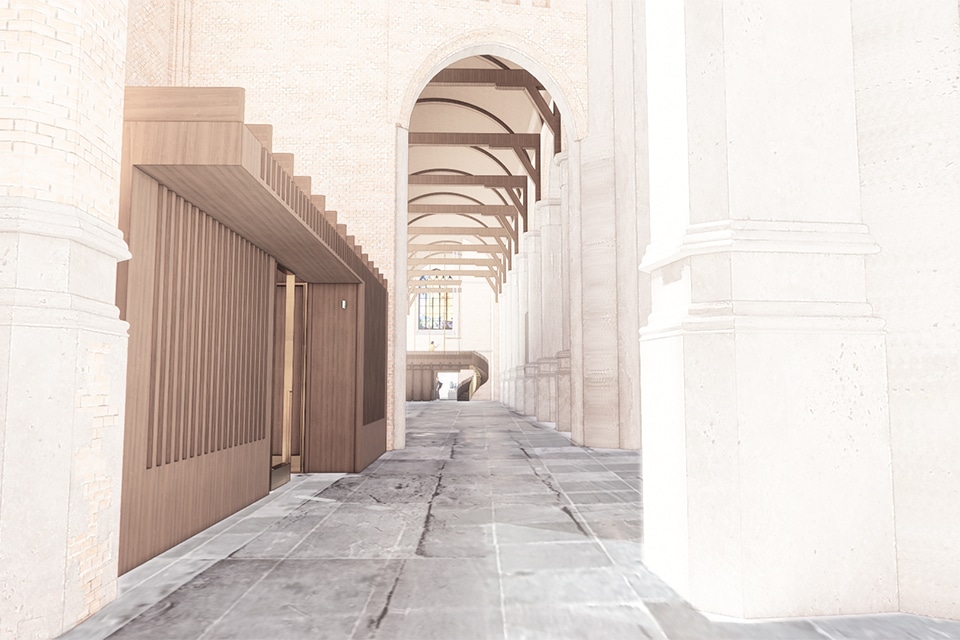
“We went through the whole process of visioning and design studies,” Verduijn says. “A complicated process. After all, the New Church is an architectural masterpiece, but you have to learn to see and appreciate it. During the restoration, I was given the opportunity to get to grips with the building. But also to make the architectural beauty more visible, so that the building speaks for itself again. The functional redevelopment is a logical next step and will be carried out based on the same vision. Because of the social function of the church for the city, we have summarized this vision in the title: ‘from monument to city church’. The functional redevelopment is thus a story of repositioning so that the building can serve the community (again). Both in terms of architecture and in the undivided space, where connection with the environment, good logistics, accessibility of all spaces and securing the human scale are central.”
“In our design, we define the New Church as a covered city square,” Verduijn says. “In this, the church is programmed in such a way that it can facilitate all kinds of religious as well as social activities. From very large to extremely intimate, drawing both tourists and residents to the church building. The Nieuwe Kerk will have a clear entrance, a logical routing and an orderly layout, with the new day chapel providing the desired intimacy. The walls of the chapel will be covered with a work of art by Claudy Jongstra. In doing so, we are letting art land on the floor again for the first time since the Reformation, bringing craftsmanship, refinement and humanity together. Storage spaces will also be inserted in logical places, enabling multifunctional use without affecting the architectural beauty. The Nieuwe Kerk will soon be able to look after itself. We have added a transparent side entrance with facilities on the garden side. In addition, the Sacristy and Librije have been opened up, thanks to improved stairs and a new entrance portal. With this we have further improved and expanded the function of the New Church, from the spatial quality in and around the building.”
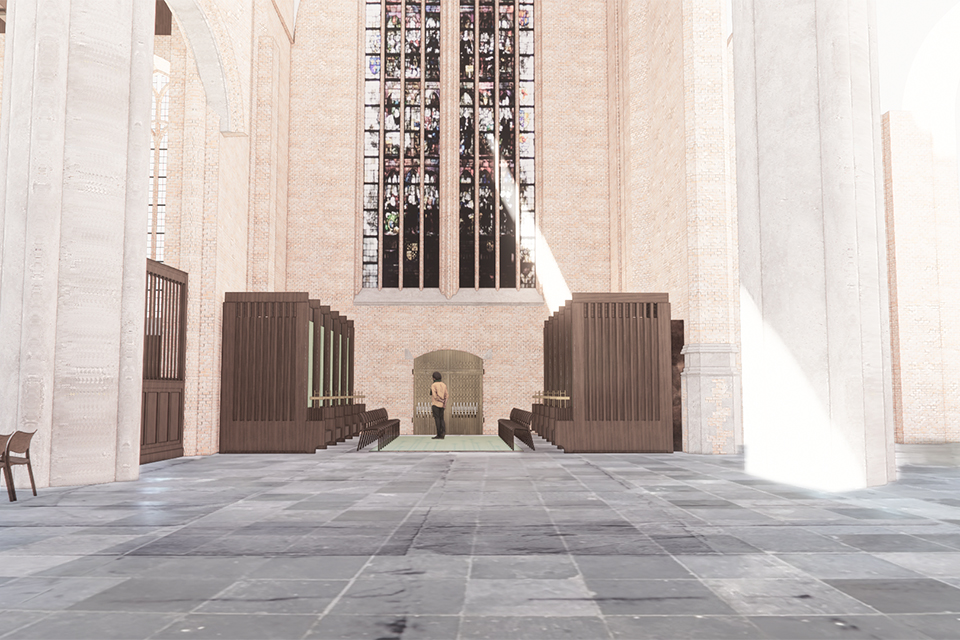
“The architecture of the New Church has a starring role in our design,” Verduijn emphasizes. “In doing so, we followed the philosophy of the gesamtkunstwerk of restoration architect Van der Kloot Meijburg. His design combined medieval and modern materials in such a way as to create a medieval 1930s church. Honesty in materials, honesty in constructions and purity in spatiality were central to this and ultimately led to a rediscovery of the cathedral space, which is also clearly visible again since the restoration in 2017. Everything we add to it now follows this mentality. For example, all new additions are executed in oak and in soft, smooth forms and detailing. In addition, the new story floor is built according to the medieval system of nut beams and child beams, but contemporary in detailing. With this, we are now adding a 21st century layer of architecture, art and use to the 1930s work of art, enriching the house of worship and the burial church of the Orange with more differentiation in use.’