










New Amsterdam courthouse is an ‘inviting monument’
Text Jan-Kees VerschuurePhotography Fernando Guerra FG+SG
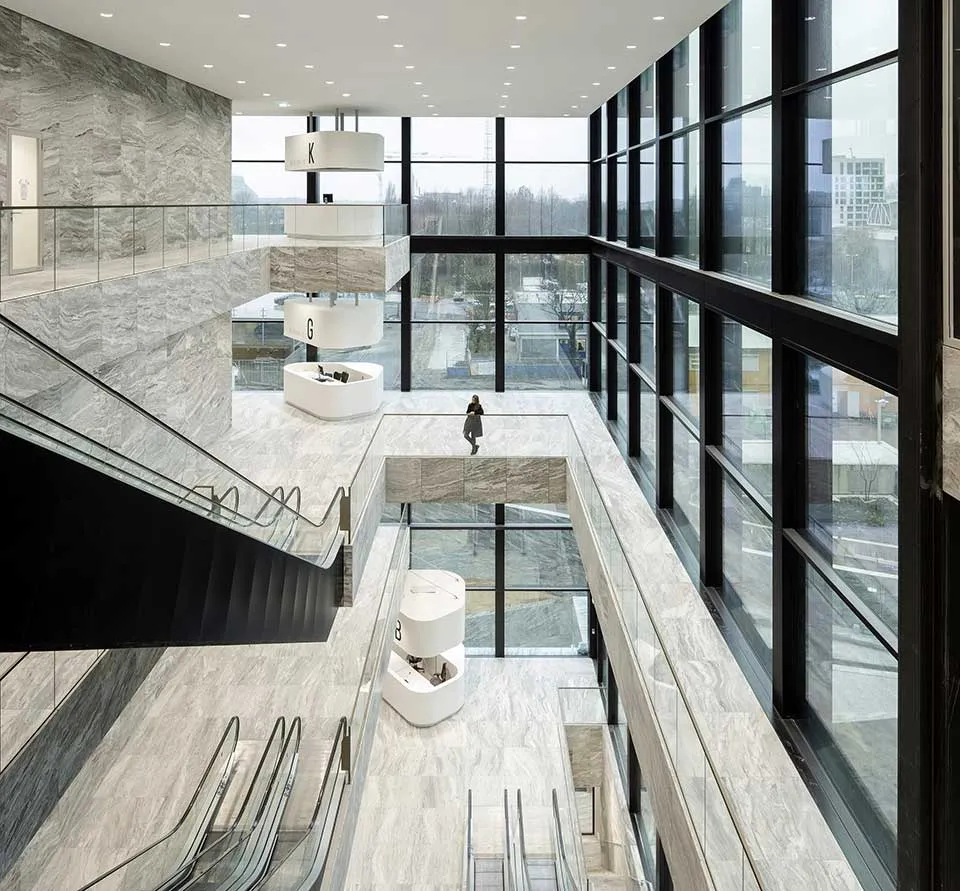
The new Amsterdam courthouse opened in May, at the crossroads of the old city and the Zuidas on Parnassusweg.
The building is ten storeys high and has a floor area of 60,200 m². It contains fifty courtrooms and 69 cells, and provides 1,200 workspaces for court staff and partner organisations. The Central Government Real Estate Agency and the court jointly set the requirements for this new courthouse under a public-private partnership agreement with the NACH construction consortium.
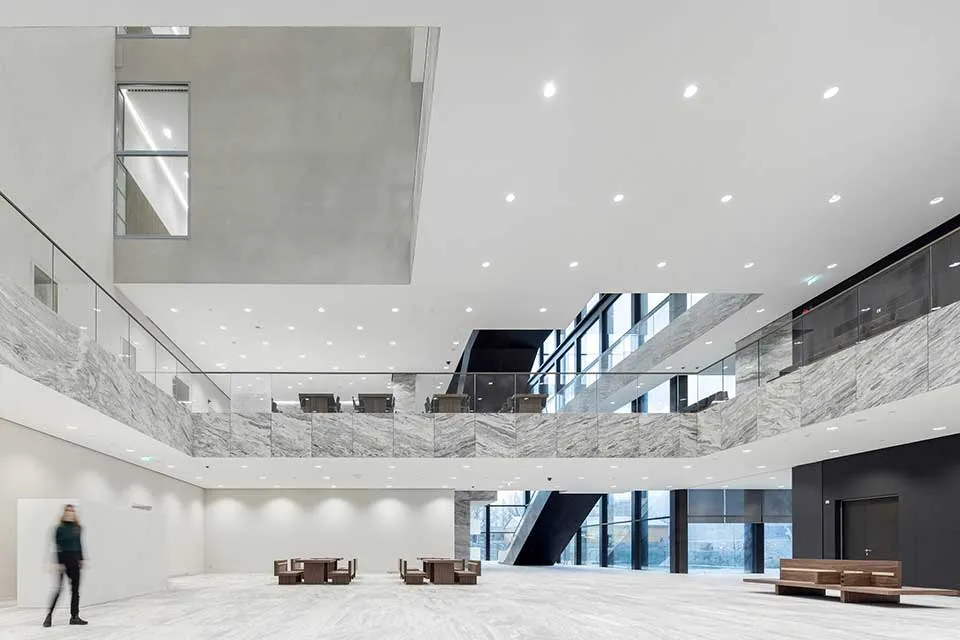
The client, user and NACH consortium (New Amsterdam Court House, a partnership between Macquarie Capital, ABT, DVP, KAAN Architecten, Heijmans and Facilicom) aim to create a multifunctional building that conveys authority and puts people seeking justice at its heart. At the same time, the building must be accessible to all visitors. This is reflected in facilities such as café Mokum on the first floor, a central meeting place, the renovated law library with 20,000 books and journals, consultation rooms, additional courtroom capacity across the fifty courtrooms, and the transition area on the fifth floor, where holders of an authorised Government ID card can work.
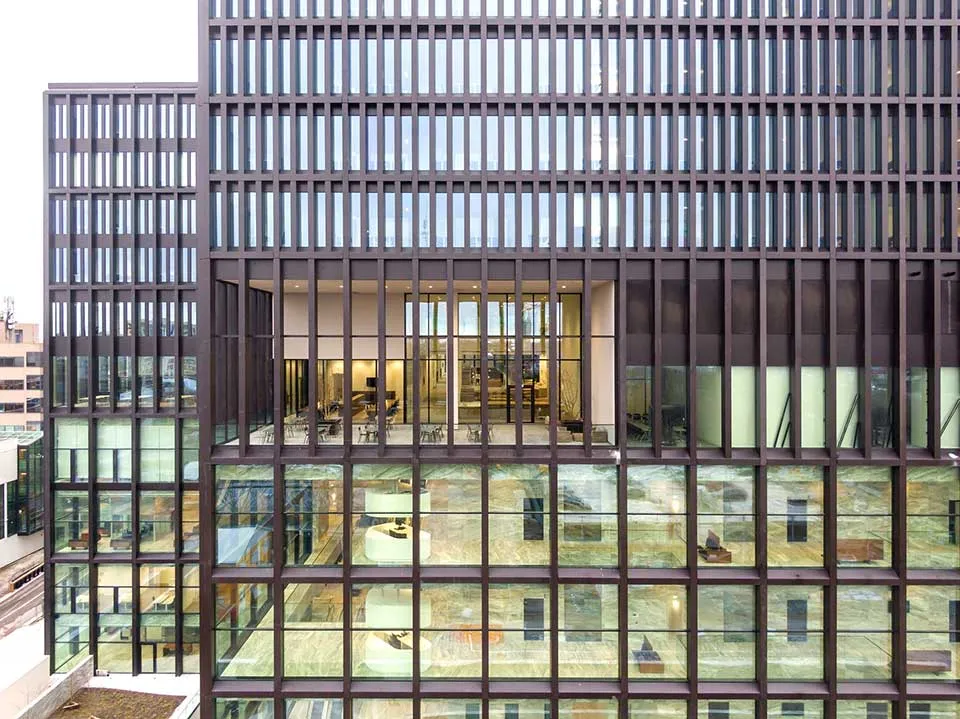
A connecting entrance
The design, described by the architects as ‘stately, clean-lined and welcoming’, incorporates a public square. Following the redevelopment and urban integration of Amsterdam Zuid station, this forecourt will become the focal point of the project area. The entrance is arranged around a south-facing square the size of half a football pitch, paved in the same light-grey natural stone as the building’s interior and furnished with matching benches. An elegant canopy above the entrance extends an equal distance into the interior, uniting the two spaces. A ramp minimises the sense of obstruction between the city, the square and the courthouse. The connecting square is marked by an iconic landmark: Nicole Eisenman’s five-metre-high sculpture ‘Love or Generosity’.
Open and unpretentious
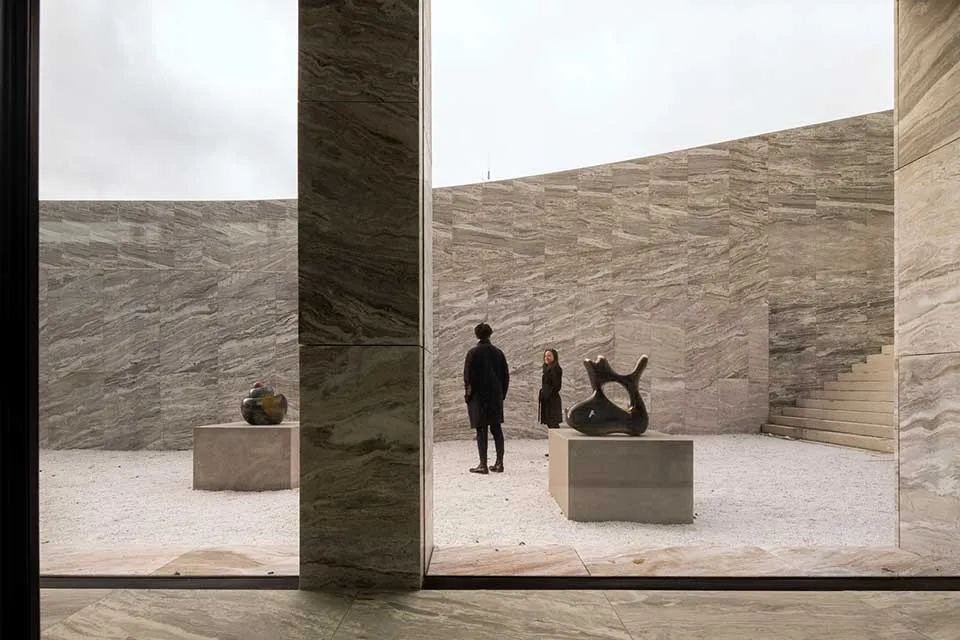
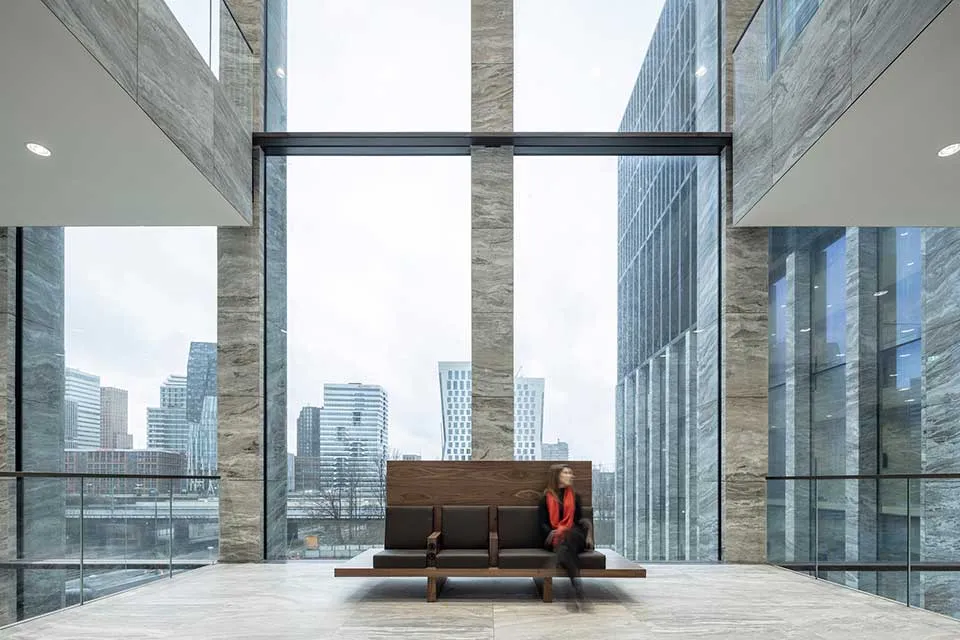
The 50-metre-high building is ‘open and unpretentious’ in character, according to the builders. Large windows in the lower half of the building offer views from the street into the interior. The spacious foyers around the courtrooms can accommodate 800 to 1,000 visitors a day. The city is always in view from inside the building. The design expresses ‘comfortable functional architecture’. It brings together and stacks spaces that need to work together, while separating those that need to remain apart, such as the routes taken through the building by judges, detainees and visitors. ‘Close collaboration between the architects, consultants for construction, building physics, building services and security, contractors and suppliers has resulted in a practical, environmentally friendly building that is almost energy-neutral and future-proof.’
Flexible
Court staff contributed extensively to discussions on how the building could support their day-to-day work. They not only set out requirements, but also had input at a later stage on the layout of the courtrooms and the names of the new rooms. The courthouse is designed to be easily adapted to future developments. For example, courtroom layouts can be changed easily, allowing all parties to proceedings to carry out their work carefully. Natural stone was chosen deliberately for the design. It lasts longer and requires virtually no maintenance, making it less harmful to the environment, according to the project team. Extra attention has also been paid to hard-wearing materials in high-traffic areas, such as public spaces.
Sustainable
The new courthouse uses around 50% less energy than the old one. The entire roof is fitted with solar panels, and a thermal energy storage system is used. Sustainable solutions have also been incorporated into the building’s day-to-day operation. One example is the use of a real-time data system for building management. Staff can see where workspaces are available, while cleaners can find out which areas need cleaning at the end of the day. Smart sensors also identify where additional maintenance is required. The courthouse has a limited number of parking spaces. It has been agreed that the consortium will be responsible for maintenance and facilities services for the next thirty years, delivered by Heijmans and Facilicom. This includes not only building maintenance, but also equipment maintenance, catering and the provision of meeting facilities.
A business enquiry for Heijmans? Get in touch
Who worked on it
Rechtbank Amsterdam in Amsterdam
- clientRijksvastgoedbedrijf
- architectKAAN Architecten
- facilities managementFacilicom
Keep following this
Bij een nieuw verhaal krijg je een e-mail. Geen account nodig.
- ProjectRechtbank Amsterdam
- SubjectConstruction projects
- CompanyRijksvastgoedbedrijf
- CompanyKAAN Architecten
- CompanyFacilicom
- CompanyHeijmans