Platform on new construction, renovation, restoration and transformation
At 109 meters, Lighthouse Eindhoven is an eye-catcher in the city. For the engineering behind the facade, it was at least as special a project. The tower housed 333 apartments, with ventilation as an important component for living comfort and health. For the parties involved, the biggest challenge was not only in the apartments themselves, but especially in the height, planning and smart design of the air transport.
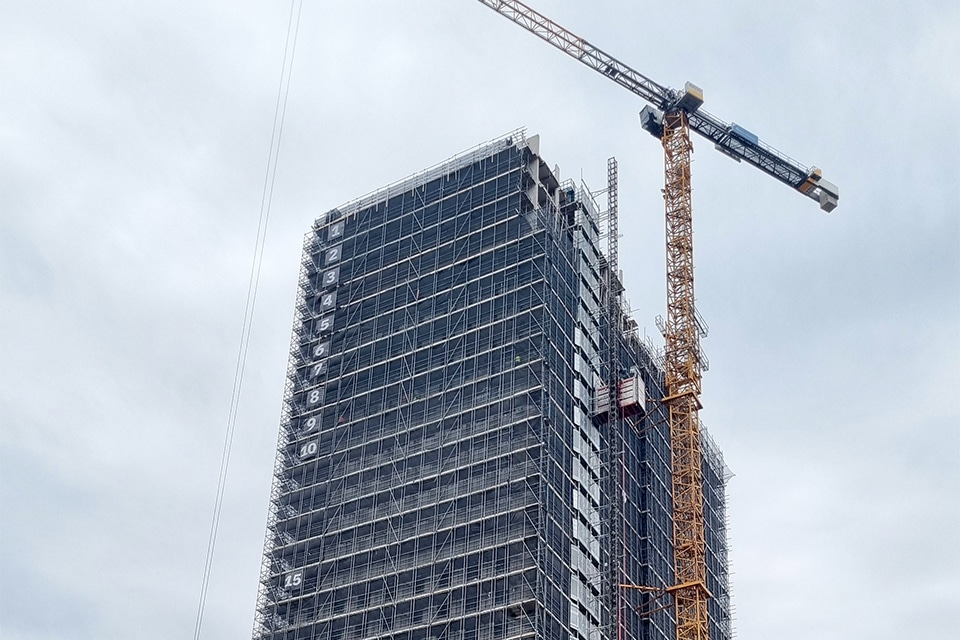
High-rise buildings require smart ventilation solutions. Within Interduct, specialized ventilation companies work daily on complex housing construction and tower projects throughout the Netherlands. Lighthouse Eindhoven is a powerful example of this and was realized by Interduct company Rodrie. Project leader Berry van Hout looks back with pride. “This was our first large, tall tower. Currently even the tallest tower in Eindhoven. That's a great thing to work on.”
For the heat exchangers, Rodrie worked with supplier Brink Climate Systems. Van Hout: “Fortunately, there was room within the budget to choose a qualitatively appropriate solution. In consultation with Brink Climate Systems, that choice came down to a solid wired system that fit well with the requirements of the project.” Berend-Jan Hagens, technical commercial advisor for Southeast Netherlands, supervised the process from the supplier. Brink supplied Lighthouse with the Flair 300 and Flair 400 units, including control, four-position switch and CO2 sensors for living room and bedroom.
In Lighthouse, ventilation plays a big role precisely because the current buildings are very well insulated and airtight. Controlled ventilation is then needed to maintain the air quality. Hagens: “The WTW units remove polluted air and bring in fresh outside air. Via the heat exchanger, heat is transferred to the colder fresh outside air in the winter. And that is especially important in a tower, because you don't open a window as easily there.” The system combines energy performance with comfort, but for Van Hout, health comes first. “Fresh air cannot be taken for granted. Especially in a bedroom, CO2 rises faster than many people think.” The CO2 sensors chosen therefore help to automatically run the system on the right setting. This helps maintain better air quality, without residents having to keep an eye on it themselves. And that's wise, according to Hagens: “You often see people insulating but forgetting about ventilation. Then you get problems. Especially in a tower like this, air quality is very important.”
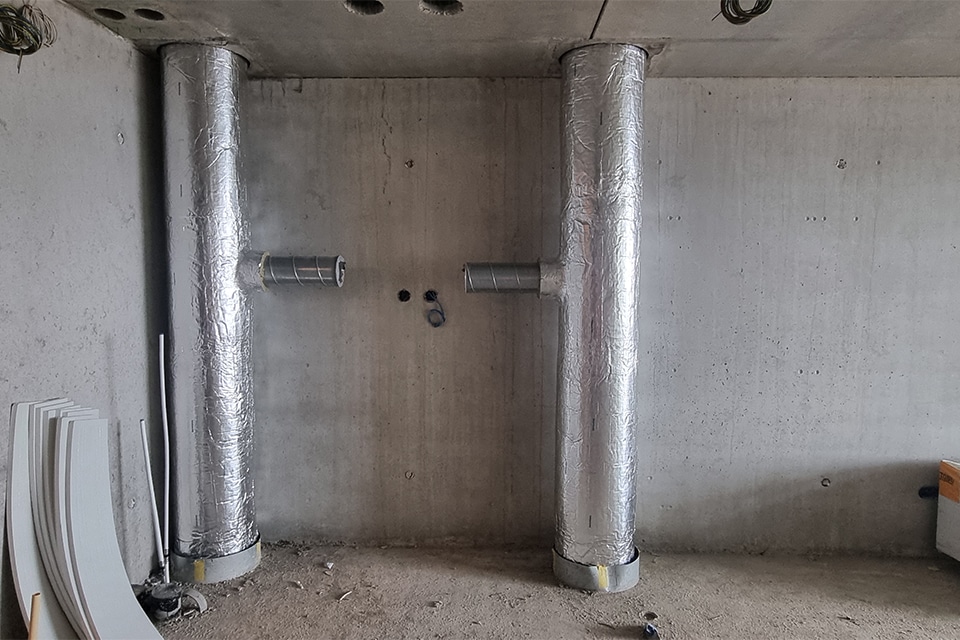
A striking choice in Lighthouse is in the way the air flows through the building. Instead of one standard layout, the tower is cut into two parts. From the eighteenth floor on, the air currents go up, while for the floors below, they go down. Van Hout: “That is quite unique. By cutting the building in two, we were able to use smaller ducts in the shafts. You need less space, and that's a big advantage in high-rise buildings.”
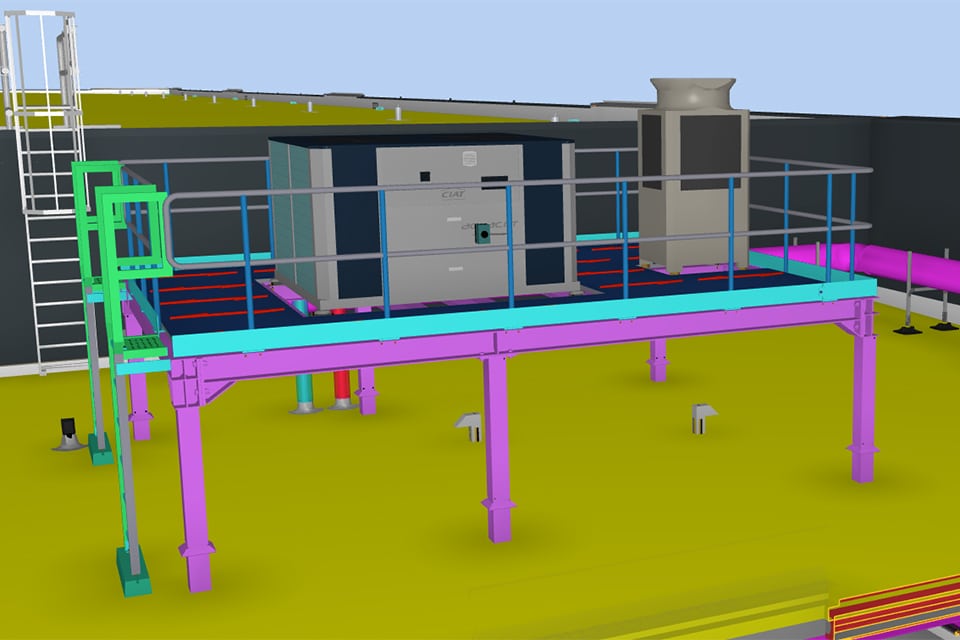
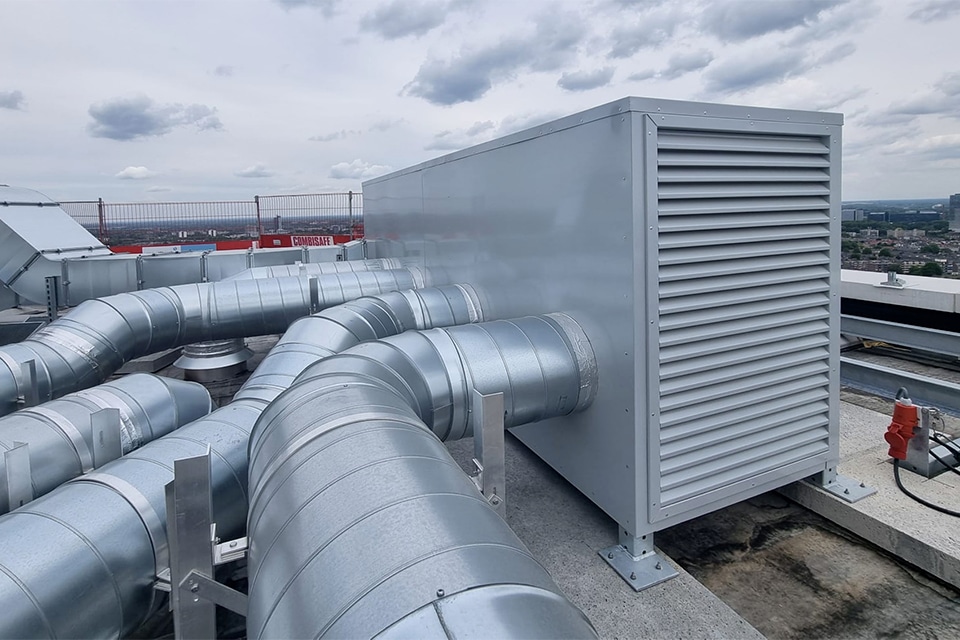
That layout had a clear advantage in the shafts and installation areas, but also created additional work in other areas. On the second floor, many ducts had to be created and routed toward the facade. There was also a considerable technical task on the roof. Van Hout: “At that height, you really have to deal with different wind loads.”
In addition to the technology in the building, the parties also looked at use and management. Together, Rodrie and Brink developed a project-specific manual with a QR code that takes residents and managers directly to the correct manual for the device. That information is available in Dutch and English, in keeping with Eindhoven's international character.
For both parties, the pride is mainly in the overall picture: a complex high-rise project that is technically sound, without breakdowns, and with cooperation that they say went smoothly. “Alone you can do little,” says Hagens. “Cooperation is the most important thing.” Van Hout concurs and also mentions the role of the contractor: “Stam + De Koning Bouw had the planning in order. And we worked well with installation consultant Bart
Vorstenbosch. That feeling that you are really making it together, that is very important in a project like this.”