Platform on new construction, renovation, restoration and transformation

The Kolping neighborhood in Nijmegen is being renewed while retaining soul and bliss. 99 new-build homes and the renovation of 127 social housing units are the capstone of a long period of work on the livability of this characteristic working-class neighborhood.
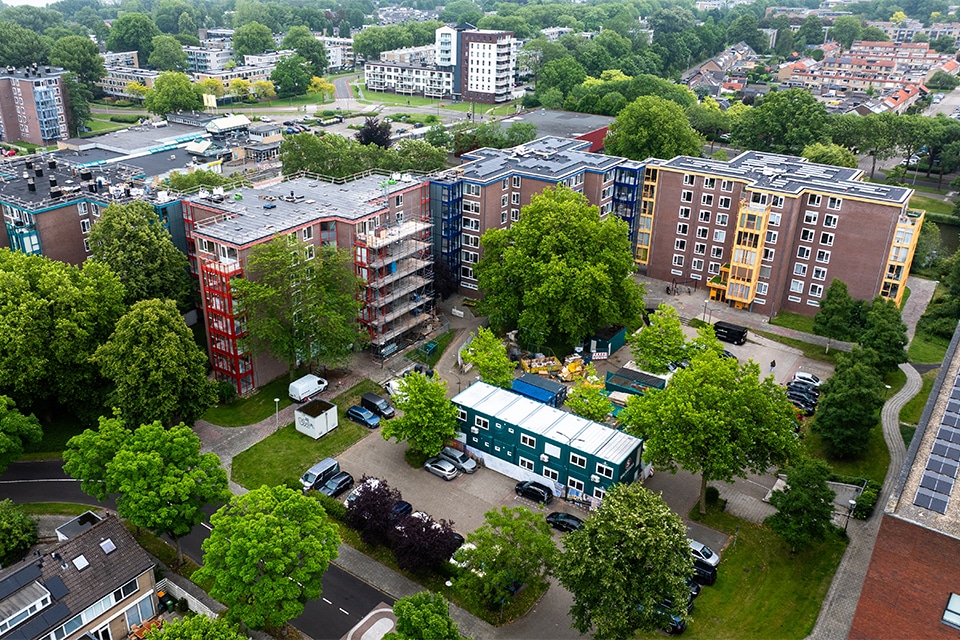
127 homes in Nijmegen's Kolping neighborhood are being made more comfortable, safe and energy efficient. 115 homes will be demolished and replaced by 99 newly built homes, including 16 apartments. The extra space created as a result will be used to create squares, trees and plants. Around June 2019, the restructuring of the neighborhood will be completed.
Integral puzzle
It was a project with challenges. One was the fact that residents continued to live in the Kolping neighborhood during the renovation and construction work. "Everyone went temporarily to a change of residence during the work," says Tjeerd van de Put, business manager of Hendriks Maintenance & Management. "That called for a social plan, which tied in exactly with the construction activities and did not affect the speed of construction. After all, the total restructuring was scheduled for a year and a half, not a day longer. Immediately after the award in 2017, we started the migration planning. This was the basis for all other planning."
Furnishing public area
For restructuring projects, Hendriks Bouw en Ontwikkeling has everything under one roof. The disciplines of construction, renovation, development and installation then work together integrally with partners and client Talis. In addition to the renovation, demolition and new construction work, the public area is also rearranged. Underground, the sewer system will be replaced. Above ground, new squares and green areas will be created.
Assembly line work
In order to keep construction time as short as possible, a single piece flow was chosen. "Every day a home was started on one side and a home was delivered on the other," Van de Put explains. "Thus, the inconvenience to the residents was intense, but short. On the other hand, this approach required many craftsmen and the punctual supply of the necessary materials through the cramped residential area. That was quite a logistical puzzle. Where could we store materials? How did we keep the neighborhood livable? If things stalled anywhere, the assembly line jammed."

New construction and public area. (Image: William Moore)
Communicating directly
Hendriks' employees also became acquainted with the atmosphere in the Kolping neighborhood. For a long time, the working-class neighborhood had a bad name. Through a specific admission policy, the atmosphere improved over the years. Many residents have their hearts on their sleeve and communicate in a personal but direct way. "That has advantages," Van de Put believes. "It's clear and you get the opportunity to explain."
Variety in facades
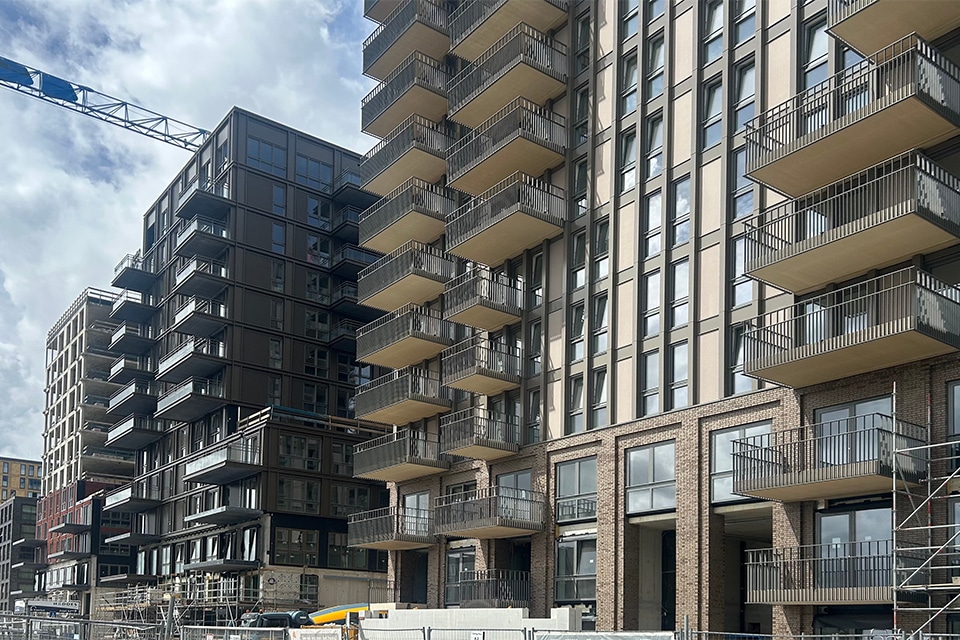
The variety of new and renovated homes makes the renovated Kolping neighborhood attractive. This required extra attention from Hendriks Construction and Development. Van de Put: "In total, there are seven different housing types. In addition, there are single-family homes, life-proof homes and live-work homes. All these homes have been given their own look, with the overarching characteristic of a rich facade with much attention to the brickwork. The execution of this was similar to a Ravensburg puzzle of 10,000 pieces."
"It's been an intense process for the residents," Van de Put concludes, as the project draws to a close. "But they got a lot in return. The renovation homes have more comfort. Kitchens, bathrooms and ventilation have been renewed, floors and ceilings insulated and fire and burglary safety improved. The solar panels provide lower energy costs and the landscaping provides a friendly appearance."