Platform on new construction, renovation, restoration and transformation

BPD (Bouwfonds Gebiedsontwikkeling) launched a competition in 2016 for Proeftuin Erasmusveld, challenging "young" architects to design one hundred homes in one building. Of the many entries, the vision of the team around Workshop Architects, where Ard Hoksbergen was a partner at the time, stood out.
This competition was a perfect opportunity for Hoksbergen and his colleagues to show what they had to offer. "We had proposed to make it a park-like living environment, but with a building that looks small-scale and surrounded by greenery. Because to put a towering building in a beautiful park, we didn't think it was appropriate in this location," he explains.
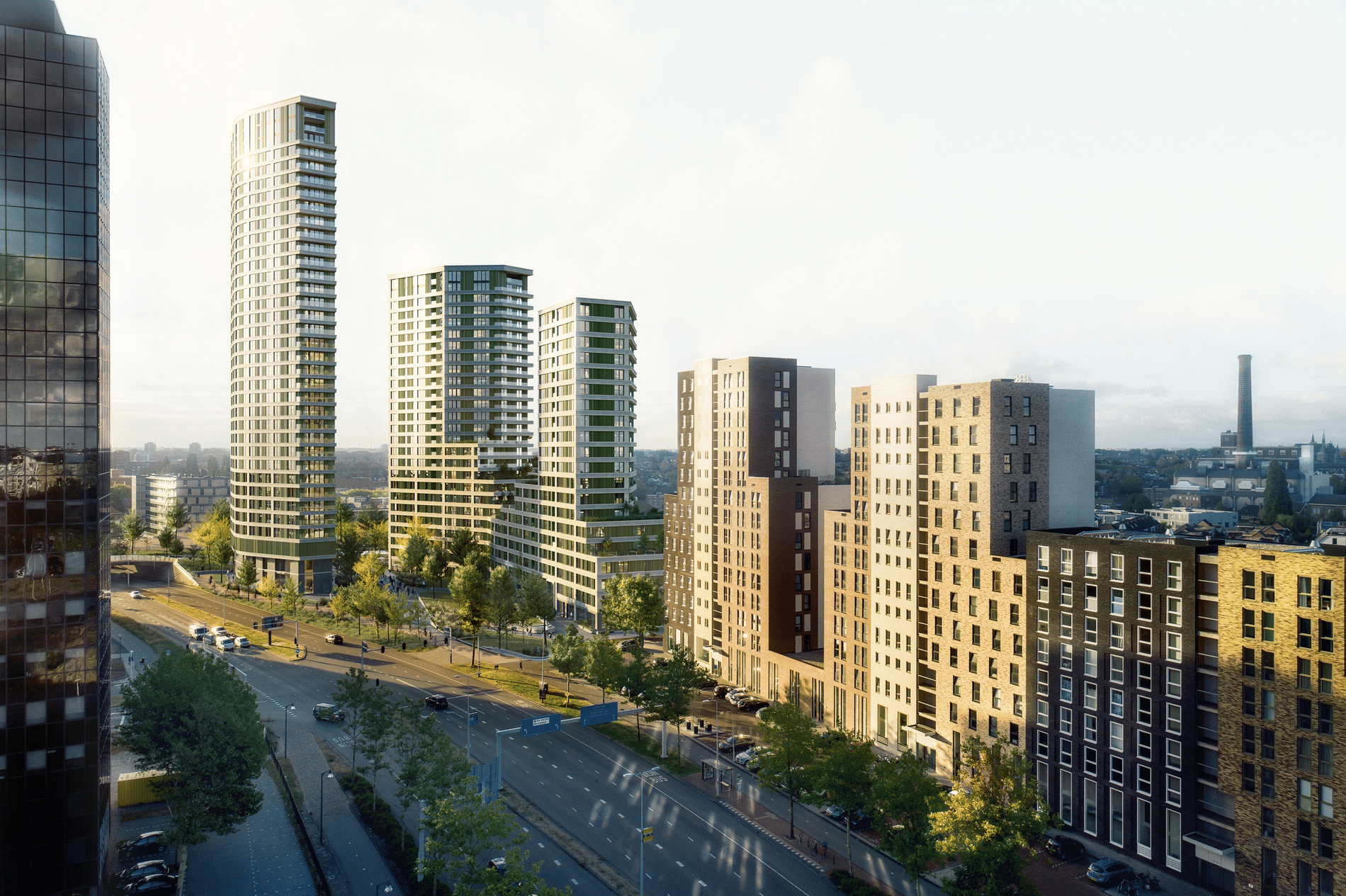
That small scale, then, was the project's biggest challenge. "One hundred homes in one building with a mix of diverse people. Families, starters and seniors. How do you design that so that it feels smaller and fits in well with the surroundings? We chose a tiered design that is higher on the forest edge side and slopes toward the park in front. In this way, the building makes a "soft" landing in the park. On the north side, the building is eight stories high, but it doesn't feel that way."
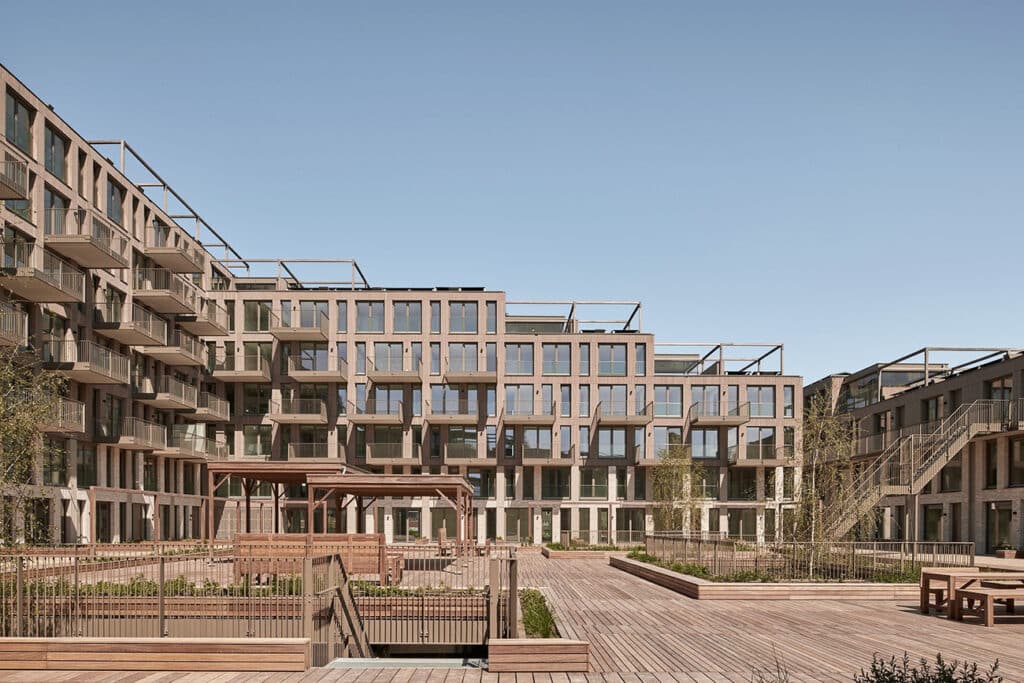
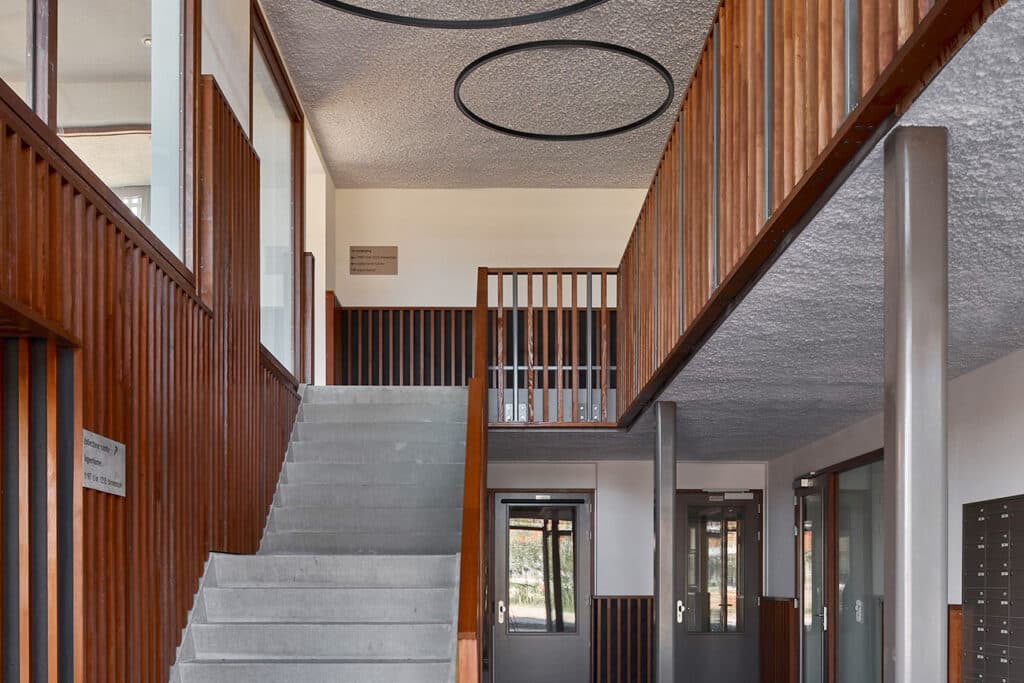
The project took shape in consultation with potential residents. "We organized several participation meetings together with potential residents and BPD. You are going to live in a building together, so it is important to think along about what you would like to share in terms of facilities and what not." Those meetings certainly paid off. "It was great fun to spar with potential residents: ideas came out of it that we hadn't fleshed out ourselves," Hoksbergen said. "For example, we had thought of filling the stairwell with several collective spaces such as a game room, library and nursery. That did end up being more than 10 spaces. But apparently there was more of a need for a few small spaces and one very large space where residents could then celebrate their birthdays or hold a VvE meeting."
During the design phase, careful consideration was also given to how sustainability and collectivity can reinforce each other. "There are multiple functions in the building that complement the homes," Hoksbergen continues. "This allows you to live relatively small, but still have the feeling of space. For example, there is a guest room for family members or friends who stay overnight, and there are shared electric cars and bikes in the garage. There is also a shared laundry bar where residents can do their laundry while enjoying a drink. By sharing all these features, each residence does not have to purchase these items on its own. Because buying new stuff has a huge, negative impact on the environment."
The configuration of the building is also very special. "Around the collective courtyard there are actually four gallery apartments, but because of the design that is not noticeable at all. On both sides of the building you have both balconies and galleries. That ensures that all the apartments are through-zoned and so every apartment has light and views on two sides. And because of the size of the courtyard, all the homes are also well oriented to the sun. That in turn benefits the livability of the residential complex."