Platform on new construction, renovation, restoration and transformation

Where developer Hollands Midden/Bolton Development and architect Venster Architekten defined the contours for the 72 ground-level homes - with a bay dimension of 4,800 x 8,600 mm, two stories and a flat roof - the residents of the new residential neighborhood did the rest. "Following the Bolton à la Carte principle, the residents chose the volume, appearance and design of their homes, among other things," says Henry Booms, Project Manager at Bolton Construction. "A very dynamic neighborhood is the result, while a uniform architecture and sophisticated plot layout provide a balanced image."
"With the Bolton à la Carte, we were responding to the building crisis, in which homes were struggling to sell," Booms says. "Had we built Woerden Centraal ten years ago, there would most likely have been 72 identical ground-level homes. But instead we had to deal with a small and discerning buying group, whom we not only wanted to serve to the maximum, but also to relieve from A to Z. In close cooperation with the architect, the residents designed their own homes. In three workshops they were given all the tools they needed to convert the architectural image into their own floor plan. All designs were visualized in a 3D model, after which the residents were able to optimize matters. After approval, engineering firm SWINN worked out and calculated a separate main bearing structure for each home, after which we started construction in 2014."

With 72 floor plans, masonry bricks in black, red and yellow, longitudinal, transverse, spouted and gabled roofs with different tiles and a choice of exterior frames, no home in Woerden Centraal is alike.
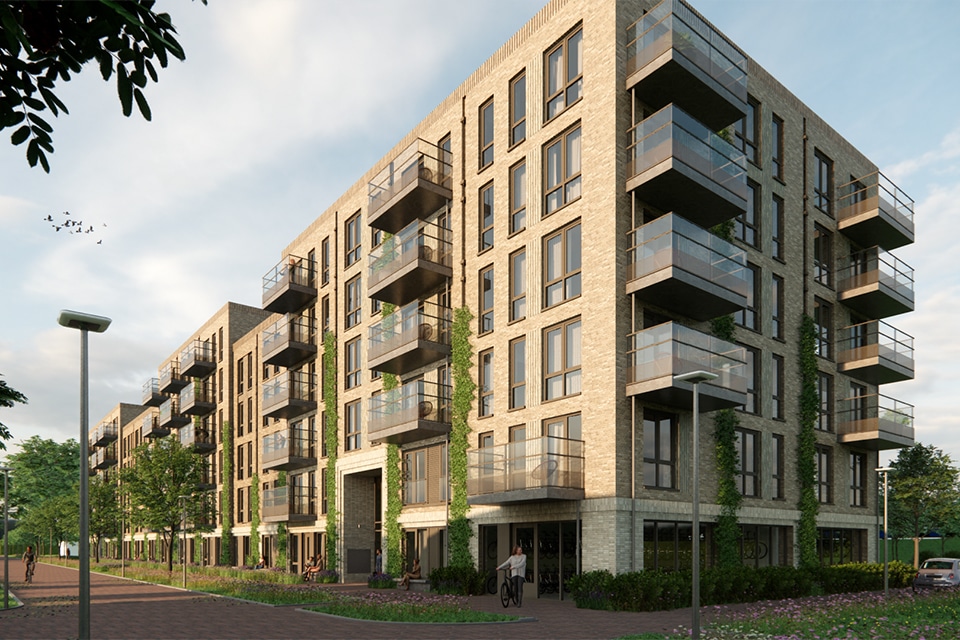
In 2015, work began on the construction of a single-level parking garage 200 meters wide, on top of which five unique apartment buildings were built. Sophisticated architecture and communal roof gardens provide harmony and connection here. "In the first residential block, the buyers could determine their own floor plans and facade layouts," says Booms. "Only the shafts were fixed, which created challenges in practice. For example, regarding the MV installations and sewers, which were not allowed to clash." The first residential block was constructed traditionally with cast-in-place concrete walls and wide slab floors, he says. "In the next three blocks - which were sold to various rental parties and have a 'standard' layout - this method of construction was combined with precast concrete interior cavity walls. In the last residential block, residents were again given more freedom of choice, although here the basic floor plans were fixed. For this residential building, all facade components were precast. Including the cavity walls, insulation, stone strips, window frames and glazing."