Platform on new construction, renovation, restoration and transformation
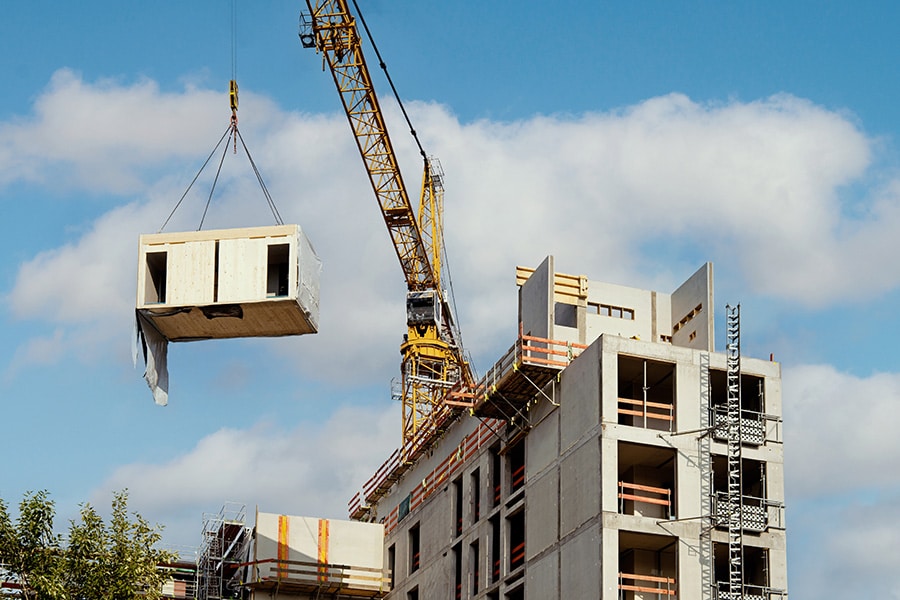
Prefabricated construction is a trend, only it is not always done safely. The wheel is regularly reinvented, and often at the very last minute and with traditional methods and existing resources. This does not always improve safety. According to Aboma's experts, safe prefabricated construction begins on the drawing board.
Prefabricated construction is a broad term: from complete modular units to concrete floor sections assembled on site. It comes down to producing or assembling something elsewhere and putting it together on site. “The risks are often similar: pinch hazards, fall hazards, falling elements and underestimating weight,” says Remco van Noordenne, senior consultant at Aboma. “Prefab elements, for example, require specific lifting equipment and safety devices. Yet the industry often sticks to traditional methods, even when new techniques such as manipulators and automatic hooks are available.”
Safe construction begins in the design phase. “The earlier in the process safety is included, the greater the impact,” says Duco Opdam, consultant at Aboma. “If safety provisions are only considered at a late stage, it is often difficult to still implement them effectively or cost-efficiently. Yet it is now often done on a project basis or after the fact, rather than structurally at the company or industry level.” Van Noordenne adds: “Companies thereby look at each other: what is my competitor doing? Instead of actively developing safety devices and assembly processes themselves, they often wait for others to try it out. As a result, improvements are delayed and known risks remain. For example, we think it is quite normal to make unmanned foundations for wind turbines at sea, but if we have to lay a floor on the construction site at a height of three meters, we would still prefer to be physically there.”
Precast construction, according to Opdam, cannot simply be used in every environment. “Laws and regulations around lifting areas, working heights and fall protection can impose restrictions.” If it does fit within the frameworks, then the occupational hygiene strategy states that fall hazards are prevented, says Allard Schonewille, Aboma consultant. “The starting point is a collective facility, where falling is not physically possible, rather than leashed work, which still has risks. Working on a leash requires good instruction and supervision, so that resources are used in the right way. Important question is: How did you think of the work beforehand, and do you carry it out as planned? This is not only about the safety of personnel, but also about the protection of bystanders. When lifting modules or elements in a residential area, for example, space is needed for trucks and cranes, and risks to the surrounding area must be avoided.”
Each construction site and project requires consideration: does precast fit here, and if so, what safety provisions are needed? “The key message is clear: safety in prefab construction starts with thinking ahead. Not reacting or improvising only when something threatens to go wrong during execution, but paying attention to assembly methods, resources, environment and people from the very first design. Only in this way can we combine the speed of prefab with the safety that is indispensable in construction,” Opdam concludes.