Platform on new construction, renovation, restoration and transformation
Leviat is a global leader in lifting, fastening, and anchoring technology for the construction and industrial sectors. “Our main goal is to increase efficiency and safety on construction sites,” say Sales Manager Meerten Siertsema and Internal Sales Manager Dennis Slot, who work together to ensure effective and efficient customer and project support. “We also help contractors and concrete manufacturers build quickly, sustainably, and in a circular manner. By contributing our expertise in engineering and installation from an early stage, we take the burden off clients from start to finish.”
“Our strength lies in the combination of high-quality products and people,” says Siertsema. “We’re known for our quality, delivery reliability, and strong, efficient logistics processes. With an extensive and constantly evolving product range, we serve the market with solutions that make a difference. However, our true added value lies in the personalized, technical advice our team provides every day. That’s why customers keep coming back to us—and new customers join us every week.”
“In addition to circularity and the reuse of materials, we see a growing need to reduce the carbon footprint in projects,” says Slot. “This is an ambition that we at Leviat wholeheartedly support and encourage—for example, with our stainless steel tie rod systems. Construction is increasingly moving toward demountable designs. Furthermore, the concrete industry is exploring sustainable concrete types such as geopolymer concrete, which cannot be used in combination with traditional (galvanized) steel. With our new Halfen Detan stainless steel tie rod systems, we offer a sustainable, high-quality, and aesthetically pleasing solution for this.”
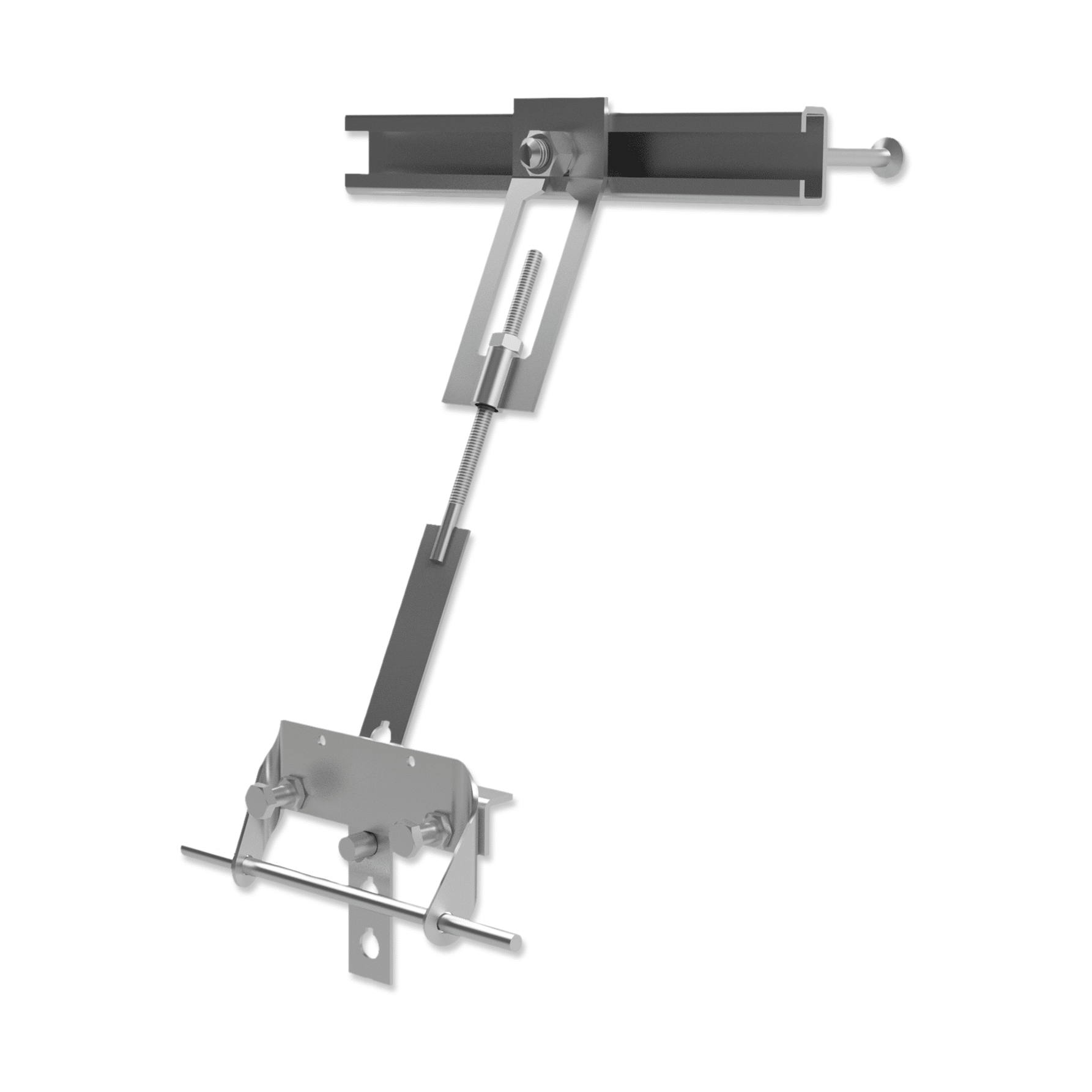
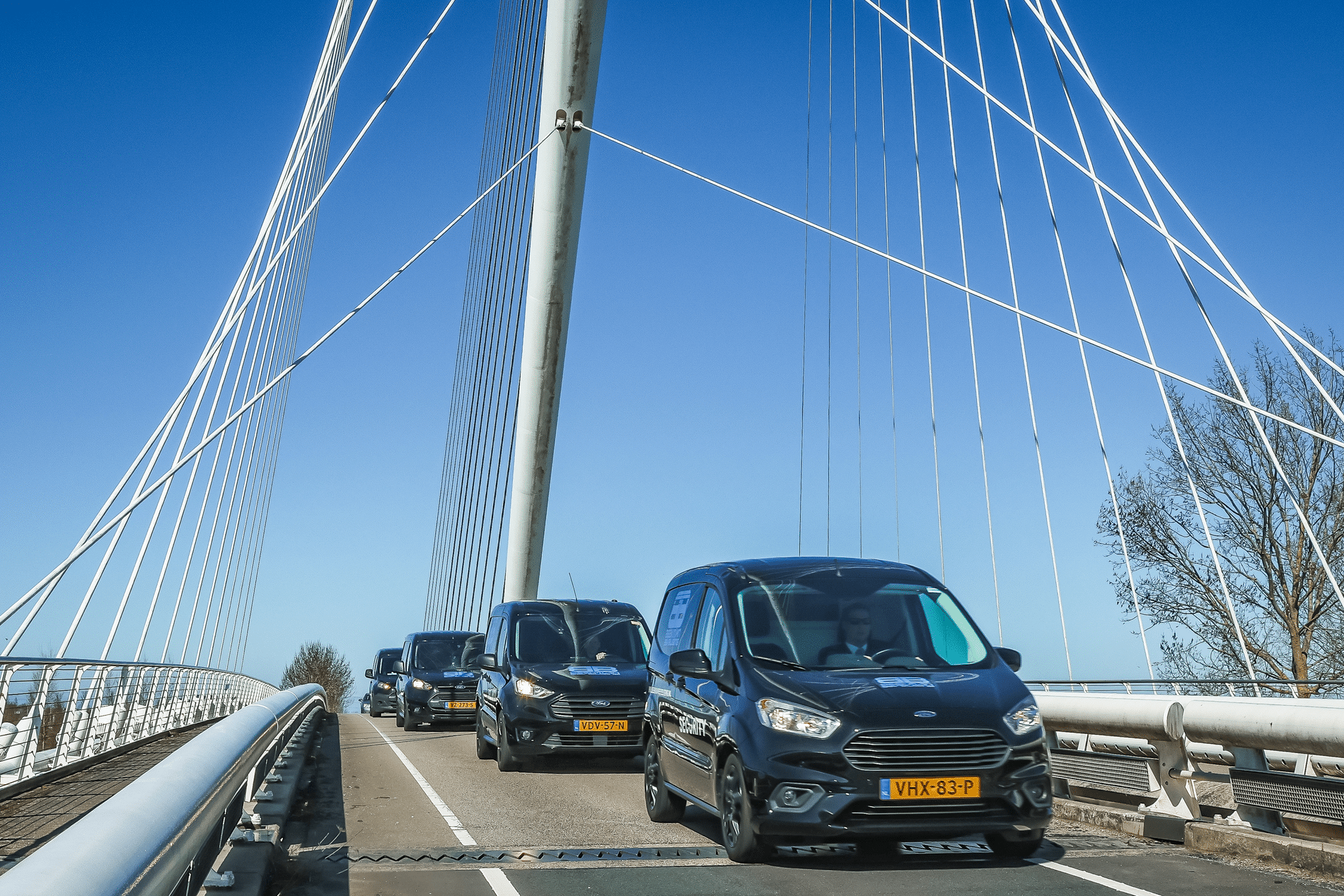
The new tie rod systems are available with rods, forks, locknuts, sleeves, and anchor washers in electropolished, satin-polished, and hand-polished stainless steel, says Slot. “The new tie rod systems guarantee high tensile strength and excellent corrosion resistance. Because the tie rods are often visible, a great deal of attention has also been paid to the aesthetic finish of the forks in particular.” As examples of visible locations, he cites applications at highway rest stops and pedestrian bridges, as well as wind bracing in office buildings and the suspension of prefabricated balconies. “Thanks to our tie rods, structural elements are held together reliably and for the long term. Maximum loads ranging from 17.1 kN (around 8 mm) to nearly 550 kN (around 42 mm) are possible. Based on the forces, span lengths, and (environmental) conditions, we are happy to recommend the right tie rod for every project.”
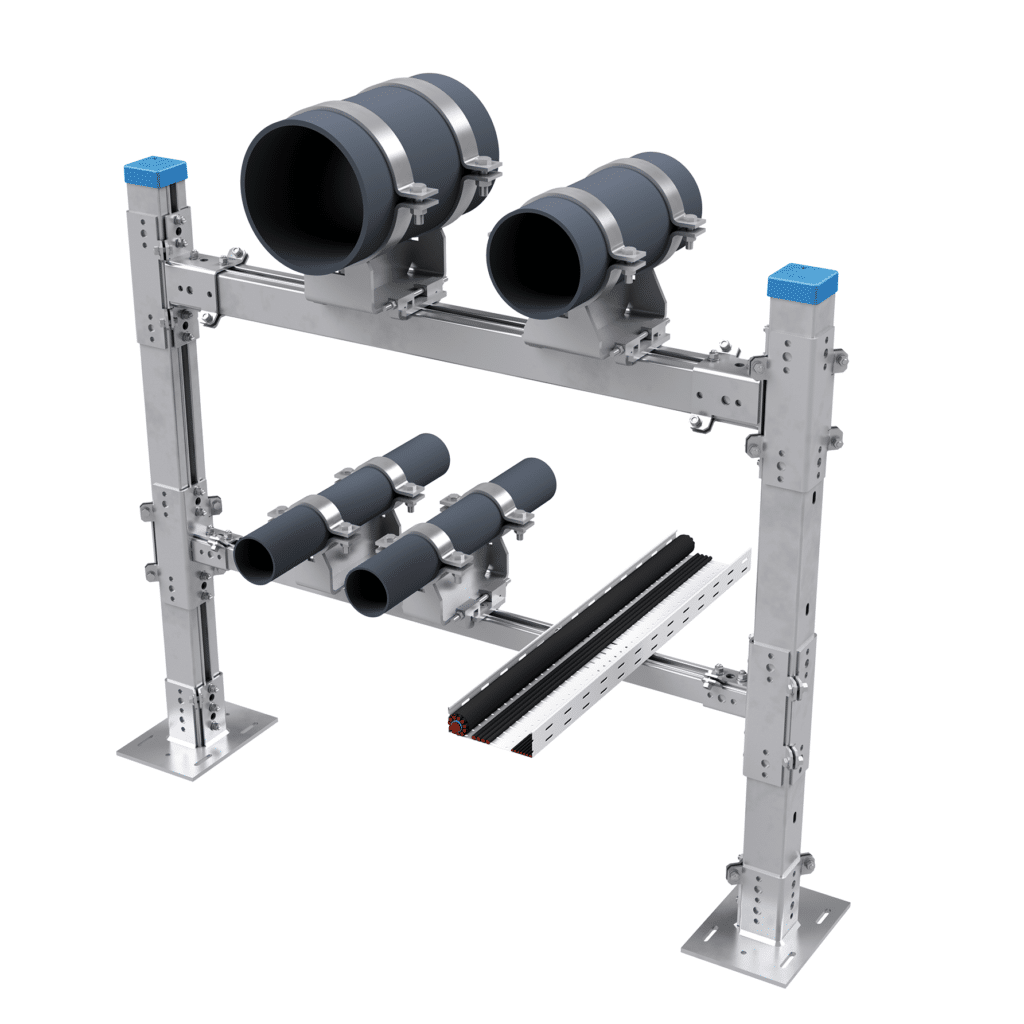
Another exciting development is Halfen Powerclick; a modular pipe support system for the (petro)chemical industry, steel construction, transportation engineering, plant and machinery manufacturing, power plants, and tunnel construction, which can be used, for example, to provide durable and reliable support for water and steam pipes, according to Siertsema. “Even when welding is not possible or not desirable. The system can withstand loads of up to 40 kN and can be quickly and easily assembled from a base, upright, T-pieces for pipe mounting, and accessories. Once set up, the system can also be easily tightened on the spot, ensuring a solid structure, long-term adjustability, and full reusability.” Depending on requirements, the system can be supplied hot-dip galvanized or in stainless steel, making it suitable for use in outdoor, saline, or chemical environments. “We are happy to help customers design the right support structure based on the required load-bearing capacity and other project conditions.”
A second trend Leviat has observed is that construction sites are getting smaller and smaller. “This means there isn’t enough space for heavy shoring,” says Siertsema. “Moreover, safety requirements are becoming stricter. Combined with the severe shortage of skilled workers, prefabricated and modular construction is increasingly being chosen. Leviat is responding to this trend, for example, with the Halfen HEK3 prefab connection, which enables a simple and quick dry connection of prefab concrete elements—both horizontally and vertically. Thanks to the Halfen HEK3, walls and facades, for instance, can be connected and disconnected quickly and easily. Construction workers no longer need to weld or work with mortar. Furthermore, lengthy shoring and/or special tools are not required. A torque wrench is sufficient.” The structural connection is immediately torque-locked and fully load-bearing after tightening, which ensures an even faster construction process.
Following the trend with floors and walls, balconies are also increasingly being prefabricated. Leviat is keeping pace with this trend with a new line of Halfen HIT-PI (Post Installed) structural thermal breaks, which allow prefabricated balconies to be safely attached to the building’s structure directly from the crane in just a few minutes.
Halfen FPA facade panel anchors, designed for the simple, fast, and safe anchoring of concrete facade panels to concrete or steel support structures, round out the product line for lifting, connecting, and anchoring technology.