Platform on new construction, renovation, restoration and transformation

In Assen, work is underway on a government office that has been designated by the Government Real Estate Agency (RVB) as a pilot for the Routekaart Verduurzamen Rijksvastgoed. Mandemaat 3 brings together all the ambitions from that roadmap: circular, biobased, nature-inclusive, climate-adaptive, energy-efficient and built with over 95% of electrical equipment.
Mandemaat 3 is the first project to apply the full breadth of the roadmap. Jelle van Egmond, Manager Customer and Market at Hegeman: “In this project the four themes of the sustainability ambitions of the Rijksvastgoedbedrijf come to life. It requires more than the use of circular and bio-based materials and the realization of an energy-efficient building. With the building and the design of the surroundings, we are also building nature-inclusive and climate-adaptive with, for example, bat towers and wadis.”
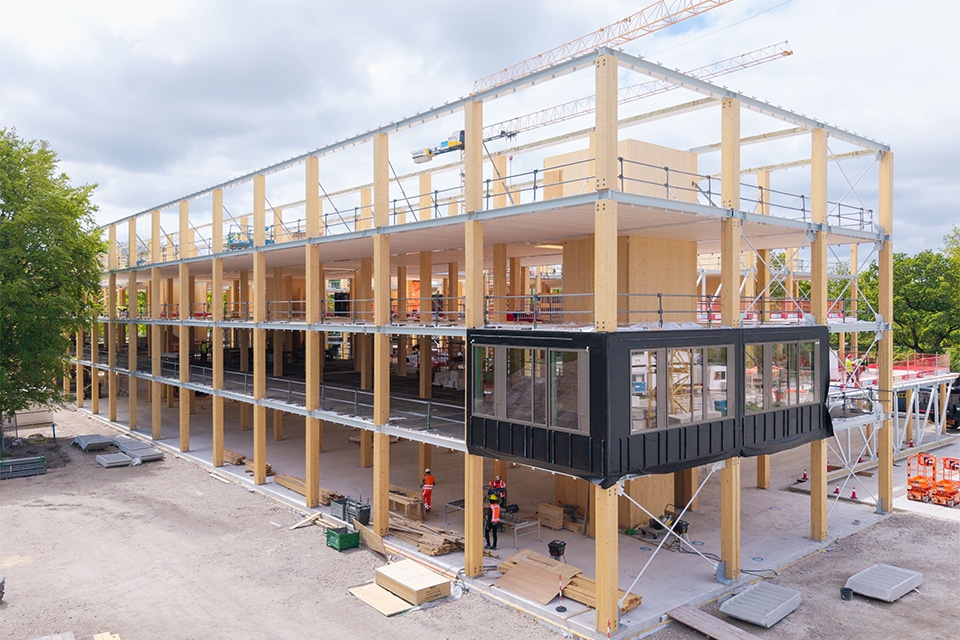
The RVB gave the team a firm ambition, but left a lot of room for their own interpretation. “It set a dot on the horizon, but gave us a lot of room to pioneer. The construction team chose circular demolition, although we prefer to speak of ‘harvest-new construction’ rather than renovation.” This seems contradictory, but was a conscious choice, according to Van Egmond. “In particular, energy efficiency, climate adaptation, nature inclusiveness and CO2 calculations over the entire life of the building justify the consortium's choice of demolition-new construction.”
A key component is almost all-electric construction. In the tender phase, the team promised 95 percent electric. “We stay well within that. We monitor that very strictly, with an innovative measuring system: TiQit,” says Van Egmond. “That monitoring is again a pilot, in cooperation with Movares and partly funded by the Top Sector Logistics.”
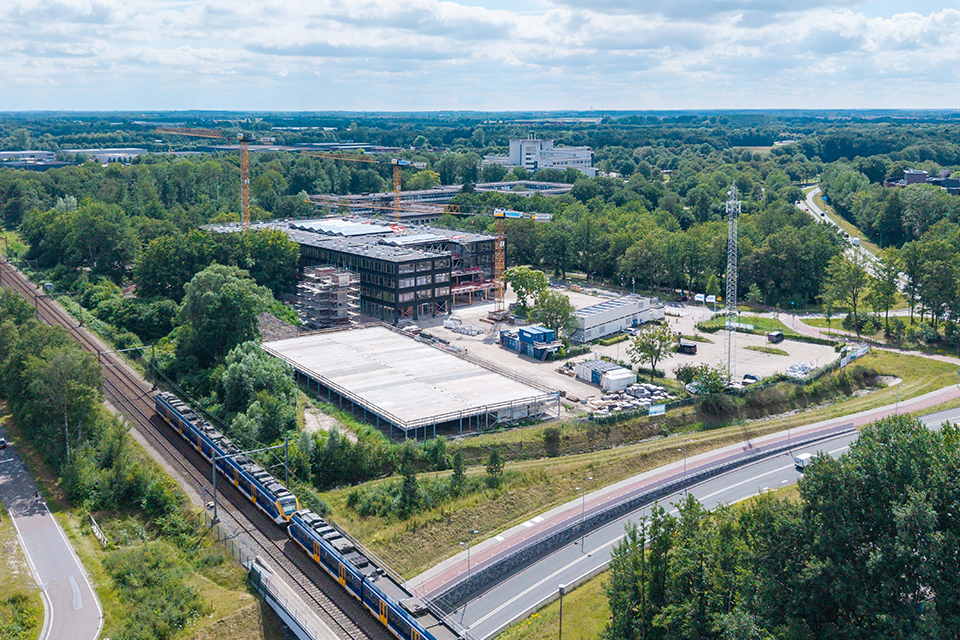
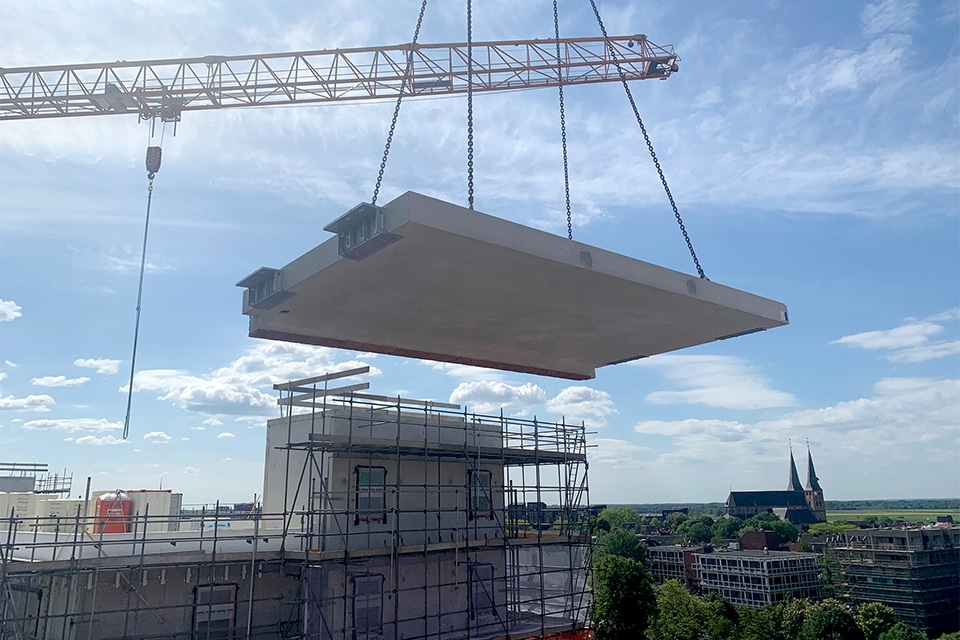
The pioneering is not limited to the construction site. Many materials from the old Mandemaat are being reused, from concrete to window frames and glazing to carpet tiles. “We are working with a hub and a lot of local parties, so the transport could also be electric,” he says. The new parking garage is also built circularly with 54 harvested TT girders from Dordrecht. “This was not initially conceived, but the circular opportunity came our way. Quite a challenge because of the different dimensions and conditions. It took blood, sweat and tears, but at the same time it is one of the achievements we are most proud of and the result of the intrinsic motivation of the partners involved within the consortium and our client. Together we stuck our necks out.”
Collaboration, creativity and inventiveness are therefore core. Architect RU+PA, De Groot Installation Group and other (sustainability) partners have been closely involved in design and engineering from the beginning. The relationship with the RVB is essential in this regard. “We are innovating and pioneering together and really pushing boundaries. The lessons will be recorded, of course. The partners involved are already benefiting from this in subsequent projects.”