Platform on new construction, renovation, restoration and transformation
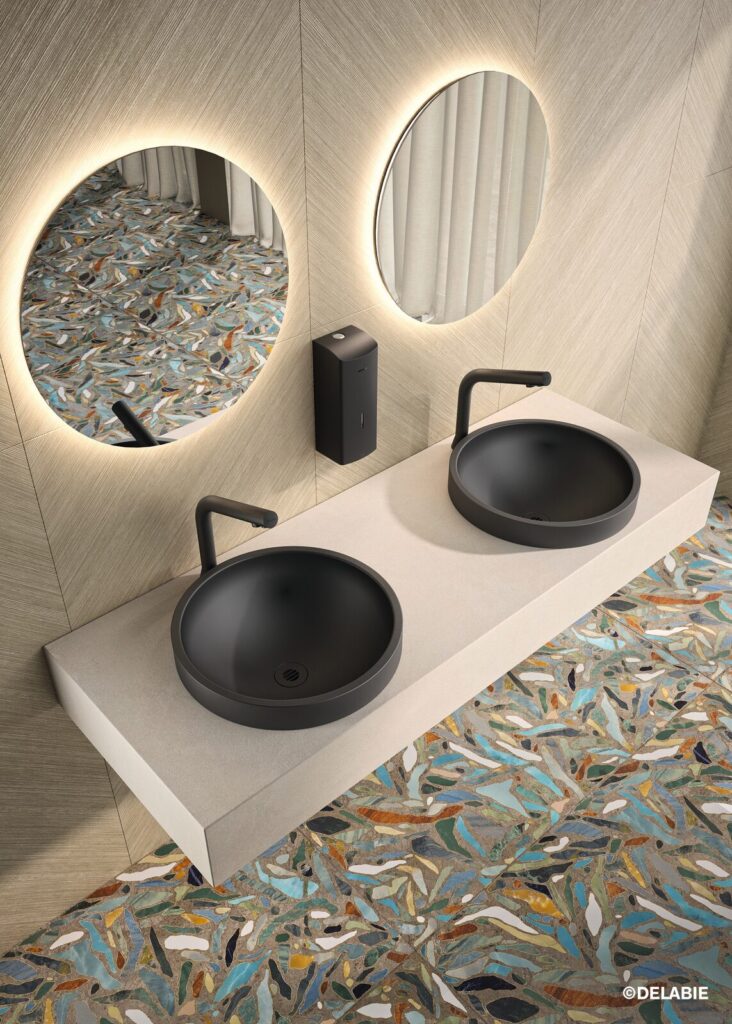
A design doesn’t end when the last line is drawn on the plan. Between the concept phase and completion, decisions regarding materials and equipment are translated into the BIM model, the specifications, and the bid documents, eventually reaching the installer and often entering a round of optimization. It is precisely at this stage that some of the original quality can be lost. DELABIE, a specialist in plumbing fixtures for public and professional environments, therefore views a well-founded specification as an essential extension of the design.
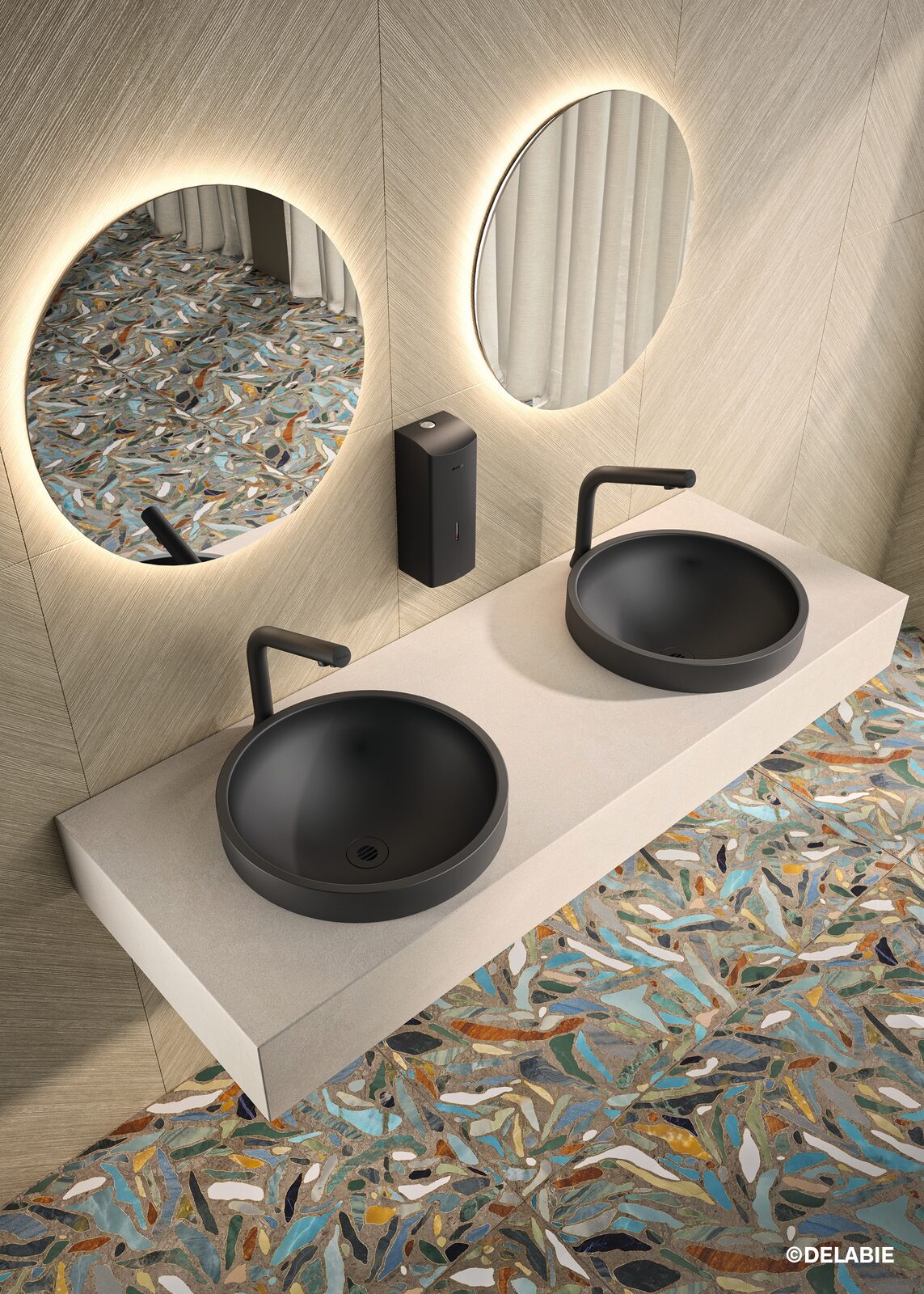
A (public) restroom typically consists of a limited number of square meters, yet it brings together a remarkable number of design decisions. The layout must be logical, the fixtures must align with the interior design concept, and the technical systems must function properly. At the same time, faucets, flushing systems, sanitary fixtures, and accessories must be tailored to the nature and intensity of use. This makes restrooms a striking example of a broader challenge: how does an architect safeguard the design intent when an increasing number of parties become involved in the development and execution? When is “equivalent” truly equivalent? During a bidding process or construction, a specified solution is sometimes replaced by a so-called equivalent alternative. That need not be a problem in itself, as long as that equivalence extends beyond price, dimensions, or appearance.
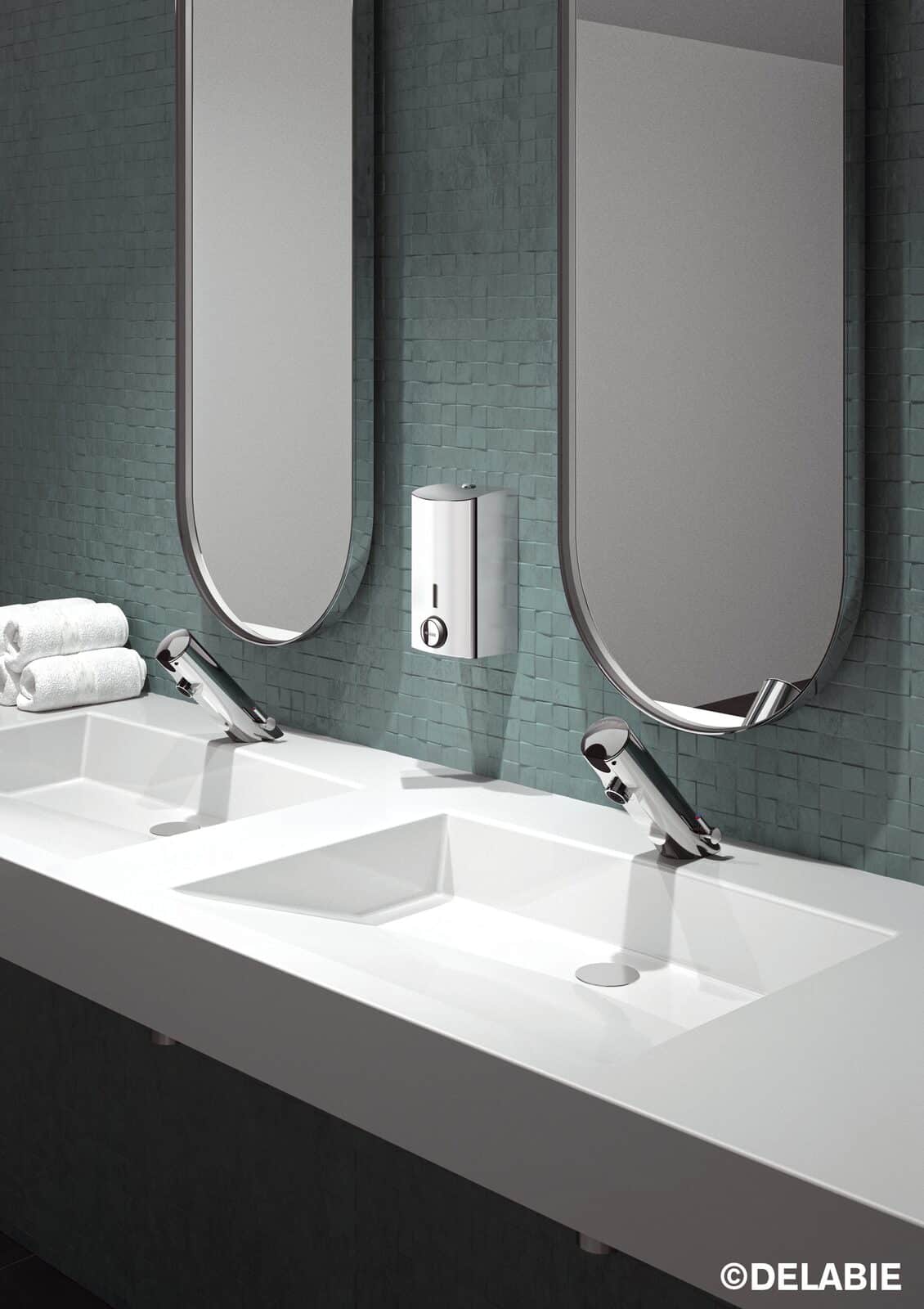
Consider electronic and self-closing faucets for public spaces. Two models may look very similar, yet differ in their detection or operating principles, preset flow rate, installation requirements, safety features, and accessibility of technical components. The options for automatic flushing, settings, and manual intervention may also vary. The same applies to toilet flushing systems. The choice between a traditional cistern-based flush and a direct flush without a cistern affects more than just the available space behind the wall. It also influences operation, availability after consecutive use, the risk of leaks, and how accessible technical components remain. A proposed alternative is therefore only equivalent if it delivers the same performance within the specific building. To determine this, it must first be clear which performance characteristics are decisive.
When it comes to plumbing fixtures, the choice of materials is sometimes viewed primarily as an aesthetic decision. In public buildings, however, it also determines how a product ages, how easy it is to clean, and how well it holds up under intensive or improper use.
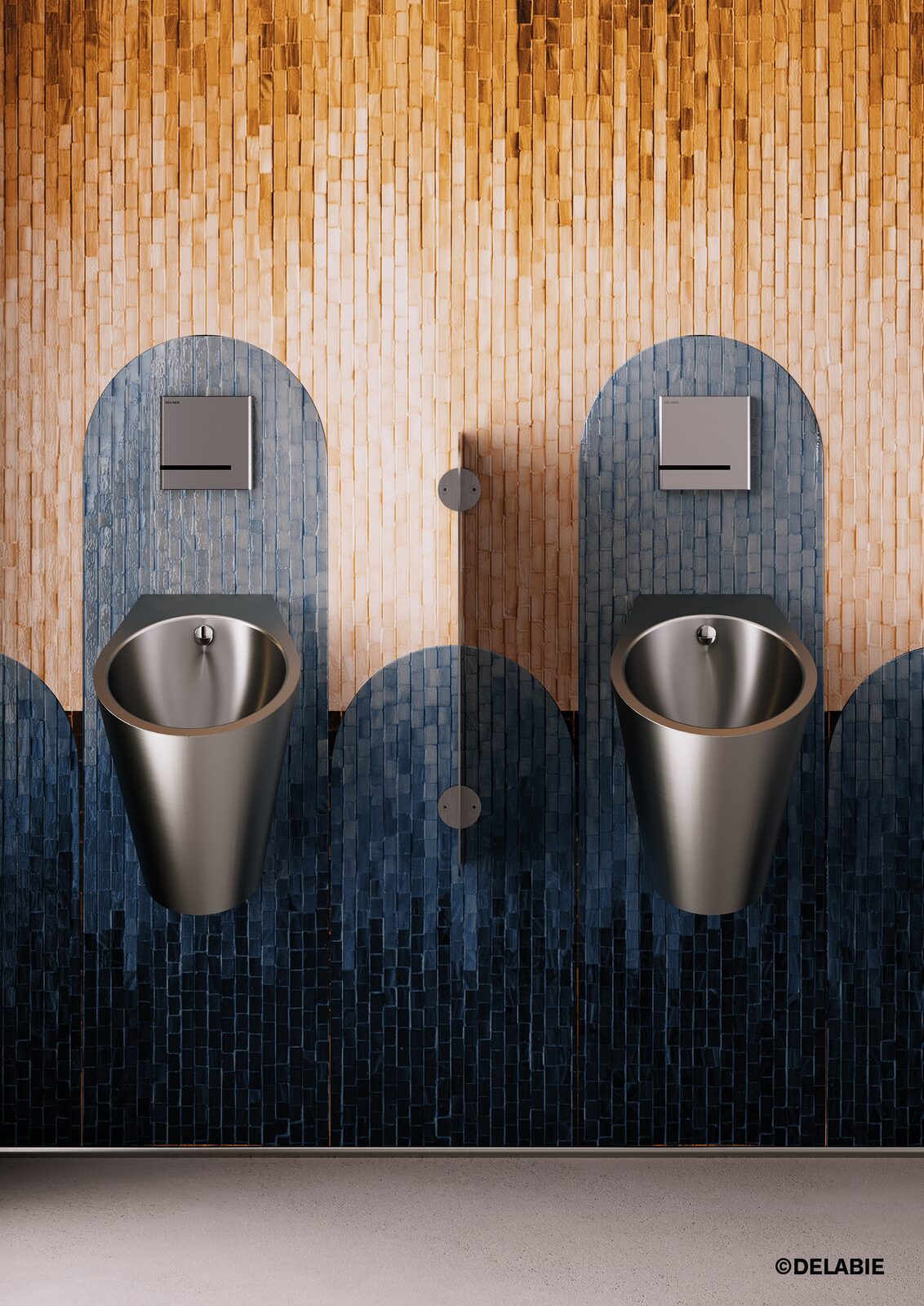
For example, with a stainless steel sink or urinal, it’s not just the shape and finish that matter. The grade of stainless steel used, the material thickness, the mounting method, the edge finish, and the accessibility of connections are also important. Furthermore, in certain projects, a closed underside or concealed trap can contribute to the desired safety and durability. By explicitly specifying such characteristics, the architect prevents the choice of materials from being reduced to ‘roughly the same appearance’ during construction. The specifications then not only define what must be visible but also what the product must be able to withstand in practice.
A good set of specifications does not have to specify only the exact product the designer has in mind. Above all, it must make clear why certain choices were made. What level of usage is expected? What operating principle is appropriate? What requirements apply to flow rate, safety, cleanability, and ease of maintenance? How accessible must components be? And which design, material, or finish characteristics are an integral part of the interior design? DELABIE provides technical product data sheets, specifications for tender documents, drawings, and certificates for its product range. This information helps designers translate a product selection into verifiable characteristics. An alternative can then be evaluated against the same requirements, rather than being assessed solely on the basis of price or a general product description.
Digital product information also supports this quality control. DELABIE’s BIM files are available in Revit and IFC formats and make it possible to correctly incorporate plumbing solutions into the building model as early as the design phase. However, a suitable BIM object does not automatically guarantee that the full design intent is conveyed. A product may fit geometrically perfectly into the model, while information regarding operation, performance, or maintenance is insufficiently accounted for. The added value arises when geometry, technical data, and specification requirements align. The BIM model then not only shows what is placed where but also helps to maintain the rationale behind that choice throughout the construction process.
Ensuring that the design intent is upheld is not the sole responsibility of the architect. Interior architects, MEP consultants, manufacturers, contractors, and installers also possess the necessary expertise. By involving a specialized manufacturer such as DELABIE as early as the design and specifications phase, design choices can be technically evaluated in a timely manner, preventing adjustments or a loss of quality on the construction site. After all, architectural quality is not determined solely by what is drawn. It depends just as much on what is correctly specified, understood, and executed. In that sense, the specifications may well be the final design drawing of a building.
Neem dan rechtstreeks contact op met Delabie.
 Contact opnemen
DELABIE, a rich history Georges DELABIE, sanitary wholesaler in Paris, takes charge of a foundry in Friville, located on the Somme, in 1927. Here he mainly develops faucets and floor siphons for bathrooms and kitchens. The following generations always strive to grow the family business, but want to preserve the identity of the brand and the [...]
Bekijk Bedrijfsprofiel