Platform on new construction, renovation, restoration and transformation
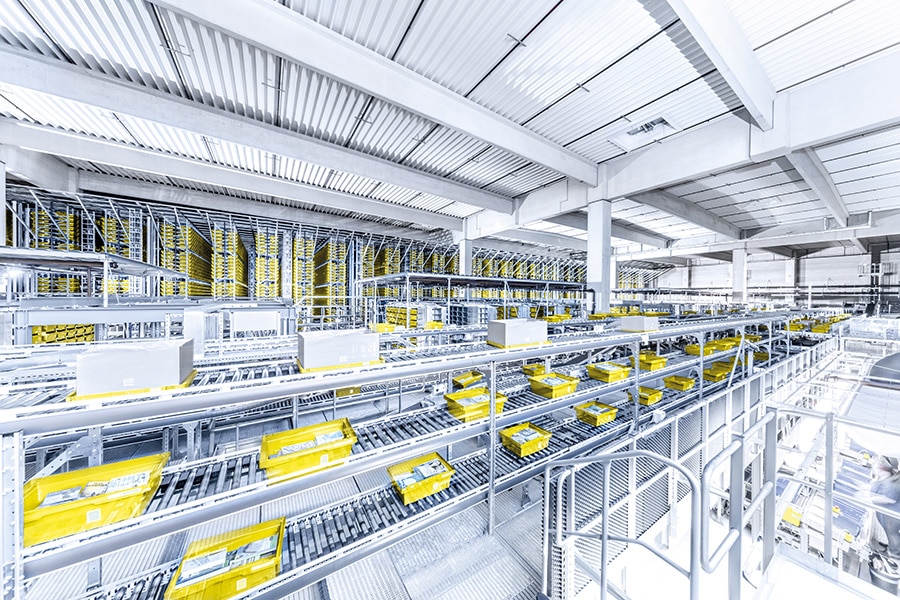
Rising sales are increasing the flow of products through your facility. While this is great for sales, it is creating bottlenecks in your operations. Automation is necessary to handle the flood of orders. But where do you start? SSI SCHÄFER's best practices can help you understand the process and the basics of automated warehouse solutions. This will give you a better idea of which solutions are suitable for your specific situation and enable you to make informed choices. Together with Sales Manager Max Nijssen, we will go through the most important questions and the most common solutions.

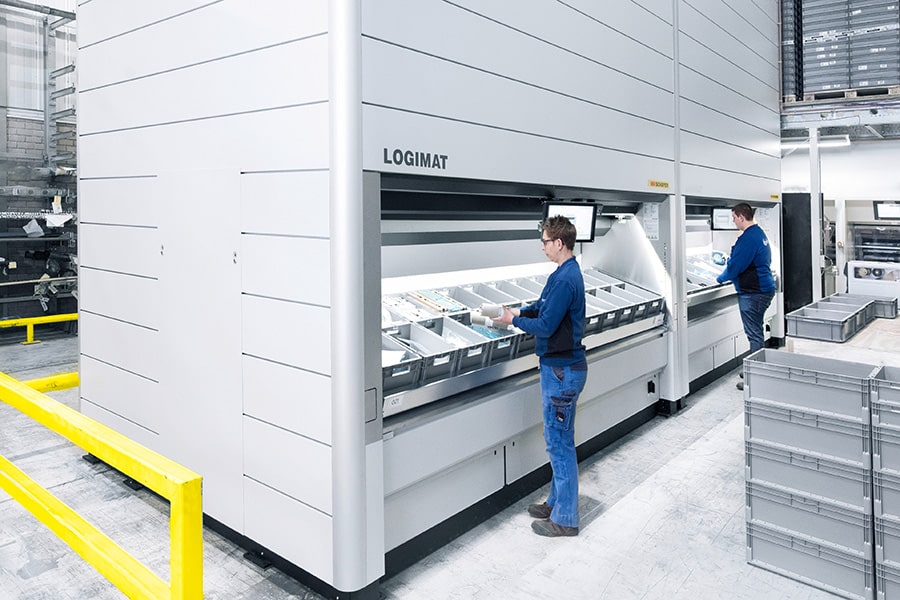
“Depending on the size of the company, its growth rate, and its growth path, companies consider different levels of automation, which we are happy to advise on,” Nijssen begins. “As a first (smaller) step, for example, simple technology can be implemented to reduce the need for manual labor or shorten process turnaround times. The installation of a transport system can connect workstations more easily, while the Vertical Lift Module (VLM) is perfectly suited for storing small parts and items. This module has been specifically developed to address both space constraints and reduce picking errors.” By combining these systems, employees working with a VLM no longer have to waste time delivering the picked product to the next station. After all, the conveyor belt takes care of this. When a transport system takes up too much valuable floor space, an Automated Guided Vehicle (AGV) can offer a solution. “AGVs are also more flexible. They only need a rail or guide on the floor. Thanks to their intelligent motion sensor, they can also be used safely in manual warehouses with increased pedestrian traffic.”
Those who want to go a step further can even opt for full automation with minimal involvement of manual process handling. Such a solution consists, for example, of shuttles for storage areas with room temperature, refrigeration, or deep-freeze conditions, case picking and piece picking robots, order verification systems, and various sensors. “However, automation does not have to start with equipment,” Nijssen emphasizes. “A Warehouse Management System, for example, can help with stock counting, order consolidation for faster and more efficient item picking, and clearer control over the process as a whole.”
Regardless of which form of automation you choose, it is crucial to divide the process into steps. First, analyze the route your products take from arrival to shipment through your logistics center, and then determine how each step can be performed more efficiently.
Is the product and tracking information for all items entered directly into the system? Are there scanners for pallet or box labels? “This is something to consider, with a view to clear and well-organized stock, easy picking, and replenishment,” says Nijssen. “Also, take a look at how the receiving area is currently set up. Are items transported to the depalletizing or storage buffer manually or via a transport system?”
“Is there a separate procedure for return orders? How are these products checked and registered before they are stored or buffered? An automated sorting system or a separate conveyor belt could be a solution to speed up and simplify these processes.”
Manual order picking can be very time-consuming. Even with perfect inventory registration, Nijssen knows. “It is more cost-effective to have employees work on one main activity. For example, by separating the picking task from packing or consolidating orders in different stations. When the areas are separated, delivery can be handled by a transport system, an AGV, or even a separate shuttle-like function. Another option is robotics for picking items and assembling orders, or both.”
“All tasks in the shipping zone can be handled manually, but with a little help from automation, the process can be significantly optimized. For example, routes and order details can be printed automatically and applied to the package. The label is scanned and the details are added accordingly, which means there will be fewer errors or mix-ups. This speeds up the entire process.”
When automation is on the horizon, dozens of decisions need to be made. This article highlighted just a few crucial points. “For those who want to know more about this topic and the basic principles of automated warehouse solutions, we have developed a best practices guide, which can be downloaded from our website,” says Nijssen, who offers one last tip: “Always take future growth into account by investing in scalable systems with room for more workstations, more machines, more orders, more turnover, and more people. We would be happy to explore the possibilities with you.”
Neem dan rechtstreeks contact op met SSI SCHÄFER B.V..
 Contact opnemen
With over 80 years of experience in warehouse equipment, SSI SCHAEFER offers total solutions from a single source. Whether you are implementing manual, semi-automated or fully automated logistics processes, SSI SCHAEFER is your partner for any intralogistics requirement.
Bekijk Bedrijfsprofiel