Platform on new construction, renovation, restoration and transformation

Anyone walking past The Hague Holland Spoor station will see it immediately: Waldorp Four is no ordinary residential building. Four towers rise from a green plinth of wood and glass, with cafes, study areas, and roof gardens in between. The whole complex looks open, urban, and sustainable—exactly as architect Paul de Ruiter envisioned it when he embarked on this ambitious project more than ten years ago.
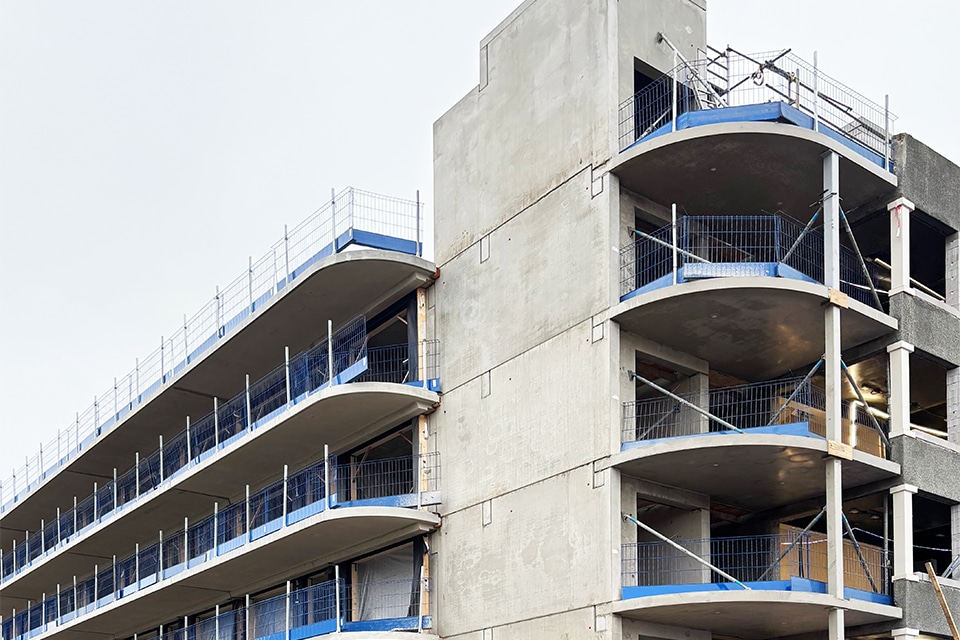
“It started in 2014 with a small, elongated plot of land measuring 30 by 300 meters between the railroad tracks and Waldorpstraat,” says De Ruiter. “That has since grown to over 75,000 square meters and 1,171 homes. A huge job, especially on such a cramped construction site.” Because hoisting over the railway tracks is not allowed frequently, the design team opted for a fully prefabricated construction system. The modules are produced in the Ursem Modulaire Bouwsystemen factory and assembled ready-made on the construction site. According to De Ruiter, this is not only efficient but also environmentally friendly. “You have much less transport and waste, and the work on site is limited. What's more, you can build much more precisely and to a higher standard in the factory.”
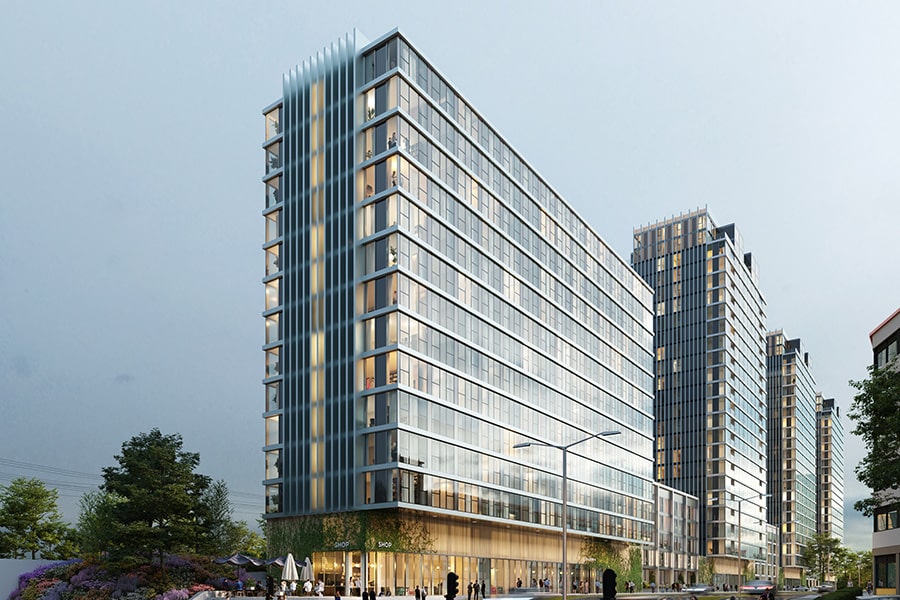
Waldorp Four consists of four residential towers, three with 22 floors and one with 13, connected by lower volumes containing homes, shops, and restaurants. The plinth has transparent facades and wooden slats, giving the 300-meter-long block a friendly appearance. “We wanted to avoid it becoming a massive wall,” says De Ruiter. “The horizontal lines and the abundance of glass create rhythm and light. And ZUS’s roof gardens literally bring air into the plan.”
The project is intended for a broad mix of residents: students, first-time buyers, and social housing tenants. “Each target group has its own type of housing and amenities,” explains De Ruiter. “For example, the student flat has compact rooms with shared spaces, while the Greystar towers have communal laundry rooms and a penthouse common room. The lower buildings have green roofs that serve as meeting places.”
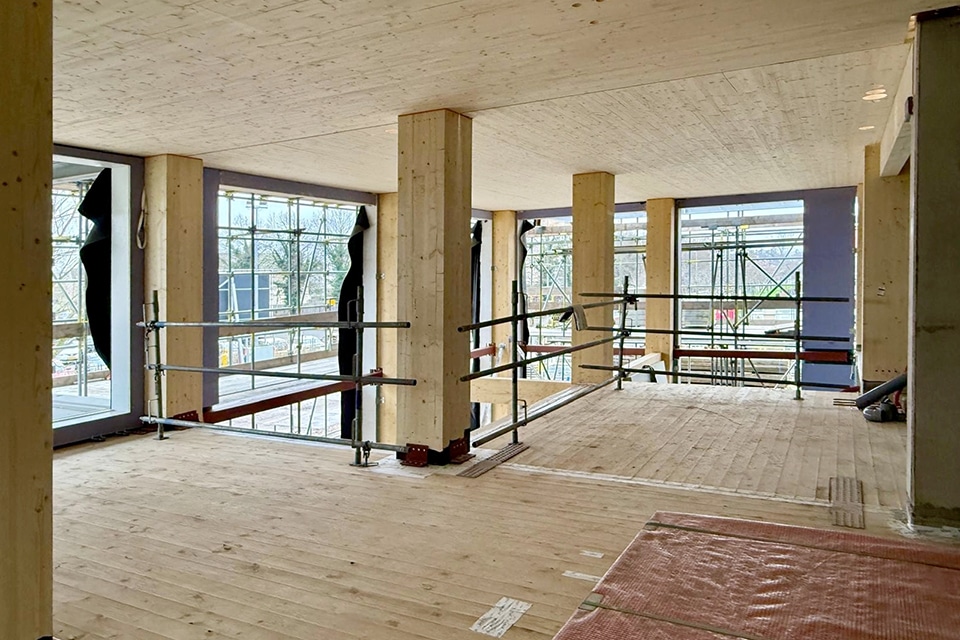
The fact that Waldorp Four is sustainable goes without saying at Paul de Ruiter Architects. The buildings will be equipped with thermal energy storage and energy-efficient installations, good for an A rating.+++ label. “We build with a wooden skeleton structure in the modules and use relatively little concrete. Nitrogen emissions also remain low because construction takes place in the factory,” says De Ruiter. “It’s a great example of how you can densify sustainably in a limited space.”
The design also focuses on light and comfort. Thanks to the floor-to-ceiling windows, residents enjoy a magnificent view of the city and plenty of natural daylight. In addition, the building contributes to the quality of life in the Laakhavens district, which will be transformed into a fully-fledged urban district in the coming years. Waldorpstraat, once known for its rough image, is becoming a lively city street that combines living, working, and leisure.
With its size and height, Waldorp Four is unique in the Netherlands. “It is one of the largest prefab buildings in the world,” says De Ruiter proudly. “You can't do that alone. We have a great team and together we are creating something that until recently seemed impossible: building high-quality homes just a few meters from the railroad tracks.”
Construction began in December 2024 and will continue until mid-2028. When the first residents receive their keys, Waldorp Four will not only be a new home for more than a thousand people, but also a symbol of how the Netherlands can build smarter. “Prefab and sustainable,” De Ruiter summarizes. “That's the future. And Waldorp Four shows that it can also look beautiful.”