Platform on new construction, renovation, restoration and transformation

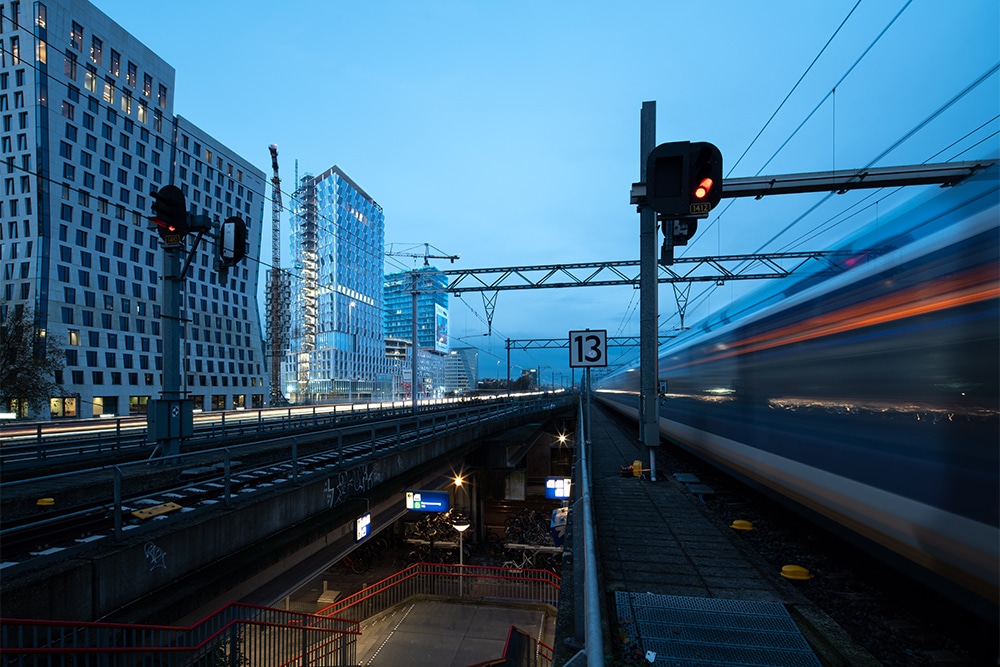
In the Kenniskwartier on the Zuidas, construction of The Pulse of Amsterdam will begin in the summer of 2021: a 58,000-square-meter multifunctional complex consisting of housing, offices, a cinema and hospitality. Sustainability is guiding both the urban infill and the design by architecture firms MVSA (offices) and VMX (residential tower). Work is expected to last until mid-2024.
The Pulse is being developed by VORM Ontwikkeling and EDGE and realized by VORM Bouw. The "first truly multifunctional building on the Zuidas," located between Amsterdam Zuid station and the VU campus, consists of two very different towers of about 80 and 90 meters high, "connected by a lower building section, including an urban forest at a height of 35 meters," says project architect Jeroen Schilder of MVSA.
The Pulse has 151 medium-price rental units and 49 free-sector rental units, including 10 garden lofts and nine penthouses. Most of the mid-rent housing is in the 21-story West Tower. The taller East Tower contains 24 floors and 36,000 sq. ft. of offices. The lower floors house, among other things, a cinema with nine theaters, various types of restaurants (2,000 sq. ft.) and a small 350 sq. ft. supermarket. "Because of the noise from the railroad and the A10 on the north side, we placed the office building on this side. This makes The Pulse a real visibility location for office users - multitenant with freely divisible floor areas of up to 3,000 m² - and creates a noise-free rear area for residents," Schilder continued. "We made the plinth as open and inviting as possible and carefully positioned all the entrances. The offices and supermarket are located on the east side facing the busy route from the station, and the residences on the west and south sides facing the sheltered and enclosed courtyard garden."
On the first floor, the community is laying out the courtyard garden. Here the emphasis is on meeting and relaxing. Between the towers, at a height of 35 meters, there will be an urban forest where nature is central and where people are guests. Green provides biodiversity and reduces heat and noise pollution. "Within the design team, which includes DELVA, we focused on viable greenery, a real urban forest at height," says Schilder. Energy is generated by solar panels on the facades and roofs. This makes the homes and offices completely self-sufficient and energy-neutral. "On the roofs there is relatively little space for panels, on the facades all the more. We solved this innovatively with bay windows that stagger, to which solar panels are mounted. In total, we were able to integrate 2,600 m² of the 7,000 m² of solar panels into the facade." Some of the facades are made of composite made from recycled PET bottles. "You would say a lot of preconditions, but this actually made us creative. Everything had to fall into place."
The mobility plan focuses on maximum use of public transportation, electric cars, bicycle and foot traffic. All 125 parking spaces in the parking garage are equipped with charging stations; about half are reserved for electric shared cars. The Pulse is thus developing into a sustainable, metropolitan biotope and will receive a BREEAM 'Outstanding' certificate upon completion. "The Pulse gives space to diversity on the Zuidas. This is not just a multifunctional building with a high sustainability target, but a beautiful piece of city with an urban forest that contributes to the green structure of Amsterdam," concludes Schilder.