Platform on new construction, renovation, restoration and transformation
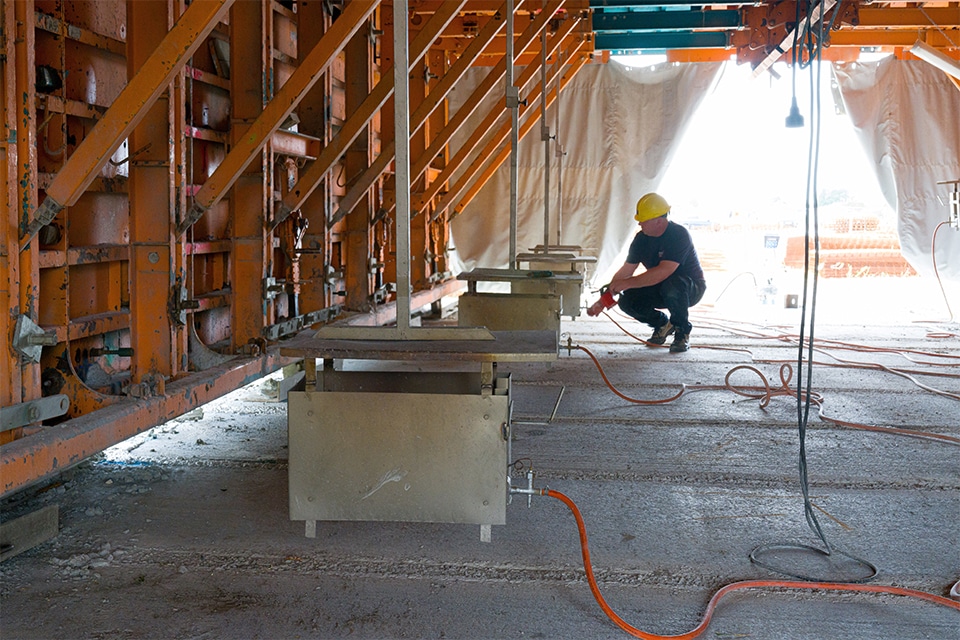
The Limes project in Oegstgeest is being constructed using the warm-cast method. For years, the cold-cast method was the standard, but stricter environmental requirements and a shortage of raw materials are causing a shift back toward the warm-cast method, according to Xander Schuite, director of Verboom Techniek. The company supplies the heating systems and determines when the concrete is strong enough to remove the formwork.
Cold-cast construction uses fast-setting cement with a high Portland clinker content. This has a high carbon footprint. In warm-cast construction, gas burners heat the concrete from the outside, allowing for the use of slower-setting cement. A Stufib/Stutech study shows that, even when gas consumption is factored in, warm-cast construction is more environmentally friendly than cold-cast construction.
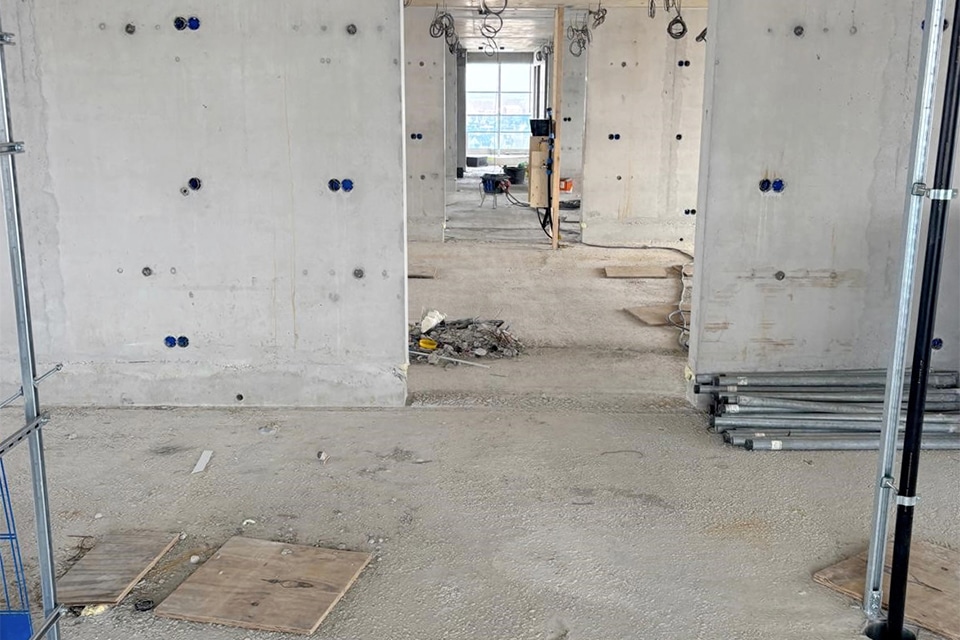
“For a long time, cold-cast construction was the preferred choice of many contractors because it was a simple solution,” says Schuite. “And the cement suppliers kept the mixes competitively priced. If you can achieve the required strength within fourteen hours without heating, that’s the most obvious choice.” But the raw materials for cold mixes are becoming scarcer and more expensive. At the same time, clients and municipalities are forcing contractors to consider emissions. “Major players like Waal and other leading precast concrete manufacturers are now taking hot-mix precast concrete seriously again.”
Three tunnel forms were installed at De Limes. Verboom equipped them with a heating system and mounting points for the sensors. The MCR-21 curing computer continuously measures the temperature and weighted curing progress of the concrete. Once the required strength is reached, the system automatically shuts off. Schuite: “This allows you to use gas as efficiently as possible while also providing proof that you removed the formwork at the right time.”
The data is available online. If there are any deviations, Verboom can make adjustments via the system or, in consultation with the concrete supplier, modify the mix. “For most contractors, we serve as an independent consultant on the paving process. It’s a great collaboration with site supervisors, structural engineers, and concrete suppliers.”
Placing a propane gas tank on a construction site requires coordination with the environmental agency. Rules regarding distances and safety are established at the national level, and municipalities may impose additional conditions. Schuite: “So far, we’ve always been able to work things out, but in urban areas, space is getting tighter and the rules are stricter.” Since 2020, Verboom has been working with gas supplier Robogas to better ensure safety and compliance with regulations.
Work at De Limes went smoothly. Schuite: “Waal is a great partner in that regard. There was plenty of space on the construction site, and the installation went smoothly.” Once the final concrete pour for the shell is complete, the tank and burners will be removed, and construction can continue.