Platform on new construction, renovation, restoration and transformation
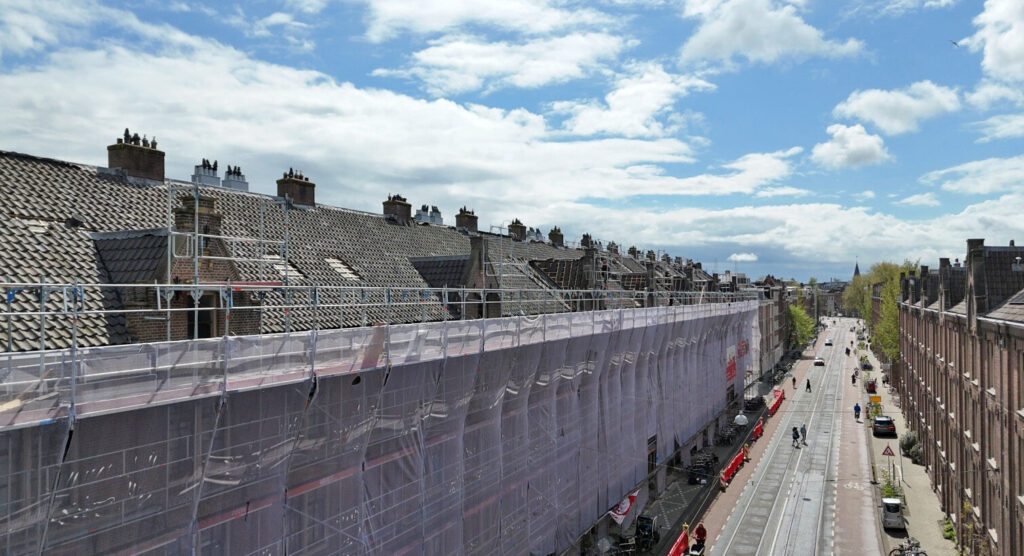
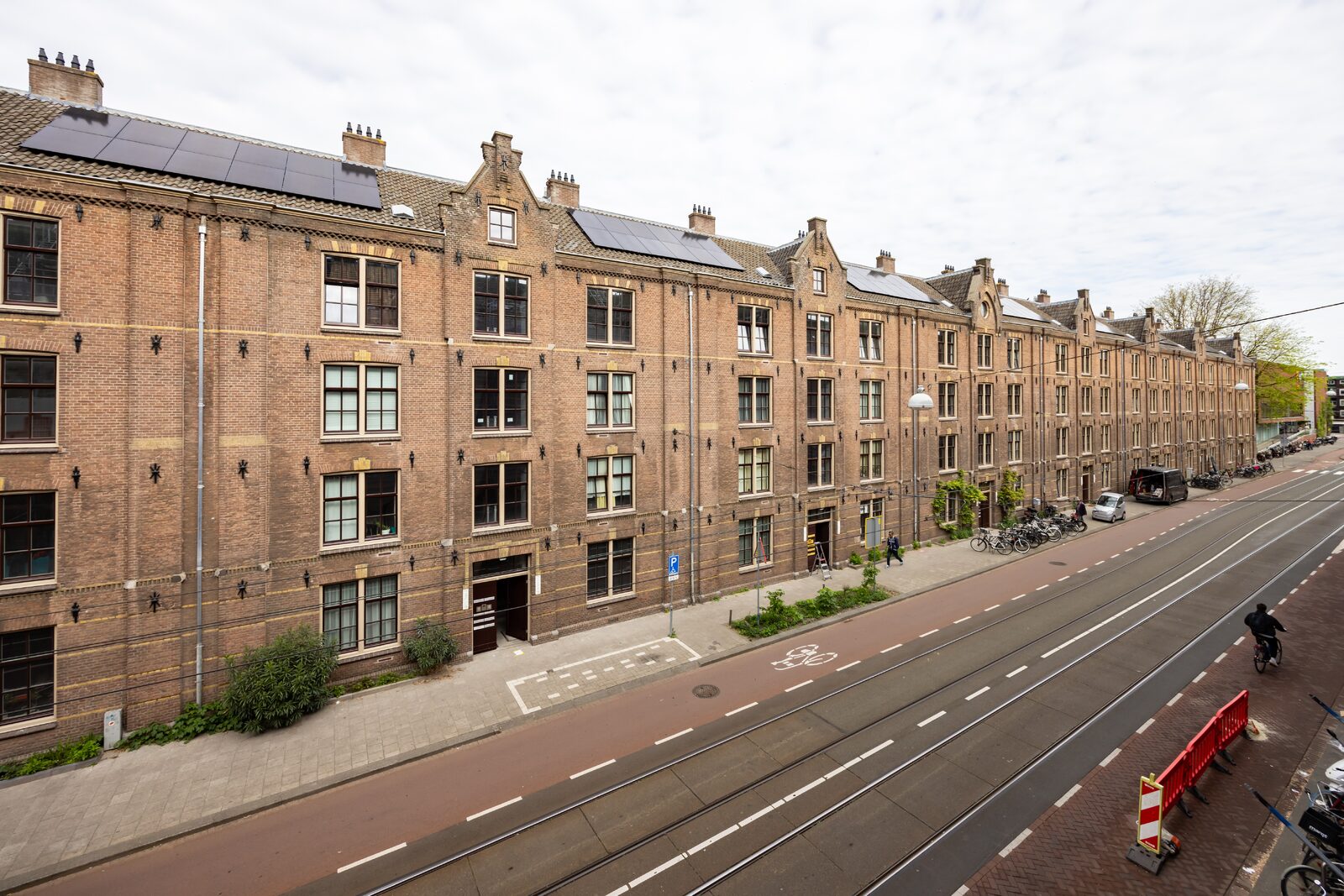
Restoring a historic facade begins at ground level, but the real work only becomes apparent when the restorer is right up close to it. On Marnixstraat in Amsterdam, MMBS was faced with masonry that had deteriorated in numerous places, unique anchoring systems, and a fairly complex scaffolding project. Careful observation, meticulous assembly, and then restoration to its original state formed the basis for nearly a year and a half of skilled craftsmanship.
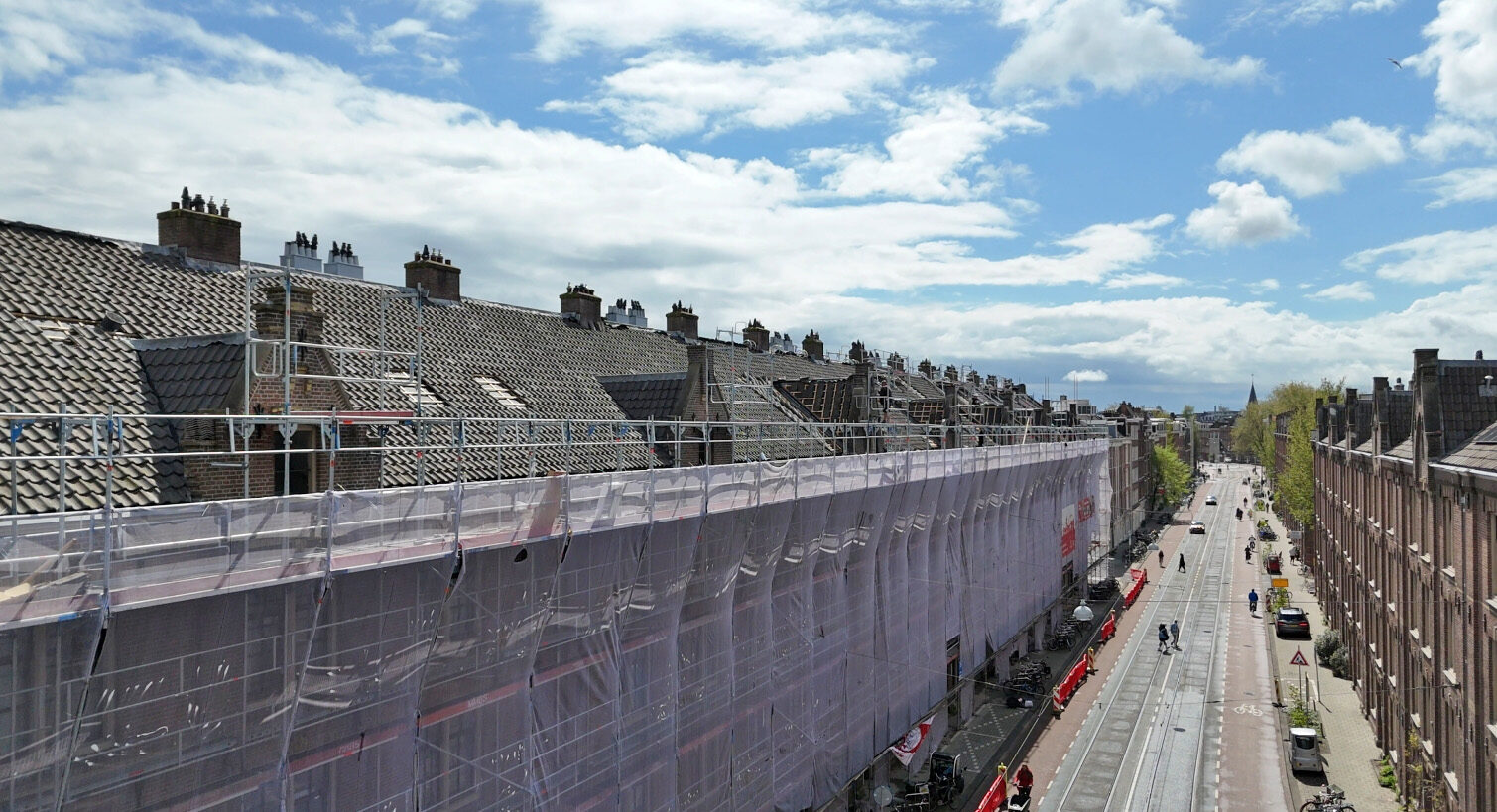
MMBS provided all the scaffolding for three building blocks. “That amounts to a total of over 12,000 m² of scaffolding to erect and dismantle, considering that the average scaffolding area per block is about 4,500 m²,” says Nick van der Kraats, project manager at MMBS.
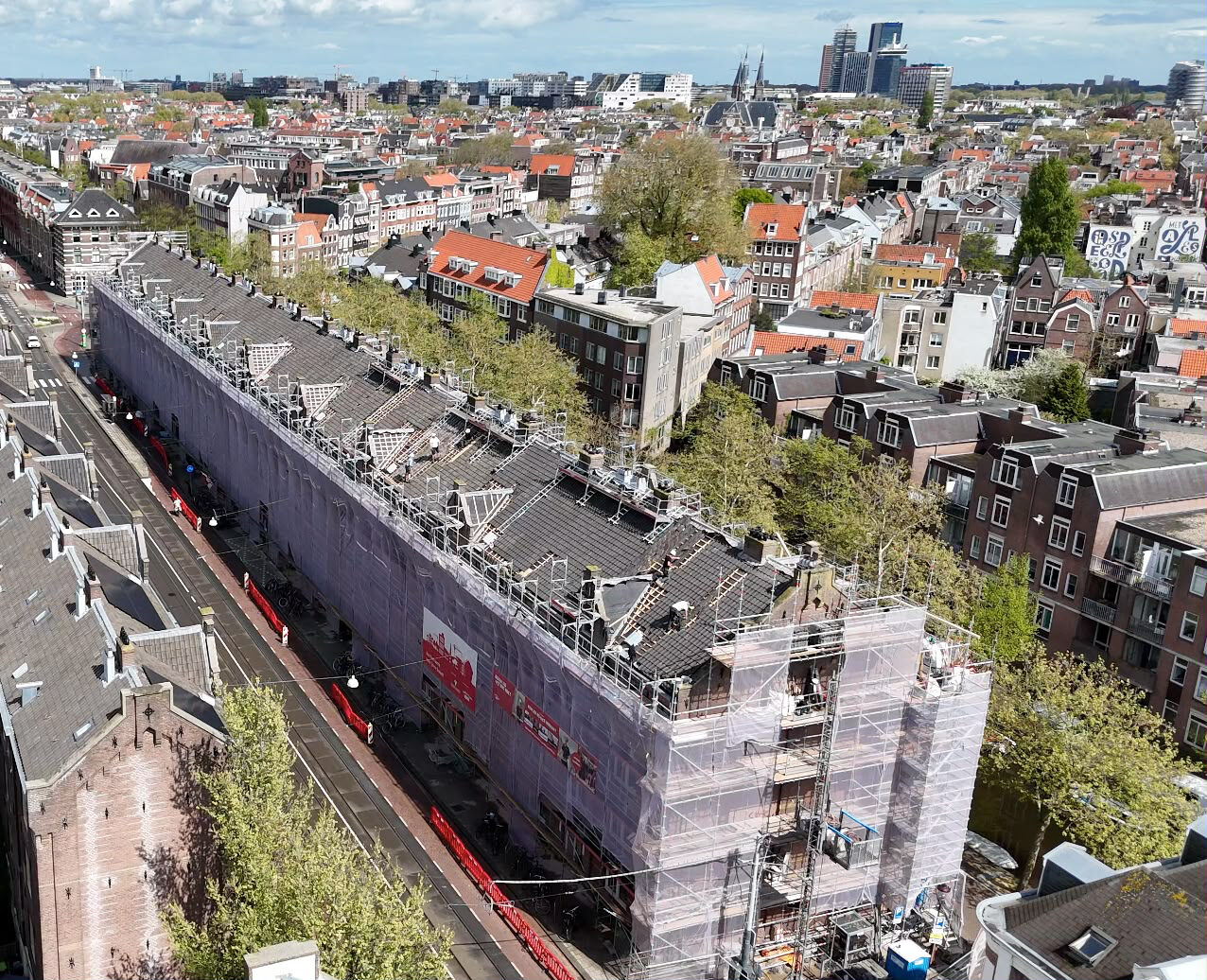
An Allround scaffold was used on the end facades; on the front and rear facades, MMBS opted for so-called Blitz scaffolds with an additional extension on the top level. “Because of that extension, extra attention was paid to stability and anchoring in the scaffolding design. Added to that was the presence of the tram overhead wires, which are attached to the facade via anchor points,” says Van der Kraats. “We built the scaffolding around these anchor points and then shielded them with formwork. Additional safety measures were also implemented, including grounding the scaffolding. Furthermore, the scaffolding was fully equipped with safety netting, and we installed safety barriers on the first level as extra protection against potentially falling debris and tools. Finally, we also enclosed the chimneys within the scaffolding.”
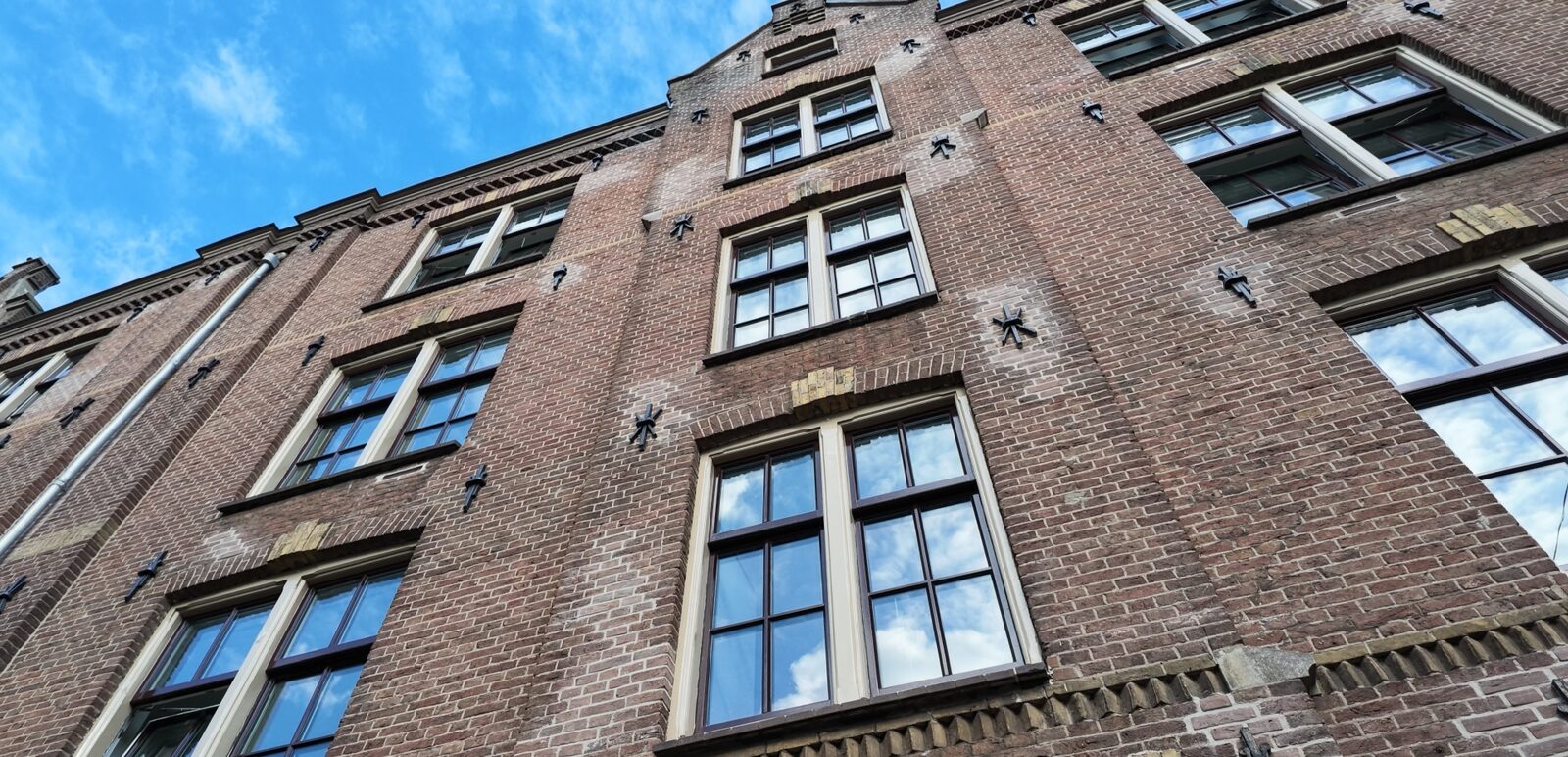
The facades themselves also required extensive restoration work. “Cracks were chiseled out and filled, and where necessary, reinforced and re-anchored,” explains Van der Kraats, adding that particular attention was paid to the facade anchors, window frame anchors, and blind anchors embedded in the masonry. “We completely exposed, treated, and preserved them. The anchors were wrapped in an acid-free grease tape, and the surrounding masonry was then repaired.” To restore the masonry, MMBS evaluated various samples for structure, hardness, and color. “Where possible, existing bricks were reused. Damaged bricks were replaced with ones that match the originals as closely as possible. We also applied a patina layer using natural pigments to the new bricks, so that their appearance blends in with the existing work.”
Finally, MMBS also repaired the grouting in certain areas. “Over the years, various repair techniques have been used with different mortars and joint types, including flat and cut joints. We’ve restored everything as closely as possible to its original state,” says Van der Kraats. “That’s also our strength. Sometimes details only came to light on the scaffolding that weren’t visible from ground level. We have the knowledge, experience, and craftsmanship in-house to provide a sound solution even in those cases, one that does justice to the past.”