Platform on new construction, renovation, restoration and transformation
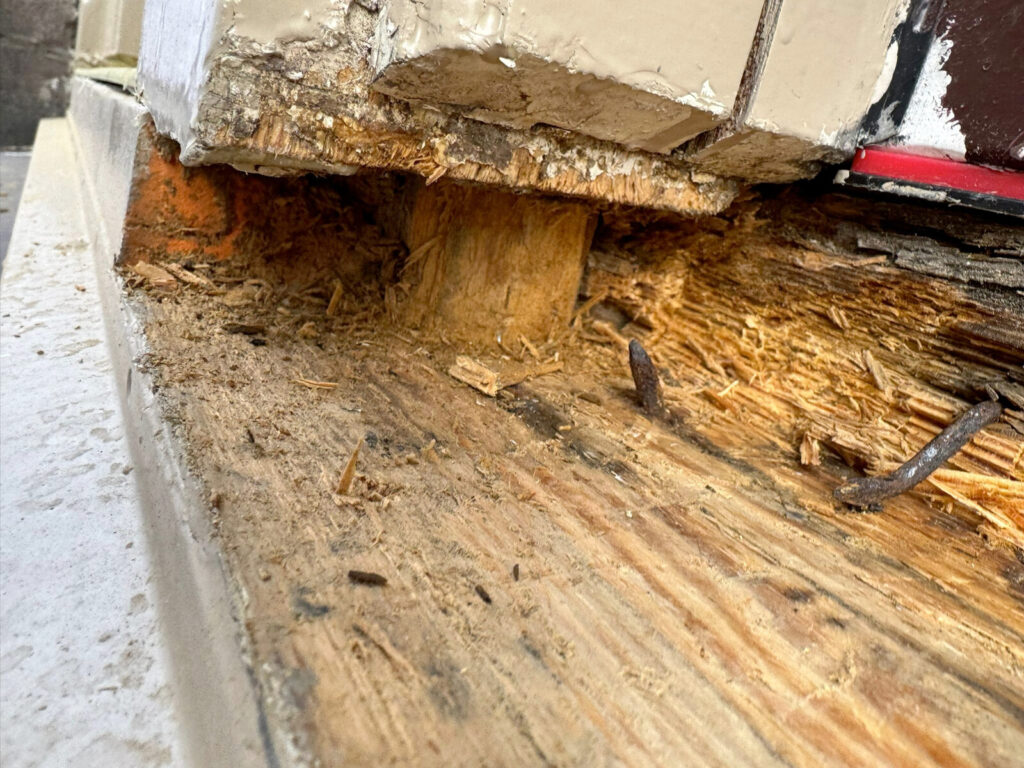
Good painting work involves more than just applying a new coat of paint. This is especially true for the 280 homes on Marnixstraat in Amsterdam, where the painting is part of a major renovation and a return to the original facade design. Sema Schilders & Onderhoud was given every opportunity here to put its craftsmanship into practice.
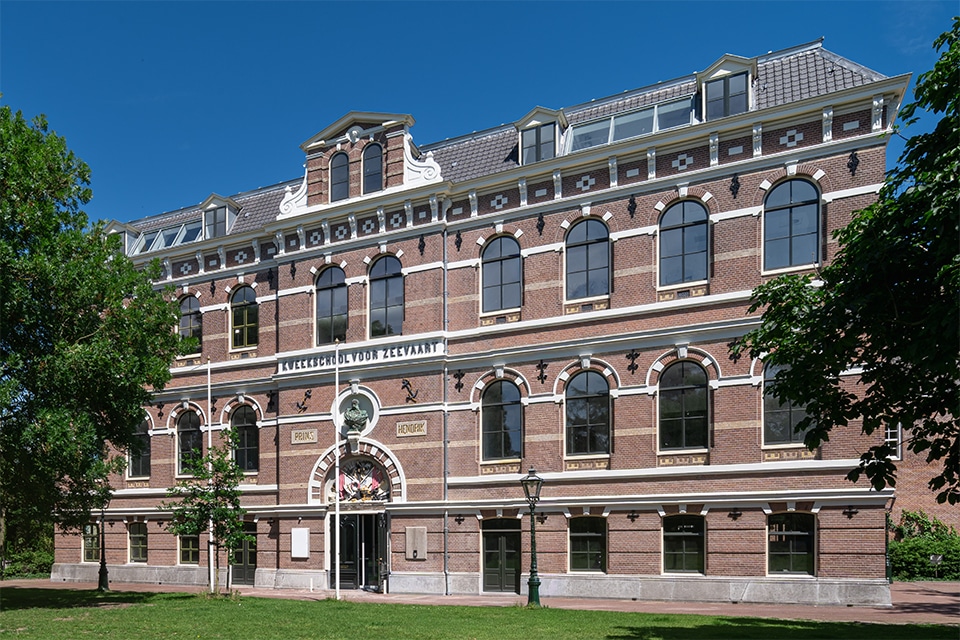
The 280 social housing units on Marnixstraat date back to 1876. In the 1970s, the buildings were fitted with aluminum window frames, which caused a significant portion of the original facade to be lost. Nijhuis Bouw replaced these with wooden frames featuring the characteristic small panes. Sema Schilders & Onderhoud was tasked with restoring the entire complex to its historic color scheme. In addition to the window frames, the doors, roof moldings, and wall anchors were also painted.
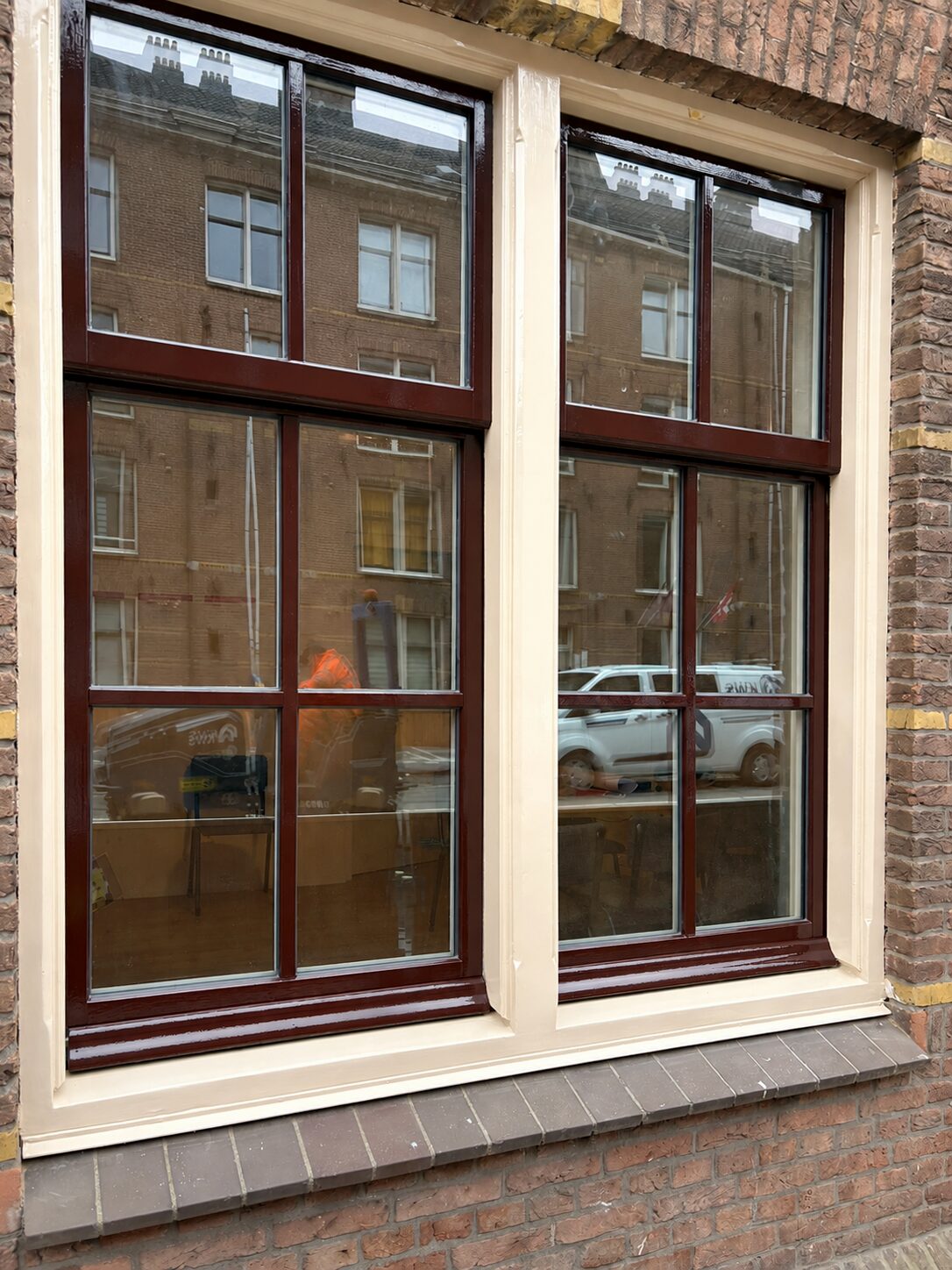
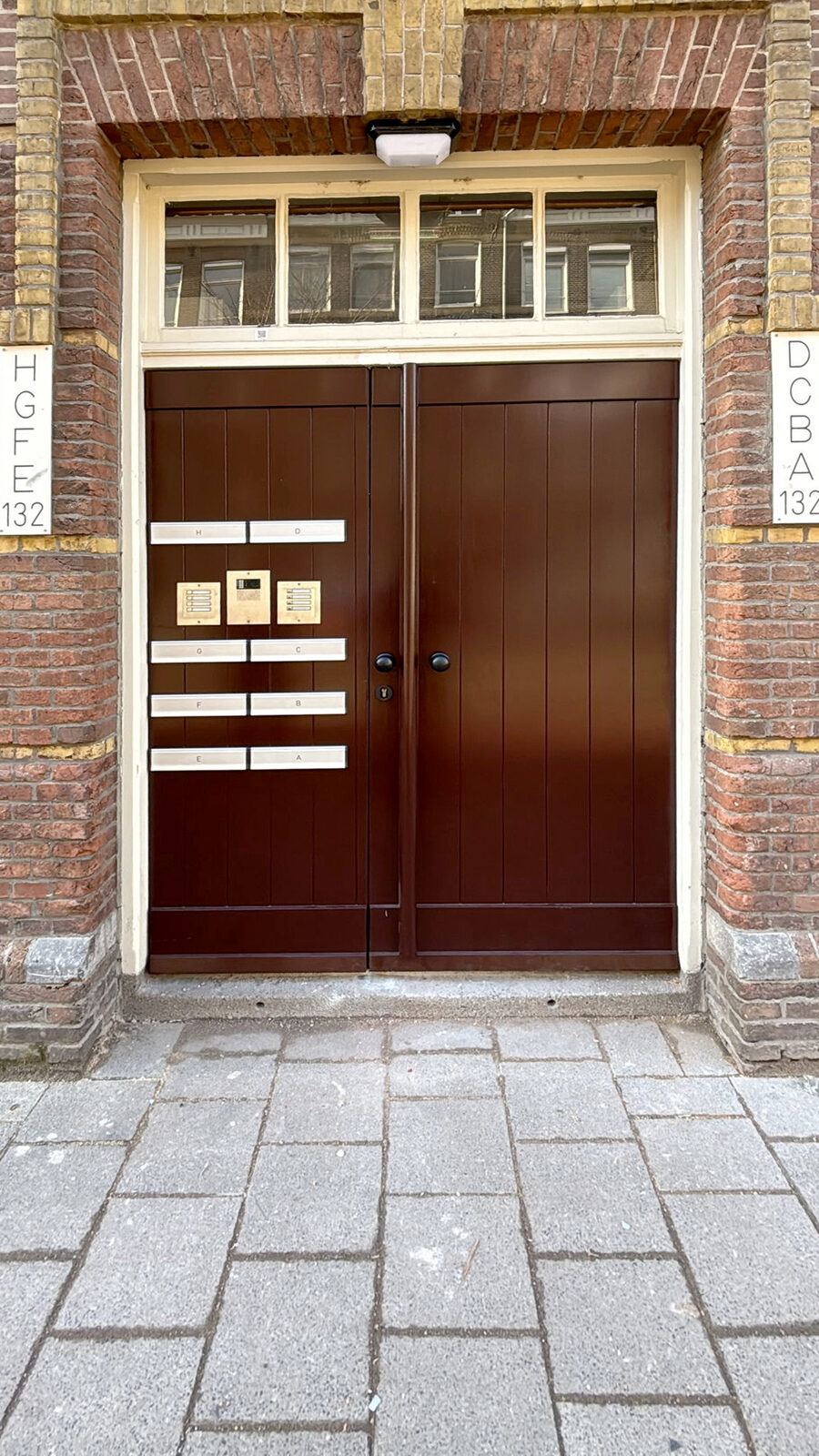
“The first step was a pilot project at the end of 2024,” says Marco Spaans of Sema Schilders & Onderhoud. “That was primarily intended to work with the municipality and the Historic Preservation Office to determine how the building’s original appearance could be restored. Initially, based on color analysis, we opted for dark green moving parts and orange-colored fixed parts. However, that turned out not to be the final solution.” Additional research shed further light on the paint history of the facades. “A color specialist scraped away various layers of paint with a scalpel and discovered a completely different color combination in the oldest layer: dark brown moving parts and fixed parts in a soft yellow/beige shade. Those historical colors ultimately became the guiding principle,” says Spaans.
The light-colored base had to be changed to darker colors in various places. “The rotating parts were delivered from the factory in white, after which they were primed twice and painted on site. Attention was also paid to the detailing: the exterior was sealed in black and the interior in white to prevent strong color contrasts for the residents.” “A neutral white color was deliberately chosen for the interior,” explains Spaans, adding that Sema also applied a scrub class 1 latex system to the fire-resistant ceilings in the kitchen, bathroom, and entryway.
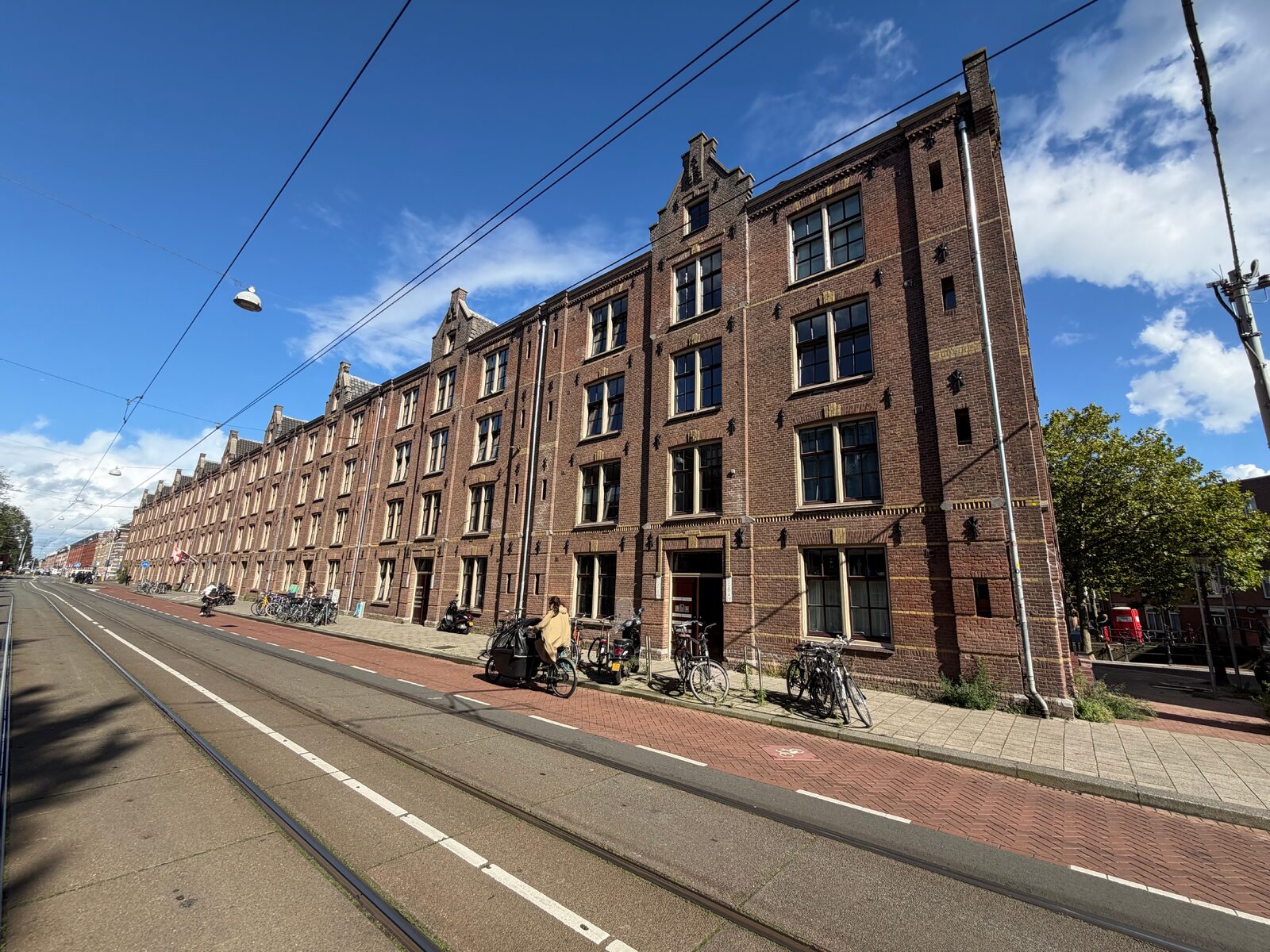
On a project of this scale, different disciplines literally work side by side. “That calls for flexibility, especially when work overlaps or when unexpected additional work arises,” Spaans reflects. “We made a conscious decision to prioritize consultation rather than strictly defining responsibilities. Together with Sigma, we also developed a technical painting recommendation, which we used to guide our work. This ensures that the various systems are compatible with one another, both technically and in terms of warranties.”
About a year had passed since work began in August 2025. Throughout the project, Sema typically had six to eight painters on the job. According to Spaans, the project involved more than just the painting work. “Thinking along with the client, taking the pressure off them, and stepping back when necessary to ensure the collaborative process runs smoothly—that’s where we make a difference. And we can safely conclude that we succeeded quite well here. Marnixstraat has regained its original facade appearance with its historic color scheme. As a relatively small player, we’re incredibly proud to have been able to contribute to such a prestigious project in downtown Amsterdam.”