Platform on new construction, renovation, restoration and transformation
The construction of The Green Arch places high demands on everything below ground level. CRUX became involved in late 2018 as a geotechnical consultant and made an essential contribution to the design and implementation of the tunnel's passage through the regional flood defenses, earthworks, structures and temporary structures.
CRUX worked intensively on the project on behalf of main contractors BESIX, Dura Vermeer, Van Oord and TBI from the preliminary design. “We started in the VO with a team of six consultants and remained closely involved from the beginning,” says Johan Zwaan, senior specialist and partner. “Our focus from the DO was on subareas 2 and 3, which included the Rottemer Tunnel, ground bodies, adjacent structures and auxiliary bridges. Colleagues also worked together in subarea 1, which runs roughly from the A13 national highway to the northern exit of the Rottemer Tunnel.”
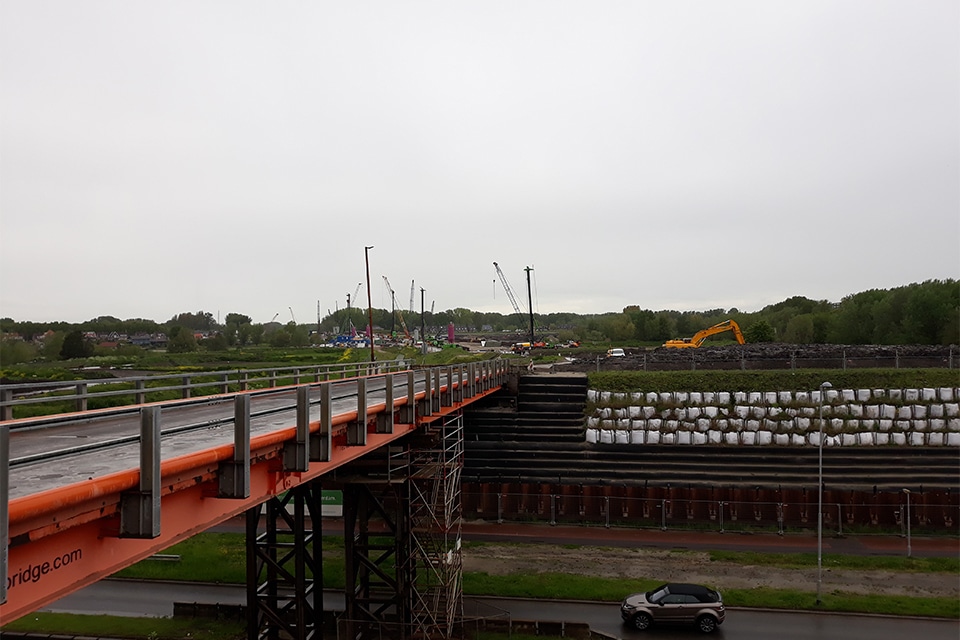
Among other things, the tunnel crosses the Rotte and the Vaart Bleiswijk canal. “Ground bodies had to be constructed on top of and alongside these, as well as bicycle paths, temporary artworks and the renovated Lage Bergse Bos, all of which interacted with the construction of the tunnel,” explains Michel de Koning, senior consultant geotechnical engineering. “Because the dikes of the Rotte and Vaart Bleiswijk rivers function as regional flood defenses, stability and water safety were crucial. And because the work took place right next to residential areas, environmental impact also had to be kept to a minimum.”
The soil conditions made the work extra challenging. “In subarea 2, we encountered one of the least load-bearing and variable soil structures we have ever seen,” De Koning said. “We had a lot of additional research done so we could make sufficiently reliable designs based on that.” For example, the subsurface contained sand lenses, which affect groundwater levels and had to be mapped in detail with additional research. Such details can make the difference between a robust and a risky design.
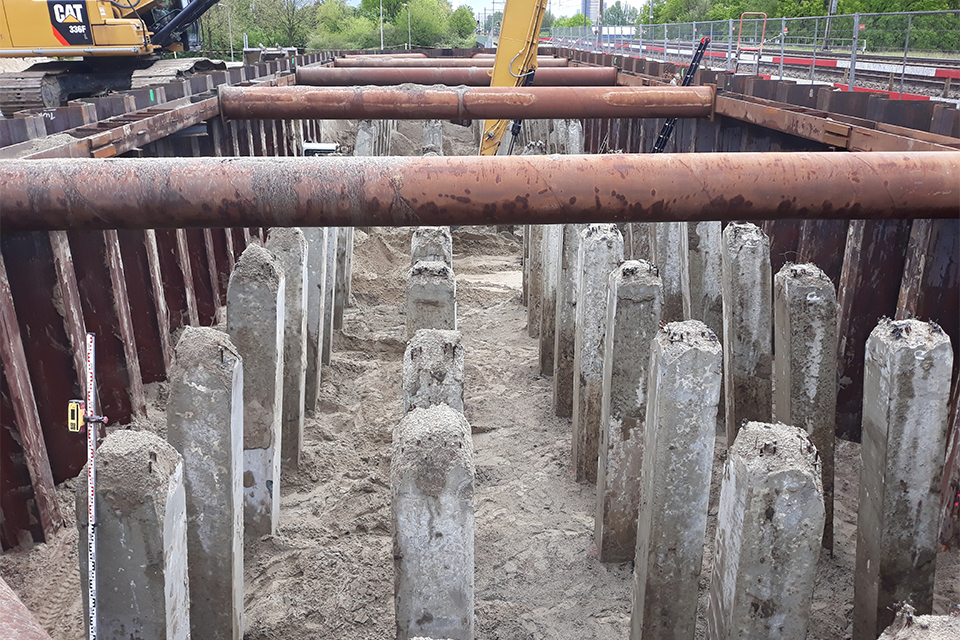
In subarea 3, CRUX designed, among other things, a pile mattress on which the 450-meter flyover was slid over the A20. “This required a precise combination of abutment, pile mattress, sheet piling, temporary construction roads and final embankments,” says Zwaan. “The work of raising, installing piles and building the foundation piers had to be carried out largely in parallel, which placed high demands on the coordination of phasing, mutual influence of the structures and project coordination.”
Also special was the daily coordination with the combination and Rijkswaterstaat during the corona pandemic. Zwaan: “There was a lot of digital consultation, in which we had to quickly process the progress of the work, monitoring data, risks and design changes. CRUX's role was both advisory and collaborative: we translated complex subsurface and monitoring data into feasible designs.”
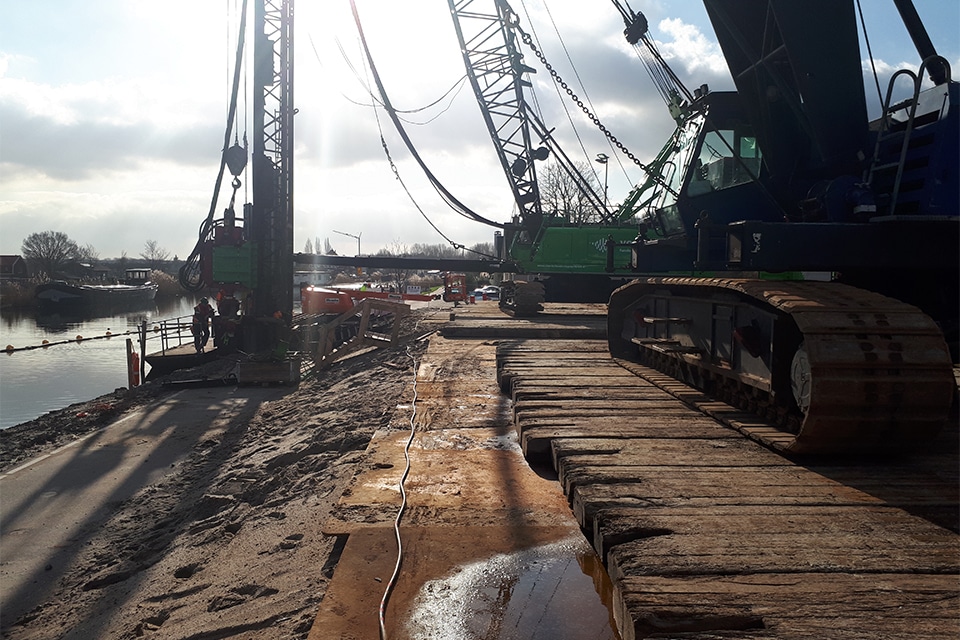
CRUX was also actively involved during implementation. “Among other things, we designed the working platforms for foundation equipment, based on a new guideline that was being applied here on a large scale for the first time,” says De Koning. “In combination with the weak subsoil, this provided quite a design and implementation challenge.”
With a broad expertise in geotechnical engineering, geohydrology, environmental impact and soil improvement techniques, CRUX delivered well thought-out solutions for a complex subsurface. Zwaan: “A feasible design with an eye for the environment. That is where our strength lies.”