Platform on new construction, renovation, restoration and transformation

Global market leader and manufacturer of solutions for flue gas extraction and ventilation M&G is relocating its two current locations in the northern Netherlands to a single new site at Assen Zuid business park - a green 'working landscape' along the A28 motorway. Borghese Logistics is realizing a total of approximately 39,500 m² of logistics real estate here according to a design by Mies Architecture. "In cooperation with HollandsGroen, the ensemble was designed completely nature-inclusive," says architect Michel Richter. The project was completed in December.
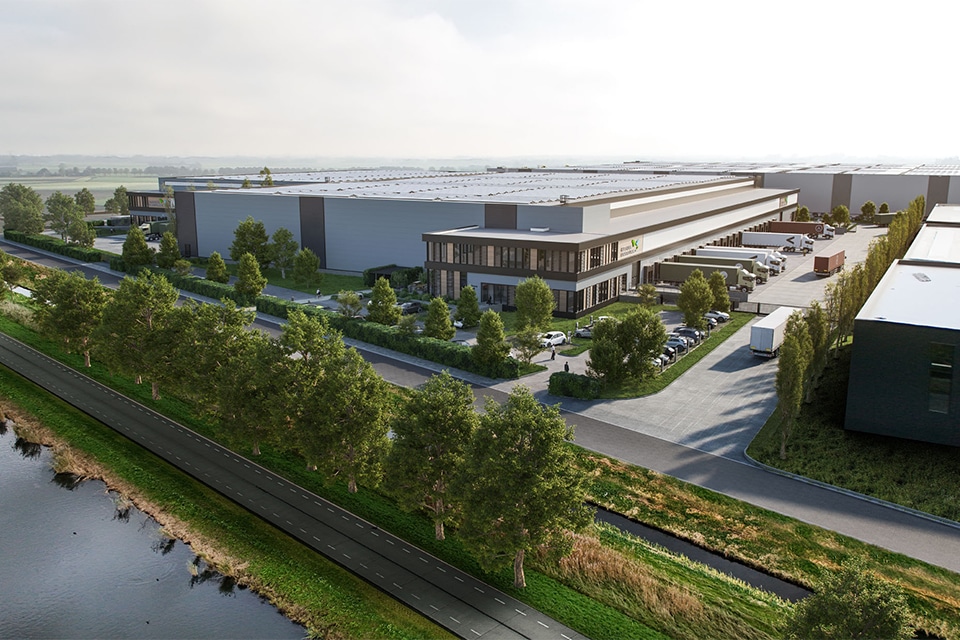
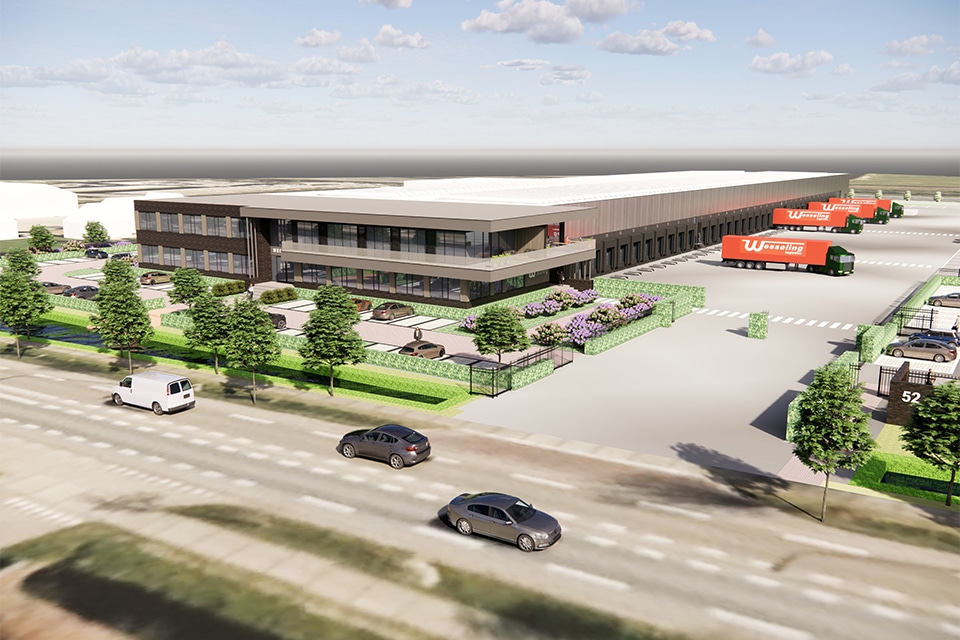
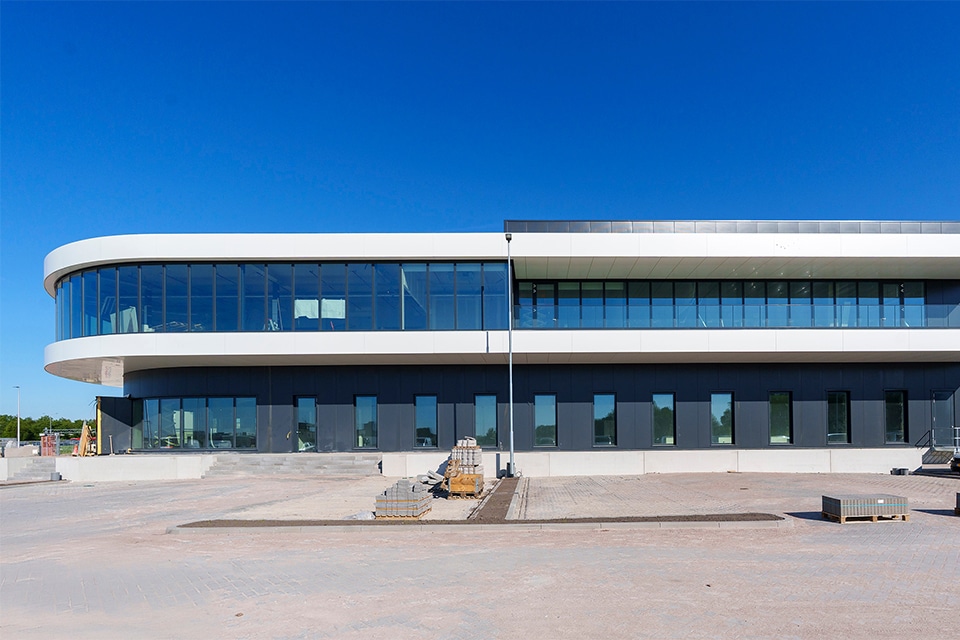
The production site for M&G includes an assembly section and a section with loading docks and logistics, with a striking office building on the entrance side. On the highway side, the complex features green screens that provide a different look each season. Partially ribbed sandwich panel facades are finished ton-sur-ton in two shades of gray. "The office is relatively large in volume for a DC complex. We designed it as an independent volume and executed it in a coarse, black-brown brick that clearly accentuates the lines," Richter says. "With jumps in the facade, we express the various components of the ensemble, including approximately 30% green facades that respond to the experience of the highway."
The entire surrounding area has been addressed to meet the ambitions, so that the concept of "sight location in greenery" desired by the municipality of Assen is embedded in the overall picture. The result is that all requirements are met with a high level of ambition, from use to architectural incorporation and ecology. "For the latter, think of bee hotels, reduction of heat stress through the use of racks of greenery and the landscape integration of the parking lot."

Part of such an approach was the need to reconcile the Program of Requirements with all stakeholders in advance, while of course maintaining all ambitions. The latter is no sinecure, but a challenge with this type of building. Richter: "A challenge we are happy to take on to the fullest extent, with full respect for other requirements, such as realizability in time - important for client and executing parties with such a large volume." To this end, traditional DC grid dimensions were used in the base, combined with the construction methods and materialization usual for this type of building, such as a steel structure with partly sandwich panels.
This was complemented by an adaptable interior, green facades and a timeless finishing material such as brick. "In this case we were even able to take into account future use, a wish from the owner/developer, and worked here together with well-known parties, HollandsGroen and Pleijsier Bouw, who can switch efficiently in this kind of process." Constructor and installers were able to fully participate in a Revit design environment. This allowed all attention to be paid to detailing, with Mies as the lynchpin of the architecture. "We are quite proud of that," concludes Richter.