Platform on new construction, renovation, restoration and transformation
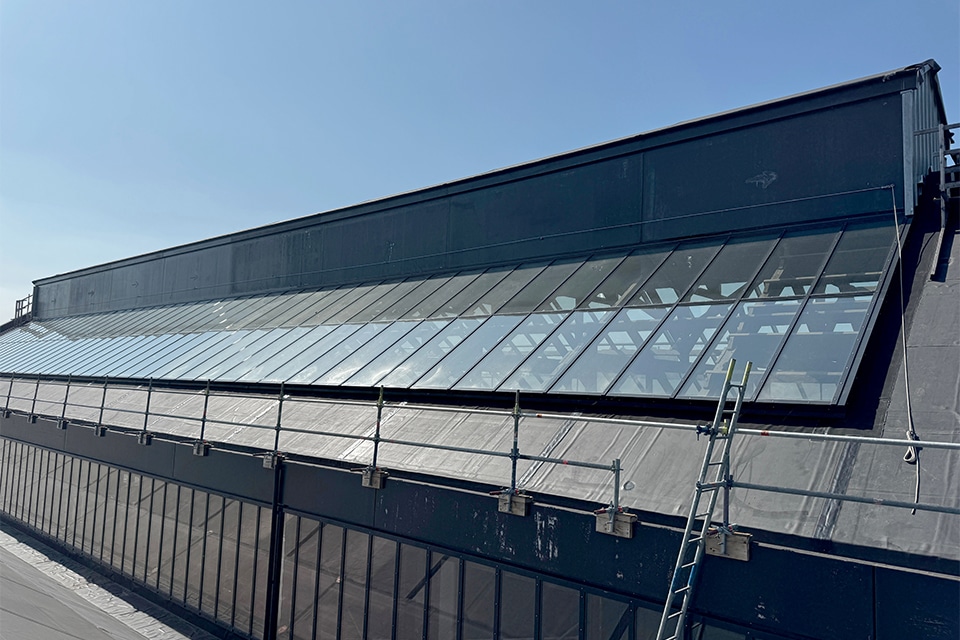
Holland Composites played a crucial role in the renovation of the Van Gendt Hallen. The specialist in composite solutions produced and supplied no less than 15,000 m² of Duplicor® roof elements, which combine six important project principles: excellent wind and water resistance, excellent fire resistance, high thermal insulation, low weight, a 100% natural base and restoration of the monumental character of the buildings.
“With our Duplicor® biocomposite material, we carried out a high-quality renovation of the monumental roofs of all five factory halls,” says Sven Erik Janssen, general manager of Holland Composites. “As a result, the Van Gendt Halls are assured of optimal wind and water tightness up to 1,000 Pa.” As in many monumental buildings, the roof renovation in Amsterdam East was a complex task. Partly because of the ever-aging wooden and steel truss structures. “By working with our structural and lightweight Duplicor® roof elements, these truss structures are stressed as little as possible.”
In addition to the light weight, the appearance and processing capabilities of Duplicor® were decisive. Thus Holland Composites succeeded in restoring the original building profile with the historic ‘steam hoods’, without putting too much strain on the supporting structure. “The steam hoods were prefabricated in our factory in Lelystad into a kind of houses, which were put on the new building roofs just-in-time and ready-to-use,” says Janssen, who immediately names another advantage: the thermal insulation value. “Our sandwich panels use a foam core made from recycled PET bottles and old plastic packaging, which guarantees excellent thermal insulation value. Moreover, the fire resistance of Duplicor® is unique, which is why the Van Gendt Hallen even received approval to mount solar panels on top of the monumental buildings.”
Duplicor® is an innovative and biobased composite material manufactured from a 100% natural resin. “The resin is manufactured from crop residues (corn and sugar cane) and combined with glass fibers and/or natural fibers such as flax, jute or hemp,” Janssen says. “An innovative combination, which is very good for the environment. Not for nothing is Duplicor® included in the National Environmental Database.”
Project Van Gendt Hallen is one of the first projects to use the innovative Duplicor® composite elements. “We greatly appreciate the trust we have been given to put our product on the map here,” Janssen concludes. “The result is amazing.”