Platform on new construction, renovation, restoration and transformation
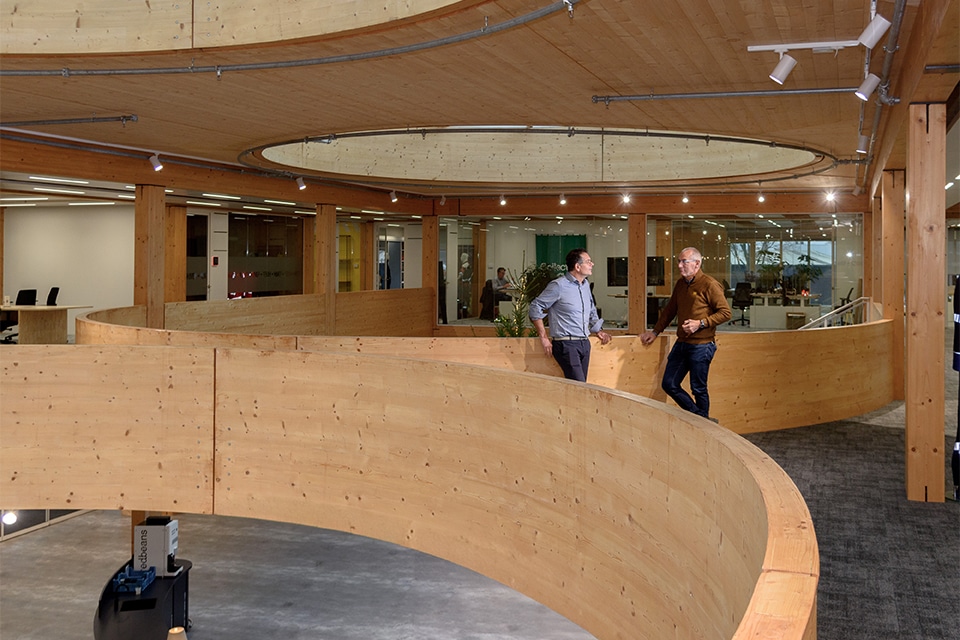
Wood construction, and in particular the use of cross-laminated timber (CLT), is on the rise. However, its application also presents challenges, especially in high-rise projects and complex structural forms, where specific fire safety requirements apply. A thorough understanding and the right approach are crucial to guaranteeing the safety of residents and protecting buildings, assets, and the environment.
Wood is easy to work with, has an excellent strength-to-density ratio, is corrosion-resistant, and is aesthetically appealing. It is no surprise that this material is popular for use in construction. However, wood also has two fundamental disadvantages: it requires constant maintenance and it burns. As the global market leader in passive fire protection, Promat offers technical advice and various solutions with fire-resistant boards and fire-resistant coatings to fully meet the fire safety requirements in wooden buildings.
Wood is generally classified as fire reaction class D-s2,d0 according to EN 13501-1, which means that it is highly flammable and can contribute significantly to the development of a building fire. To limit the risk of fire starting and spreading, the material must be properly protected. For this purpose, Promat offers PROMADUR®: a transparent, solvent-free, water-based coating that foams up in the event of fire, protecting the substrate from contact with air (oxygen). This reduces the flammability of wood. Solid wood, chipboard, and plywood protected with PROMADUR® comply with fire reaction class B-s1,d0 according to EN 13501-1, the highest achievable fire reaction class of protection with a reactive coating. Thanks to the excellent transparency of PROMADUR®, the natural beauty of the wood is preserved.
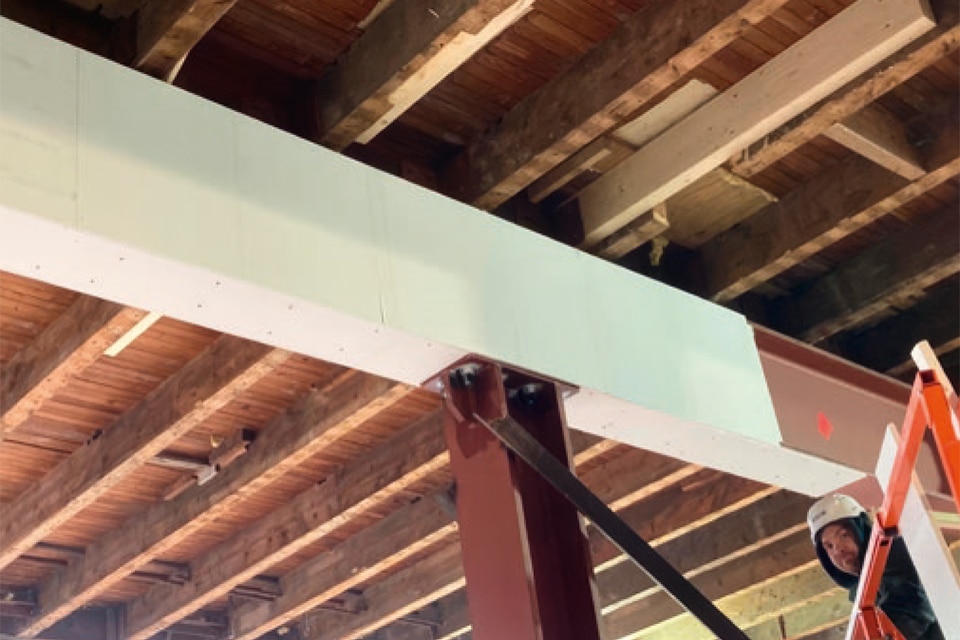
The fire resistance of wooden load-bearing structures can be calculated in accordance with EN 1995-1-2. When wood is exposed to fire, the wood surface ignites. Gradually, a charred layer forms, which becomes thicker as the wood burns. The charred material slowly loses its strength until the wooden element can no longer bear the load and collapses. Especially in renovations, the wood section of load-bearing wooden elements is often insufficient to guarantee the necessary fire resistance, which means that the elements must be protected. Promat offers two board materials (PROMATECT®-100 and PROMATECT®-XS) and a fire-resistant coating (PROMADUR®) for fire resistance up to R 120 and even more.
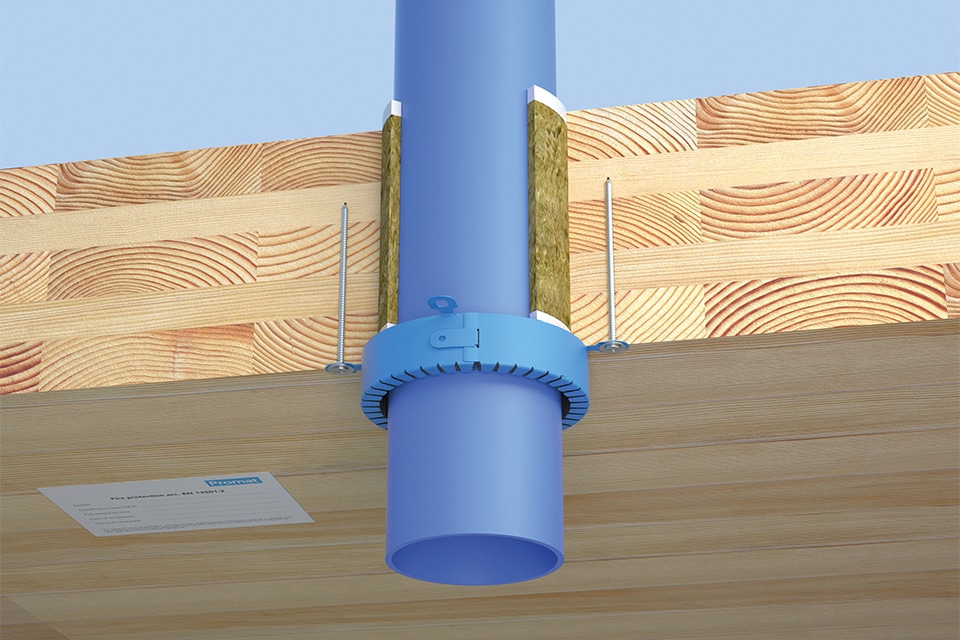
Effective compartmentalization in wooden buildings is vital to prevent the spread of smoke and fire. Promat offers solutions for horizontal and vertical compartmentalization, as well as fire stopping solutions for fire-resistant penetrations and joint seals. The products demonstrably comply with the relevant fire safety standards and even exceed them, providing reliable protection.
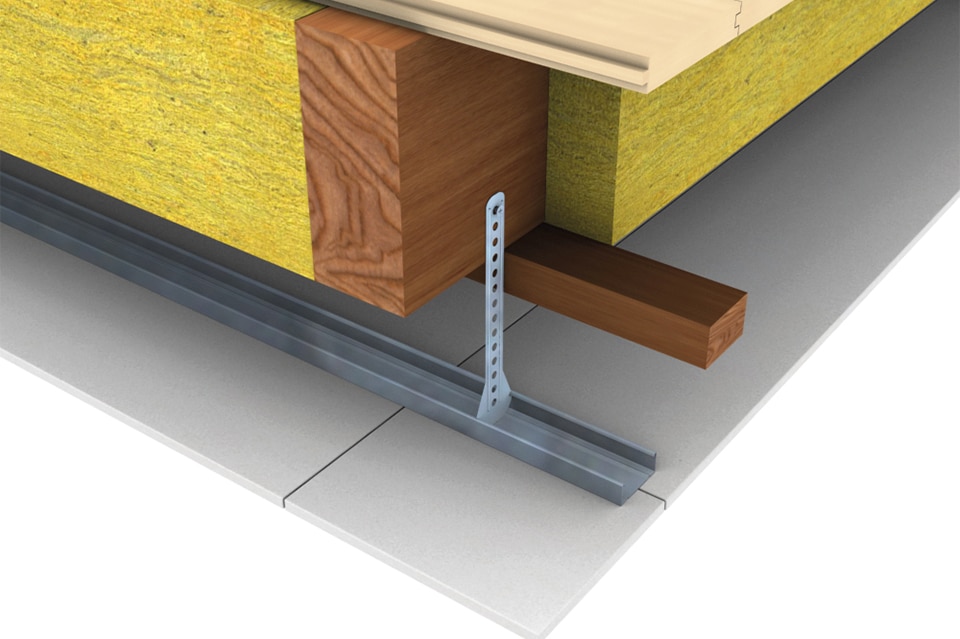
The function of wooden floors can be compromised on both the underside and the upper side in the event of a fire, making effective protection essential. In practice, the construction of wooden floors can vary greatly, due to different types of floorboards, dimensions, and center-to-center distances between beams and insulation materials. Promat offers solutions for fire resistance ratings up to REI 120 for fire attacks on the underside and top side of the floor, which are applicable in most practical scenarios.
Wooden roof structures are also particularly vulnerable when exposed to fire and often need to be protected in order to maintain the compartmentalization and load-bearing capacity of the structure. Promat offers solutions for classifications up to REI 120 with PROMATECT®-100 boards that are attached to steel profiles.
The connection between a load-bearing (timber frame) wall and a wooden roof is important in order to comply with the WBDBO requirement. Promat offers solutions with PROMATECT®-100 boards for creating connections between load-bearing timber frame walls and sloping and flat roofs for fire resistance of up to 30 minutes.
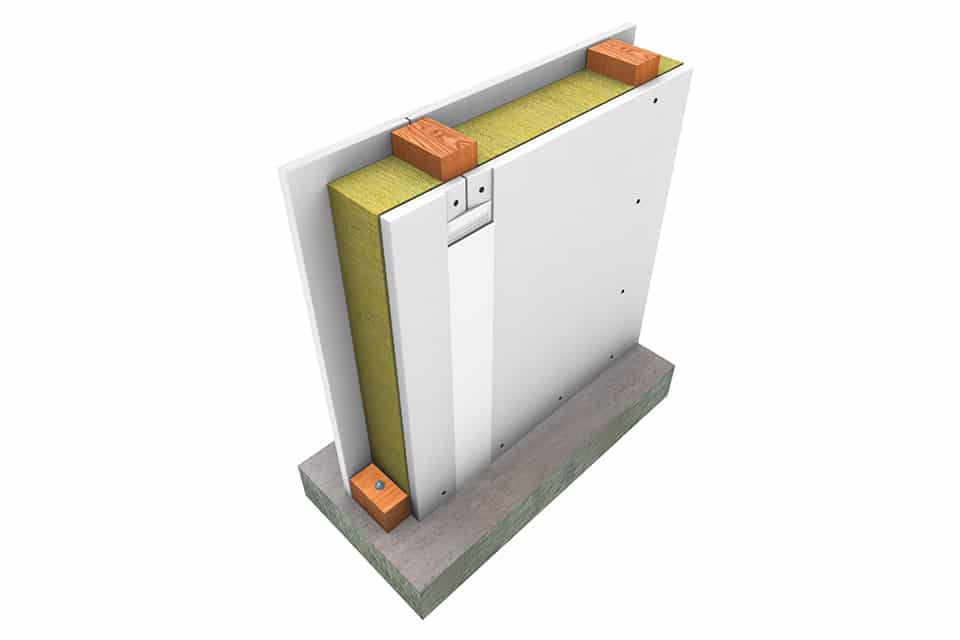
Fire-resistant walls often need to be installed in both new and existing buildings for compartmentalization purposes. Sometimes timber frame walls have a purely compartmentalizing function (EI classification, tested according to EN 1364-1), while in other situations walls must also meet the R criterion (load-bearing capacity – REI classification, tested according to EN 1365-1). Promat offers solutions with PROMATECT®-100 and PROMATECT®-H boards for timber frame walls with a classification up to EI/REI 120.
Systems for closing openings in fire-resistant partition walls or shafts can usually only be installed on one side. Promat offers solutions for shaft walls on wooden stud and batten frames for fire resistance ratings up to EI 120. The wood is protected against fire from the plate side. If there is a risk of fire from the shaft, the wood must also be clad on the inside. The same applies to new buildings, where the Bbl (Building Regulations) sets requirements for the fire class of the material on the inside of a shaft.
The complexity and continuous evolution of timber construction require the ongoing development of new solutions. Promat is committed to developing reliable solutions that respond to market developments and specific project-related needs. The focus here is primarily on modular construction, hybrid wood-steel structures, CLT structures, and fire protection solutions that preserve the aesthetic appeal of wood.
Neem dan rechtstreeks contact op met Promat.
 Contact opnemen

World class passive fire protection solutions Promat is a commercial brand of Etex, within the Building Performance division, and is known as a global manufacturer of fire resistant calcium silicate boards, fire resistant intumescent paints, fire resistant spray mortars and a wide range of Fire Stopping & Fire Sealing products. Promat is the brand dedicated to passive fire protection. Passive [...]
Bekijk Bedrijfsprofiel