








Sustainable, 100% electric welfare unit for Versluys Groep: step by step towards the smallest possible CO2 footprint
Text Lieke van ZuilekomPhotography Top Systems / Inge Jansen
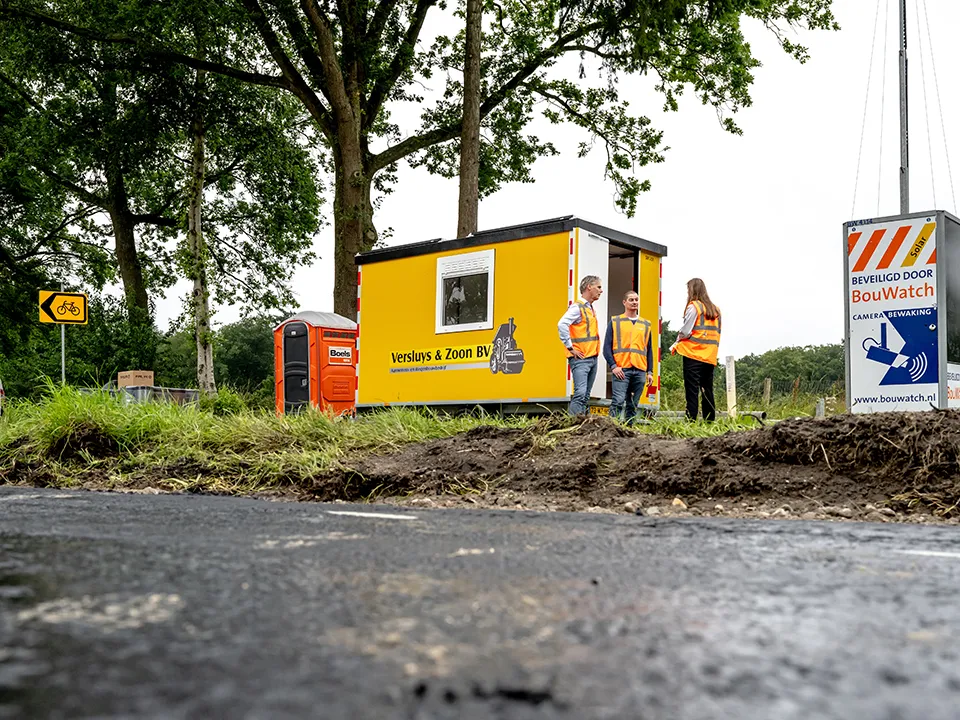
With the 2050 climate targets in sight, construction, building services and infrastructure companies are taking increasing steps to make their equipment and machinery more sustainable. Versluys Groep is also placing a strong emphasis on electrification. Following the introduction of an electric roller and several electric loaders, this road construction and maintenance specialist has recently put its first 100% electric welfare unit into service. Top Systems handled the engineering, supply and commissioning of the complete energy system.
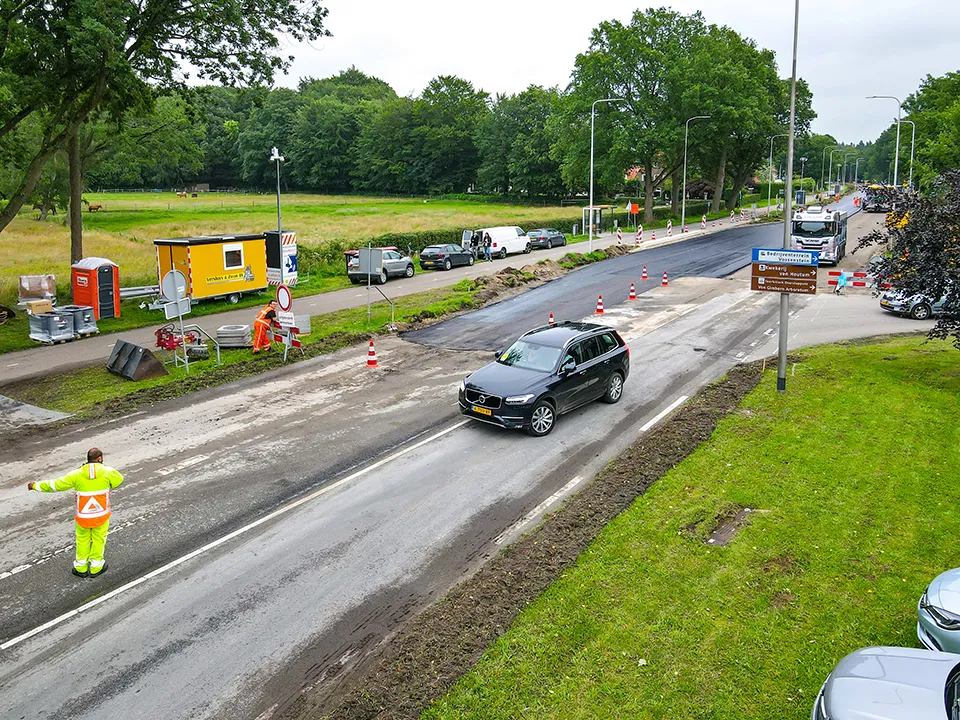
Versluys Groep is a family business founded in 1898, primarily engaged in shaping public spaces in Hollands Midden. This includes road construction and maintenance, as well as road-marking projects, traffic engineering and traffic management. “In addition, our stake in an asphalt plant gives us an important role in asphalt production,” says managing director Patrick van Wijngaarden. “We mainly work at municipal and provincial level, sometimes in collaboration with other SMEs. Sustainability plays an important role in all our projects. Alongside our intrinsic motivation to work sustainably and in an environmentally friendly way, this also enables us to respond to the wishes and requirements imposed by the government and other clients. By positioning ourselves as a sustainable contractor, we also want to be an attractive employer for both existing and prospective employees.”
Sustainable initiatives
“We feel responsible for the individual wellbeing of our employees,” stresses Van Wijngaarden. “This has led to various sustainable initiatives in recent years. In October 2020, we became the first infrastructure company in the world to introduce an electric roller. We also have several electric loaders. Our roof is covered with solar panels, which we use to charge our small electric equipment. The latest addition is a sustainable, 100% electric welfare unit. We will also be electrifying our management unit in the near future. Wherever possible, we use low-temperature asphalt mixes based on linseed oil, as well as a stabilised semi-permeable surface (Gravilyn) for walking and cycling paths, made exclusively from natural ingredients. We are also currently assessing the potential of hydrogen-powered vehicles for transporting asphalt and an electric asphalt paver, with the aim of continuing to reduce our CO2 footprint.”
Zero-emission welfare unit
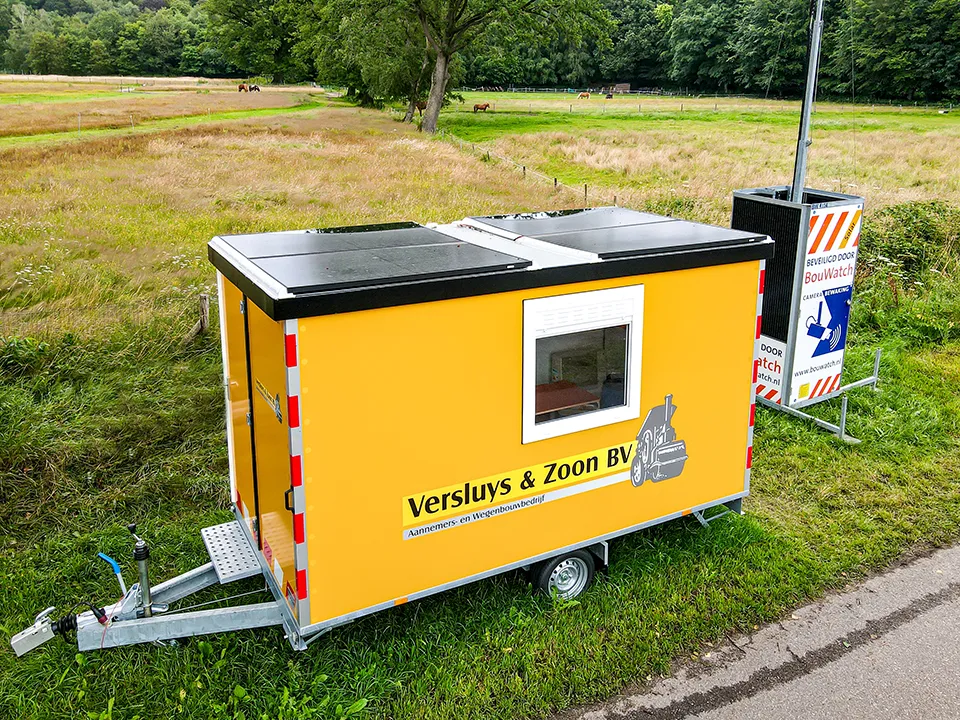
Working with as many local companies as possible fits perfectly with this ambition. “The electric welfare unit is a good example,” says Van Wijngaarden. “Like us, Top Systems is based in Bodegraven. The company also has an excellent reputation in the market for its advice and supply of energy systems. Our aim was to have a zero-emission welfare unit. We discussed this at length with other SMEs and, on their recommendation, approached Top Systems. We bought a small welfare unit measuring 4.10 x 2.76 metres. Top Systems then designed a bespoke energy system, which we installed in the unit ourselves using clear installation diagrams.”
Clean Air Agreement
The 100% electric welfare unit is being used, among other places, on projects for the Province of Utrecht, where Versluys Groep maintains roads in the eastern part of the province. “A sustainable welfare unit had been a long-standing ambition, but the Province of Utrecht tender accelerated its development,” says Van Wijngaarden. On 13 January 2020, the Province of Utrecht signed the Clean Air Agreement together with 36 municipalities and 9 other provinces. The agreement aims to reduce emissions of particulate matter and nitrogen oxides from road traffic, mobile machinery, agriculture, shipping, industry and households. “The Clean Air Agreement builds on existing policies such as the Climate Agreement and the nitrogen approach. It aims to halve the health damage caused by air pollution by 2030, compared with the 2016 baseline year,” explains Wim Dekker, Project Manager at the Province of Utrecht. “That is why the use of sustainable, low-emission equipment and machinery is actively encouraged and rewarded on all our projects. This includes electric cars, road-building machinery and small equipment, as well as the 100% electric welfare unit.”
The energy system
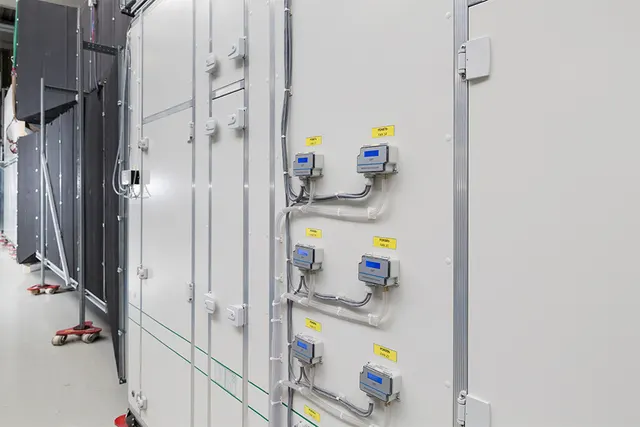
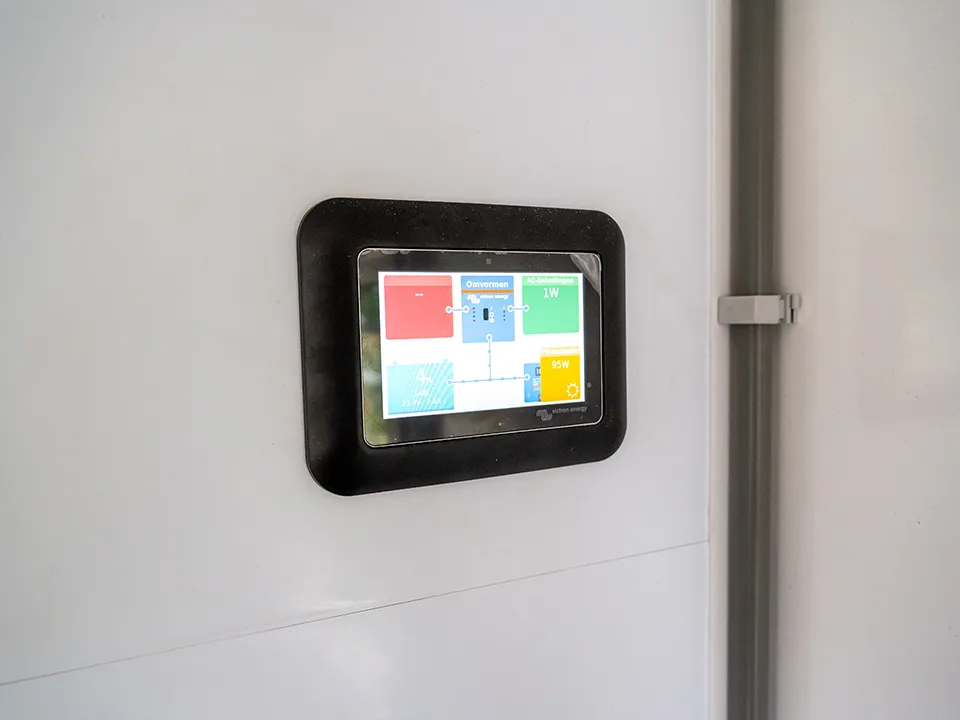
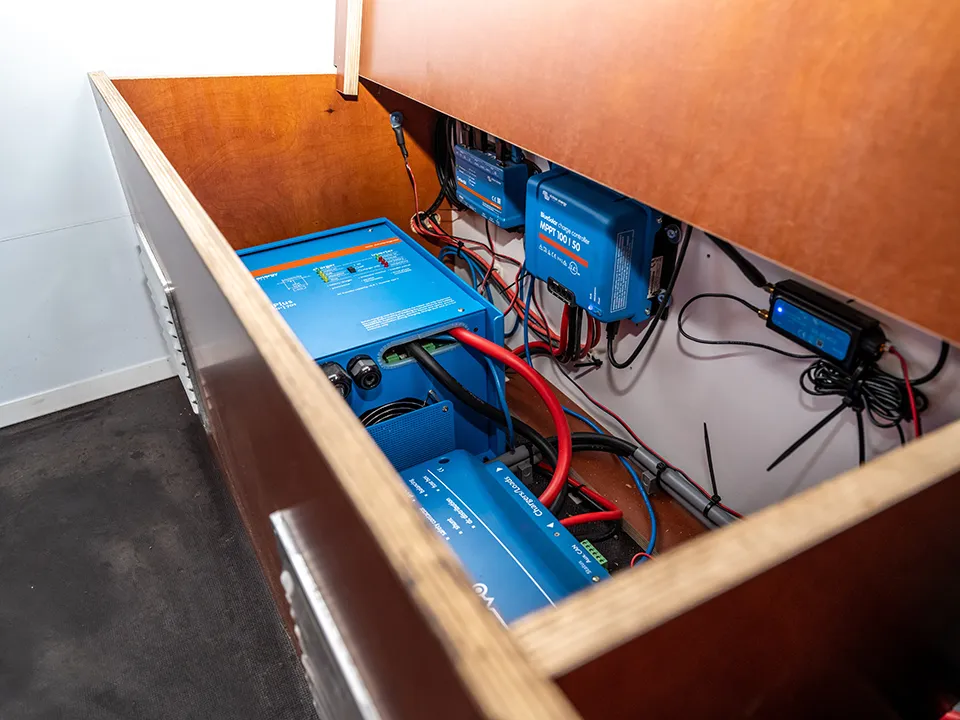
Versluys Groep put the electric welfare unit into service in early June. To provide enough power for appliances such as the coffee machine, lighting, laptops and batteries for electric hand tools, Top Systems developed a bespoke energy system. “At its heart is an advanced Victron MultiPlus inverter-charger with an input voltage of 230 VAC / 24 VDC and an output of 3,000 VA / 2,400 W,” says Ronald van den Berg, Construction, Building Services and Infrastructure Sector Specialist at Top Systems. “The MultiPlus has a power input for a generator or mains supply and is connected to a 5 kWh lithium-ion battery from MG Energy Systems. The battery system is protected and monitored 24/7 by an MG Master Battery Management Controller, preventing overcharging, excessive discharge and excessively high or low temperatures. The Battery Management Controller also ensures the battery is properly balanced and tracks key parameters such as battery status and energy consumption. A Victron Cerbo GX communications module provides control and monitoring, while a Victron Cerbo GX Touch 50 touchscreen control panel displays all values in real time. The welfare unit is also equipped with a mobile Victron GX GSM 4G modem, allowing the values to be easily read and monitored remotely via the Victron Remote Management portal.”
Sustainable energy generation
“Four 330 Wp solar panels have been fitted to the roof of the welfare unit using plastic spoilers. They charge the lithium-ion battery during the day,” says Van den Berg. “A Victron BlueSolar MPPT solar charge controller converts the sustainably generated solar energy into the correct charging current for the battery.” A generator is also connected to the 230 Volt input as a backup, says Van Wijngaarden. “However, we did not need this backup during our first project in Doorn, even though the welfare unit was used day and night! We are very pleased with the system. In future, when our existing welfare units need replacing, we will also switch to 100% electric for those. Our next sustainability project, though, is our management unit. Top Systems is designing, supplying and commissioning the systems for that as well. We have been very pleased with the collaboration. Communication was direct and questions were answered quickly. Materials and advice were also provided promptly.”
A business enquiry for Top Systems B.V.? Get in touch
Companies in this story
Keep following this
Get an email when a new story is published. No account needed.
- SubjectInnovation & technology
- CompanyTop Systems B.V.