Platform on new construction, renovation, restoration and transformation
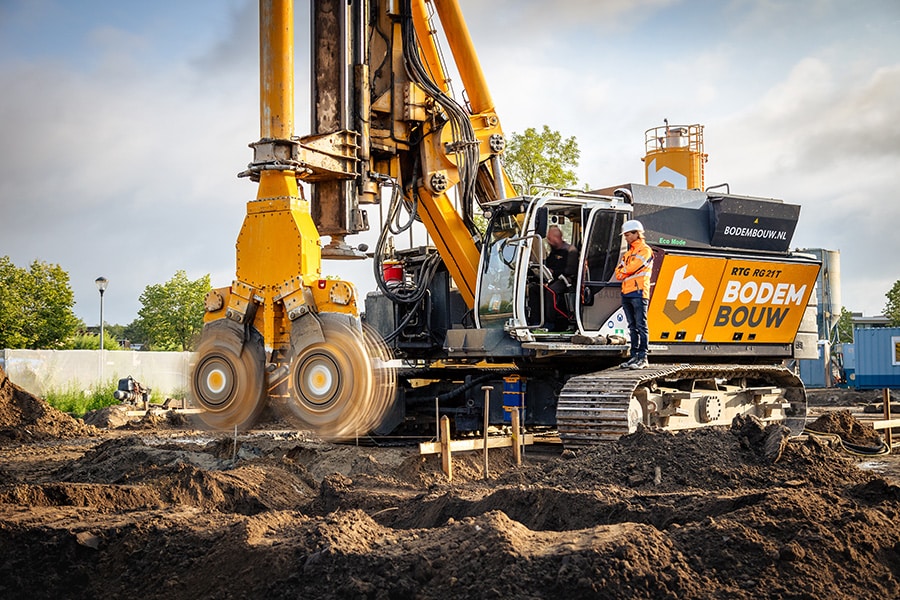
Using pile caps for foundations offers the construction industry countless benefits. For example, CO2 and nitrogen emissions, material consumption, and construction lead times are significantly reduced, according to Djordy van den Eijnde, project manager at BodemBouw. “Yet this technique still doesn’t get the attention it deserves. General contractors and regulators still too often stick to the well-known and accepted traditional pile foundations. However, given the challenges we face today, we can’t ignore more sustainable alternatives. We really need to assess the required bearing capacity on a project-by-project basis. What does nature provide? How good is the soil? How much reinforcement is needed? And which techniques are available to reinforce the soil slightly, moderately, or significantly? Which technique is best suited for the specific foundation or excavation pit?
Van den Eijnde still sees foundation piles being used far too often—even in relatively good sand layers. “In this case, many soil layers are bypassed that could also contribute to the structure,” he explains. “Although the traditional approach ensures safety, it puts sustainability at risk. Clients are faced with unnecessarily rising costs, longer construction times, higher CO2 and nitrogen emissions, and a great deal of waste of raw materials. And that’s a shame, because with the right reinforcement, the overlying soil layers can also be utilized.”
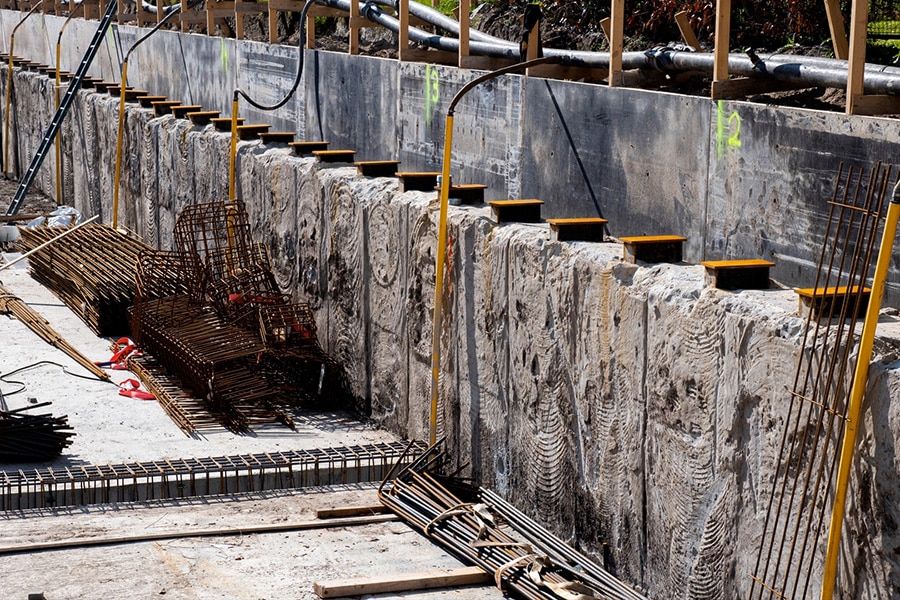
Using BodemBouw’s CutterSoilMix (CSM) technique, the existing subgrade is effectively and vibration-free mixed with a cement mixture, thereby providing it with lasting reinforcement. “We then create blocks (piles) measuring 2.40 meters by 55 or even 75 centimeters, which are driven down to the appropriate sand layer,” explains Van den Eijnde. “On their own, we call these four-sided piles ”barettes’—which are excellent for use as foundation elements. When we interlock the panels, we create a CSM wall that can be used for both soil and water retention, as well as for foundation purposes, and that can also be upgraded to a CSM Energy Wall.”
“With a standard foundation pile, the force is transferred almost entirely at the tip,” explains Van den Eijnde. “Because an enormous amount of force is exerted on the pile, choosing the right (hard) soil layer is essential in this case. Unfortunately, in many places in the Netherlands, this means foundations must be driven deeper than 20 meters. In Amsterdam and Rotterdam, for example, the soil is so soft—due to clay and peat—that foundations must be driven as deep as 50 or 60 meters.” However, if you go further south and east in the country, there are plenty of locations with sufficient sand. “This sand alone is not yet strong enough to absorb the immense forces exerted by the pile tips. Barrettes offer a good alternative here, because they have a much larger surface area and thus greater contact with the surrounding soil. Furthermore, the frictional resistance against the surrounding soil is greater. As a result, the force that the barrette must absorb can be distributed over a larger surface area. This means that even a soil layer with lower bearing capacity is sufficient, allowing the barrettes to be made considerably shorter.”
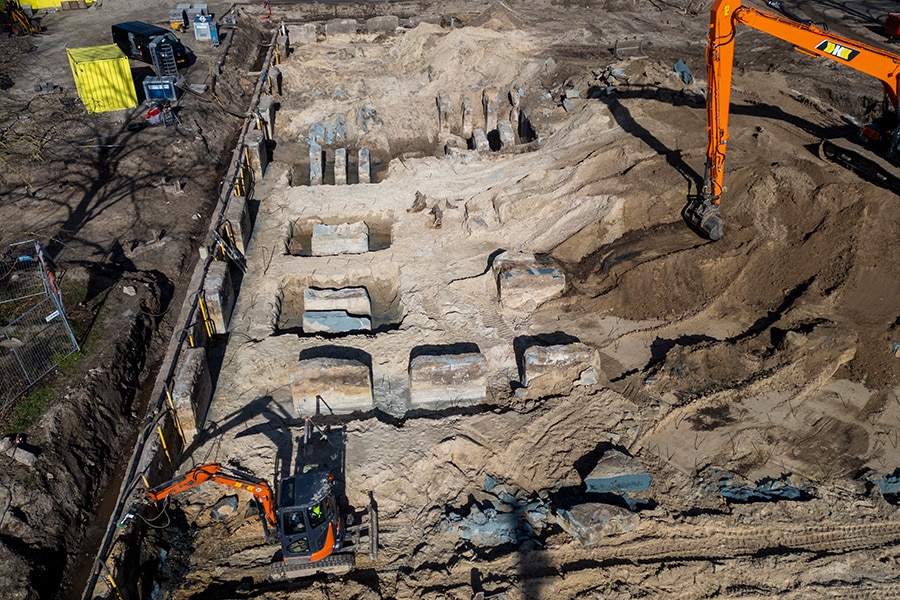
BodemBouw’s CutterSoilMix (CSM) technique is inherently a sustainable solution because it makes use of the existing sandy soil, Van den Eijnde emphasizes. “By reinforcing this sandy soil with cement, we add only what is necessary. If you use this technique as a foundation solution, you also benefit from shorter pile lengths, less material, shorter lead times, and lower CO2 and nitrogen emissions.”
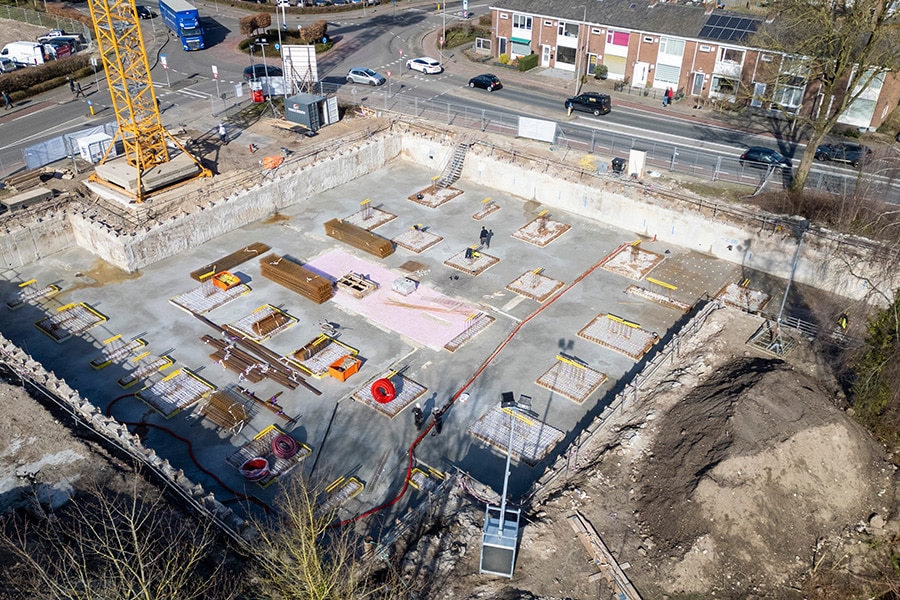
According to Van den Eijnde, CSM walls and CSM barrettes are an ideal solution, especially in the case of a construction pit, where soil-retaining and water-retaining walls are already needed to excavate the pit. After all, in this case, the CSM walls can be used directly as foundation walls. “All the outer foundation piles have already been optimized by using the wall as a foundation. The step of replacing the piles in the inner area with barettes is then extremely small. After all, general contractors and supervisors prefer that a building be founded on a single system to prevent differences in settlement and subsidence. An important additional advantage is that when using barrettes, no footings are needed under the basement floor, which again saves a significant amount of material, lead time, and CO₂ and nitrogen emissions. Unlike the footings used with foundation piles, a cap (thickened section) of 30 to 60 centimeters beneath the basement floor is sufficient for a baret.”
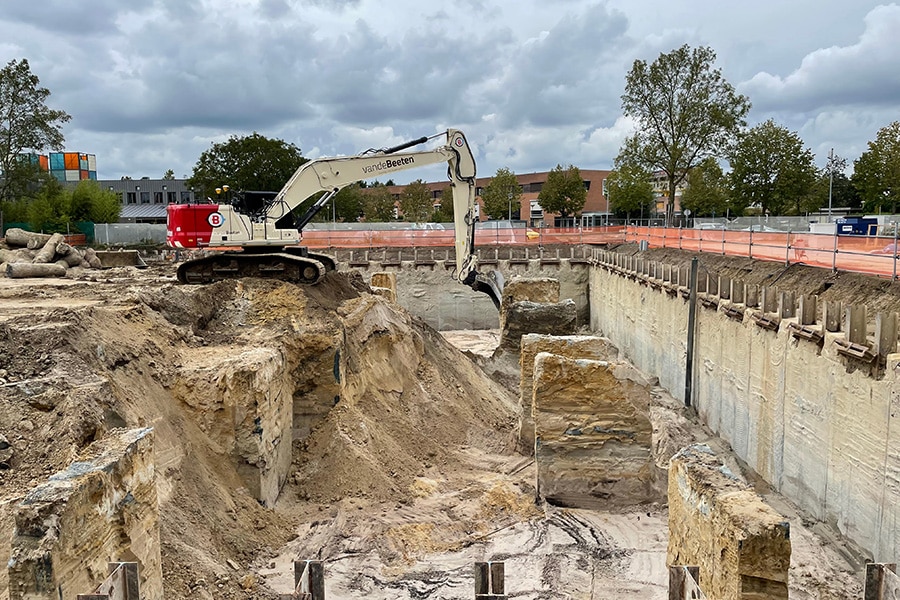
BodemBouw’s CSM formwork systems are being used, among other projects, on the Nieuwstad project in Zwolle, which consists of the Koopman (61 apartments) and Reiziger (26 apartments) residential buildings. They are also being used in the new construction project for Actium in Meppel, which will accommodate 55 apartments.