Platform on new construction, renovation, restoration and transformation
What happens to a neighborhood once construction is complete? And how far does the impact of physical interventions extend? With ‘Back to the Neighborhood,’ ERA Contour returned to four neighborhoods it had previously developed. “The main goal was to learn from residents,” says concept developer and program creator Arie Lengkeek. “How do they experience their neighborhood now? And how have our (social) ambitions played out? What do residents find important? What works? What causes friction? And what lessons can we draw from this? With the knowledge we gain from this, we want to continue building on our mission of strong neighborhoods and happy residents—not just on paper, but especially in practice.”
ERA Contour typically works within the context of the existing city and in places that ‘could use a little love.’ “To ensure that people can live here comfortably and safely, we identify core principles for our projects: quality objectives that align with both the location and the target group,” explains Lengkeek. “To see what social benefits these essentials ultimately yield—and to learn from them—it’s essential to return to the neighborhood. After all, the most important insights only emerge once the construction dust has settled and ‘normal’ life has resumed its course.”
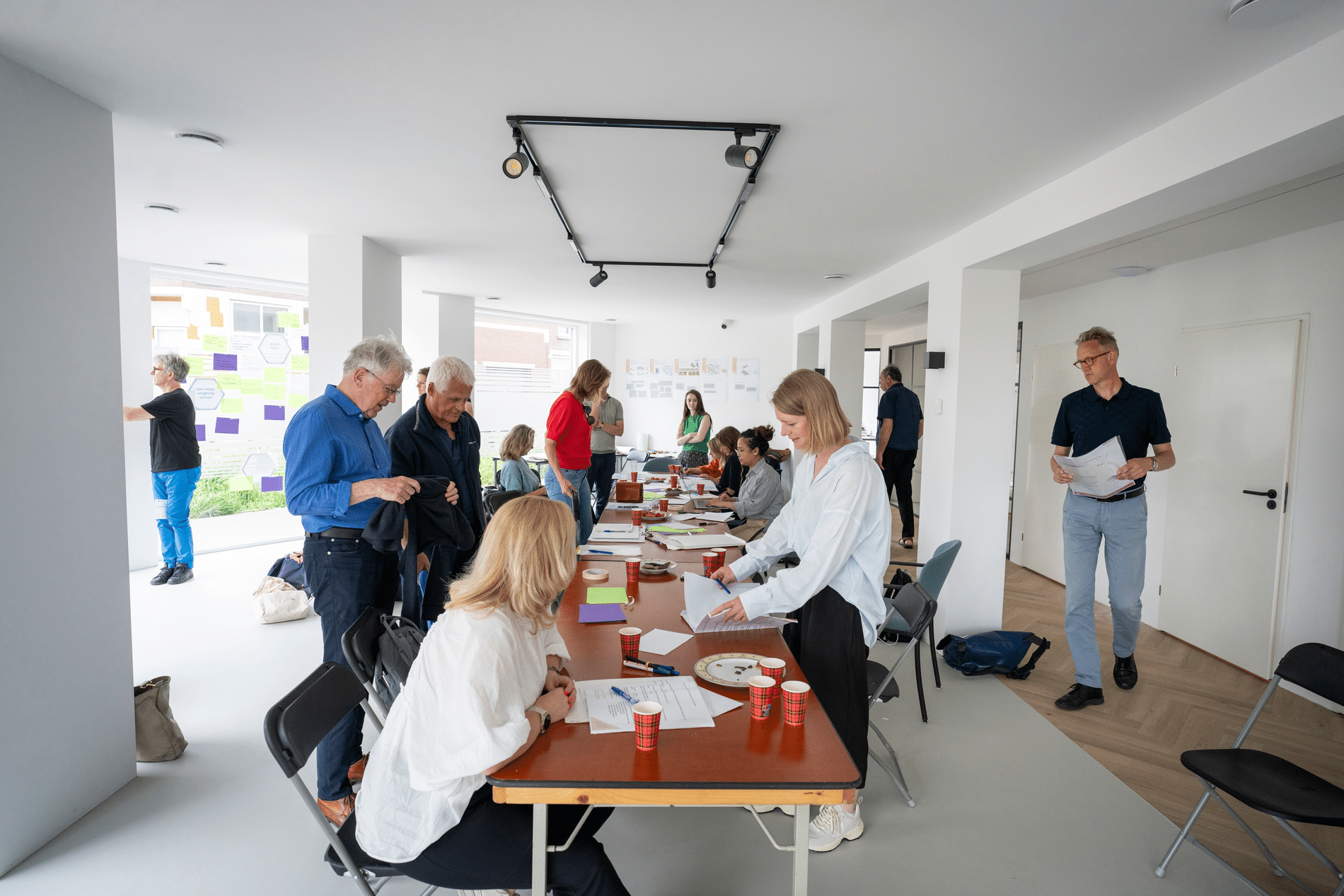
In recent years, ERA Contour has visited several neighborhoods. “However, the need arose to do this methodically,” says Lengkeek. “We take a concept-driven approach within clear frameworks—an approach we also want to apply in our evaluation research. This is especially important because it yields more useful information than just a few nice quotes, opinions, and observations. But also because this aligns with the reporting requirements of, for example, B Corp, ESG, and CSRD. To this end, we began collaborating with Céline Janssen, who, in her doctoral research at TU Delft, examined the contribution of the Capability Approach to area development. Together, we have developed a methodology inspired by this approach, but focused on how residents relate to their physical living environment.”
Lengkeek emphasizes that asking the right questions is essential to achieving meaningful results. “While we’re quick to ask residents ‘what they think of the neighborhood,’ such a question can quickly derail the conversation or steer it in a certain direction. From the Capability Approach perspective, the first question is therefore: ‘What do you find valuable in your life?’ Followed by: ‘And how does this become a reality in your neighborhood?’ The neighborhood values map, developed by the Arnhem and Nijmegen University of Applied Sciences, proved to be a helpful tool for starting this conversation.”
Between June 2024 and January 2025, ERA Contour visited four diverse residential neighborhoods in Rotterdam, The Hague, and Amsterdam.
Lengkeek shares the key findings.
“Our evaluation study began at The Hudsons in Rotterdam’s Bospolder/Tussendijken neighborhood, which was completed in 2021. This project consists of family homes spread across five city blocks, forming a link between the new Dakpark and the neighborhood behind it. The goal was to foster a sense of connection between families and the city and neighborhood. We believed that guaranteed outdoor play areas and opportunities for upward mobility were essential—a view that was echoed by residents. When it comes to community and social interaction, a scale of eight homes, a layout of small streets, and a ground-floor kitchen have proven to work exceptionally well. The space and quality of shared green areas are also important. If you approach this the right way, residents are even willing to give up their private gardens.”
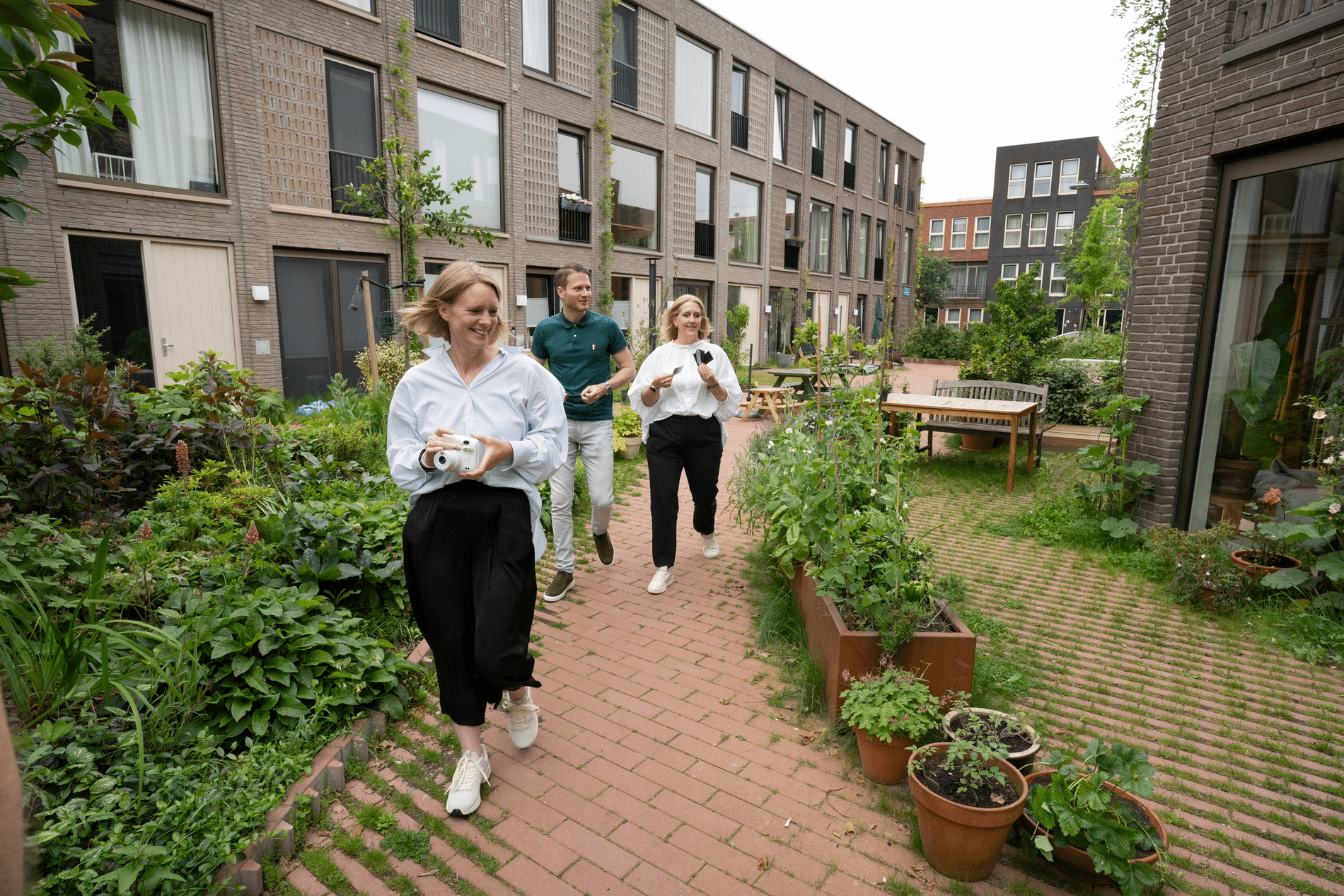
A second project was Kloosterbuuren in The Hague—a unique neighborhood with 118 homes surrounding a former monastery complex, which was completed in 2018. “The design of this neighborhood forms a small island with streets, small squares, and meticulous brick architecture, in sharp contrast to the surrounding open postwar urban development,” says Lengkeek. “Residents appreciate, for example, that they’ve gotten ‘value for their money.’ But they also appreciate that both extroverted and introverted residents have their own space within a varied layout of squares, streets, alleys, and sidewalks. In various places, the small sidewalks in front of the windows had been appropriated to further enhance the sense of safety. From this, we learned, for example, that while social interaction is a major benefit for some, privacy and introversion are equally important for others. But we also learned that both can coexist.”
Mi Oso in Amsterdam-Zuidoost was completed in 2020 and is instantly recognizable for its Caribbean atmosphere, featuring white homes with orange roof tiles, green shutters, and blooming gardens. “Romantic porches create a pleasant transition between private and public spaces,” says Lengkeek. “Residents turned out to be extremely enthusiastic about the communal aspect of this project. However, we also heard that a railing on the porches would be welcome—for example, to allow people to retreat from time to time. So designing for social interaction also means designing for privacy.”
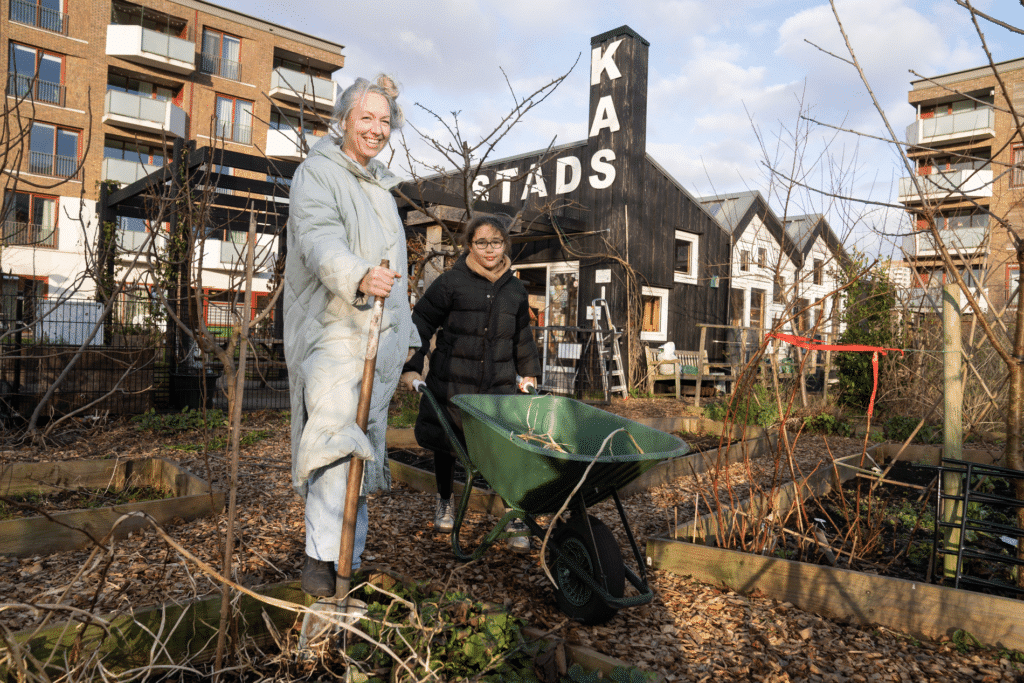
One recent project was the Overtoom Community Garden in Amsterdam-West, which was completed in 2018 to entice ‘inner-ring residents’ to venture out into the neighborhood. “During these discussions, the quality of the facilities, the benefits of social interaction, and the short distance to the inner ring road proved to be particularly important,” said Lengkeek. “The project’s guiding principles, however—such as the high standards for sustainability and circularity—had faded into the background. New residents weren’t even aware of them at all.” How different that was for the Stadskas. “The social entrepreneur who has been working here from the start really makes a difference. This shows that not only the physical facilities but also the human factor is essential for a development to succeed.”
‘Back to the Neighborhood’ shows that the work doesn’t stop after completion. It is precisely during the usage phase that it becomes clear which design choices truly contribute to a sense of community, security, and quality of life, Lengkeek emphasizes. “The insights we gain from this are indispensable for continuing to build strong neighborhoods—not just on paper, but also in practice, and informed by the voices of the people who live there.”
‘Back to the Neighborhood’ was a project by ERA Contour, SKG Area Development, TUDelft, and Kickstad.