Platform on new construction, renovation, restoration and transformation
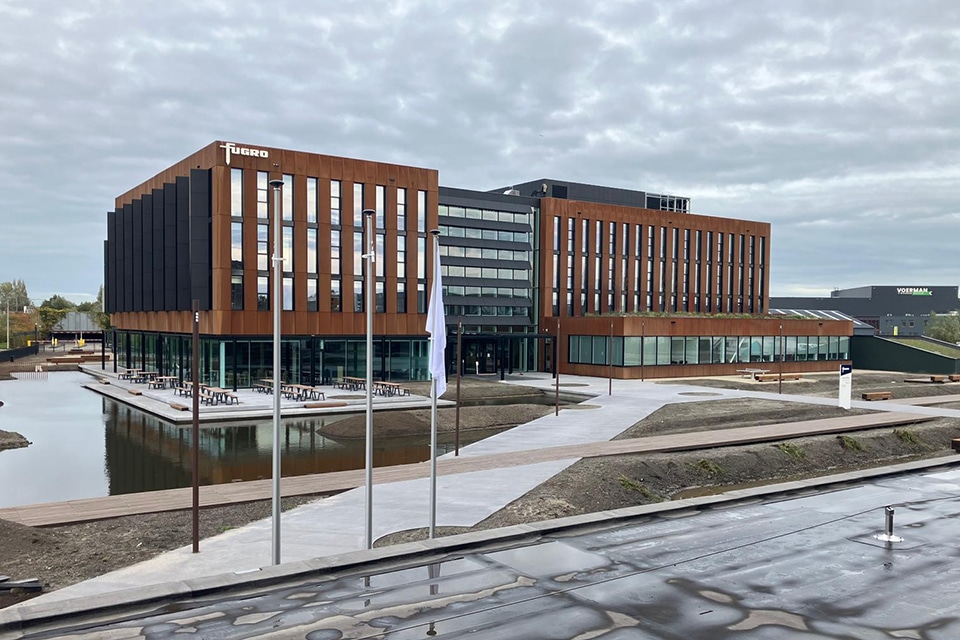
With stricter requirements for energy performance and the desire to emit less CO2, BIPV is increasingly coming into the picture: facade glass with integrated solar cells. André Feenstra, founder and owner of Pixasolar explains why these products fit a trend in which architects and builders are looking for solutions that are simultaneously manufacturable, affordable and aesthetic.
Pixasolar manufactures sustainable BIPV panels. “We do this from two motives,” Feenstra explains. “Sustainability is the main one. All of us at Pixasolar want to contribute something to a better world. And in addition, we believe very much in our business model. From the government and laws and regulations, the energy management of buildings is increasingly important. Cladding with integrated solar panels is an important part of that.”
According to Feenstra, the profit lies in combining building logic and solar technology. “We didn't start from the solar panel, but from the construction.” As a result, Pixasolar produces a building product that fits the requirements of facade builders and contractors, with attention to size, color, weight and processability. “Urban areas are expanding tremendously around the world. This calls for sustainable solutions, but the eye wants something too. Aesthetics are important to architects, and builders simply want a product that is easy to apply. We combine all these requirements in our facade solutions.”
Pixasolar focuses primarily on BIPV in facades, atria and balconies. That market is project-driven and keen on costs. That's why customers can turn to a one-stop shop for the facade panel. “The construction industry wants two things,” Feenstra explains. “Customization ánd a good price.” BIPV often starts with the architect. If they include BIPV from the first sketch, the team doesn't have to puzzle with standard sizes later on. One building may require a few types of panels, but also hundreds of variants.
Pixasolar's facade solutions are currently being used, for example, in the renovation of Coolsingel 75 in Rotterdam. “There we supply panels of almost 4 by 2 meters. That's huge. But we also do the shutters to keep heat out. Then you're talking about small panels of 38 centimeters. Everything we supply is 100% customization. At least, for the clients. For us, customization is just the standard.”
Feenstra notes that there is still a perception that BIPV is expensive, difficult and complicated. “That is unjustified. On the contrary, it is easy to apply, the quality is high and the prices are competitive with current materials.” Construction, however, is a conservative world. “But we do see BIPV being used more and more. In Germany, facade-mounted solar energy is even already mandatory in some places.” In the Netherlands, he sees the movement going in the same direction. “We want to make it a commodity as soon as possible.”