Platform on new construction, renovation, restoration and transformation
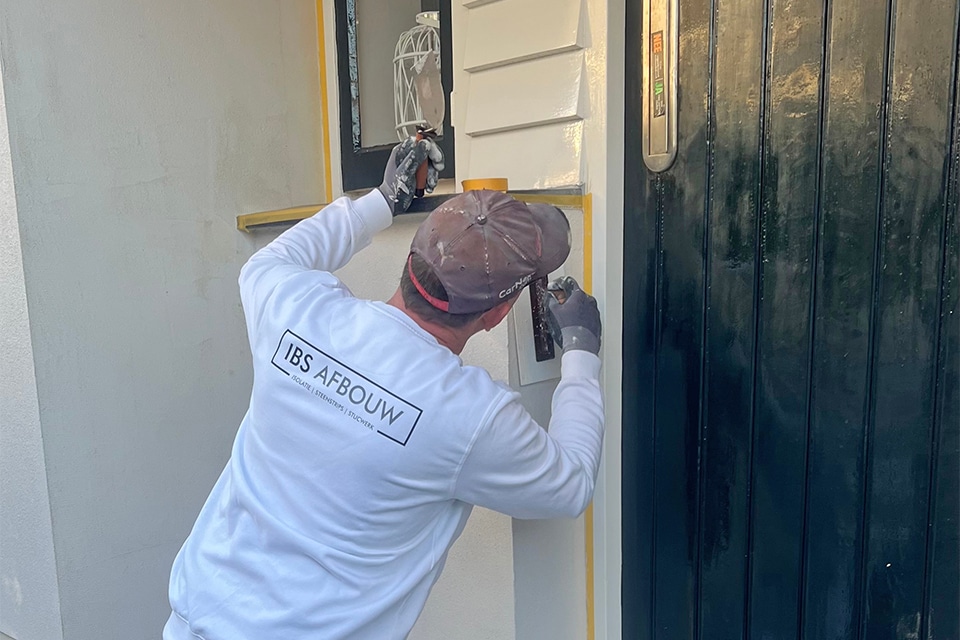
In facade construction, safety starts with design, choice of materials and execution. Marc Veenstra, owner of IBS Afbouw, sees that the pressure on quality is increasing, especially now that fire safety requirements are being further tightened. At the same time, he sees that practice is still lagging behind. According to Veenstra, the industry needs to be more honest about risks, document more tightly and opt more consistently for certified execution.
IBS Afbouw is active in preservation and finishing, with a clear focus on exterior wall insulation and finishing. An expert by experience, Veenstra shares his concerns about safety in facade construction: in his view, the industry can only move forward if safety and quality are leading, in design, execution and cooperation.
Fire safety requirements have been further tightened since this year, especially for buildings with a sleeping function. Yet implementation is not always in line with the rules. Veenstra notices that many parties are not yet equipped for this. “On paper everything seems arranged, but in the implementation it goes wrong as soon as work by certified parties is passed on to parties or freelancers without the proper certification.” Then risk still arises. “If they are not KOMO-certified, it doesn't comply.”
IBS has again been certified by KIWA according to current requirements for the processing of facade insulation systems. Veenstra links that directly to responsibility under the Quality Assurance Act. “If I don't keep our manual up to date and don't document it, I always have a problem later,” he says. That's why his team records temperature, humidity and photos structurally. That, according to Veenstra, is the only way to prove that the work was done safely and correctly. Those who cannot produce that information risk claims, repair costs and safety problems.
Veenstra sees that faulty execution is still too often accepted. “That sometimes starts at the very beginning. Architects who come up with something that you can't actually make safe. Some only see the money and just take the job. Because if you put your finger on the sore spot, sometimes you get labeled inconvenient.” Still, Veenstra continues to do so precisely because safety and quality are at stake. “We all have to do better. If you are proud of your profession, you choose quality.” In addition, he points out the importance of KOMO certification throughout the chain. Even in light of the Quality Assurance Act, this requires sharper choices. Veenstra argues for a higher bar in the industry. Less steering for quick profit, more steering for craftsmanship, control and responsibility.