Platform on new construction, renovation, restoration and transformation
Anyone talking about façade construction quickly thinks of glass and aluminum. Yet solar shading largely determines how a building performs in terms of heat, comfort and energy consumption. This is precisely where HSD Ecoscreen wants to make a difference. Director Jan Huisbrink explains what role solar shading can play in the field of sustainability.
The Genemuiden-based company is a technical clothing company and supplier to the awning market. The family business originated from Genemuiden's textile industry, but shifted its focus from the carpet industry to the awning market. This year, the company is celebrating its 50th anniversary. Today, HSD Ecoscreen supplies screen cloth for outdoor awnings and applications such as patio covers, among other things.
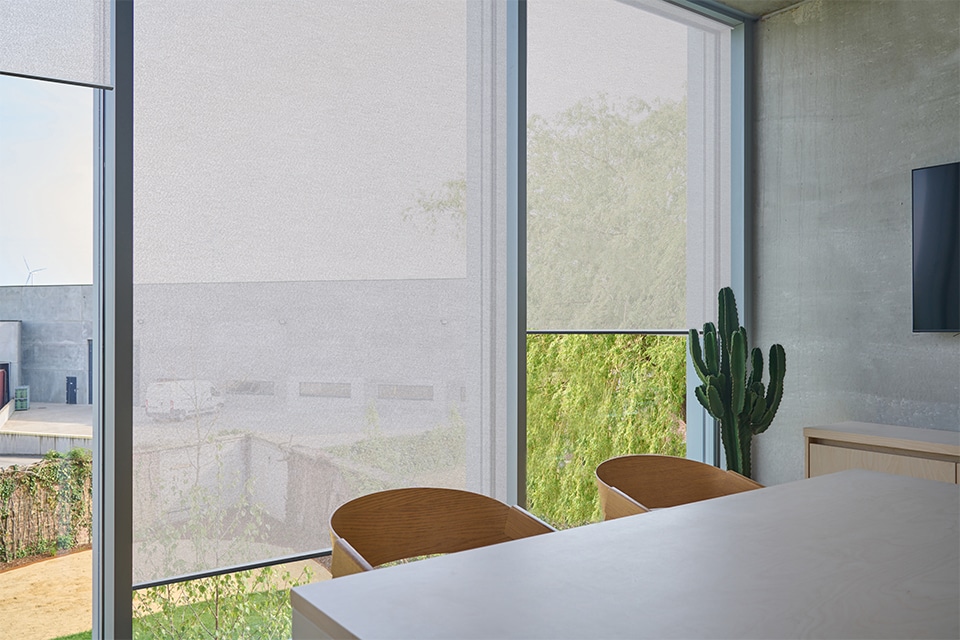
Huisbrink saw early on that sustainability would take on a larger role. “Twenty years back we already started our eco story,” he says. “My father and former director Klaas Huisbrink said back then: you are way too early. Sustainability costs too much money.” But that early start is now turning out to be an advantage. The demand for blinds with less environmental impact is growing, including in utility buildings.
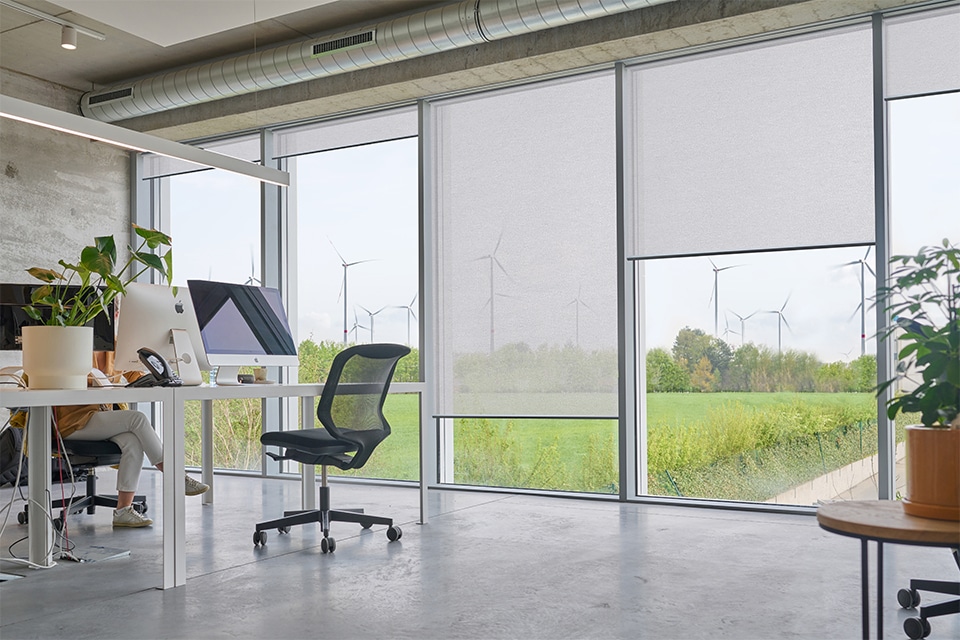
According to Huisbrink, shading is an important means of making your building more sustainable. “It ensures that buildings heat up less from the sun, so you also need less energy for cooling.” Demand for outdoor solar shading therefore continues to grow. At the same time, he sees a clear trend toward indoor solar shading, especially for large and tall buildings. “Architects sometimes find outdoor blinds less attractive: a waste of their design. And in large buildings, indoor blinds are sometimes easier.” This raised a new question: can an indoor fabric also be durable, safe and technically strong?
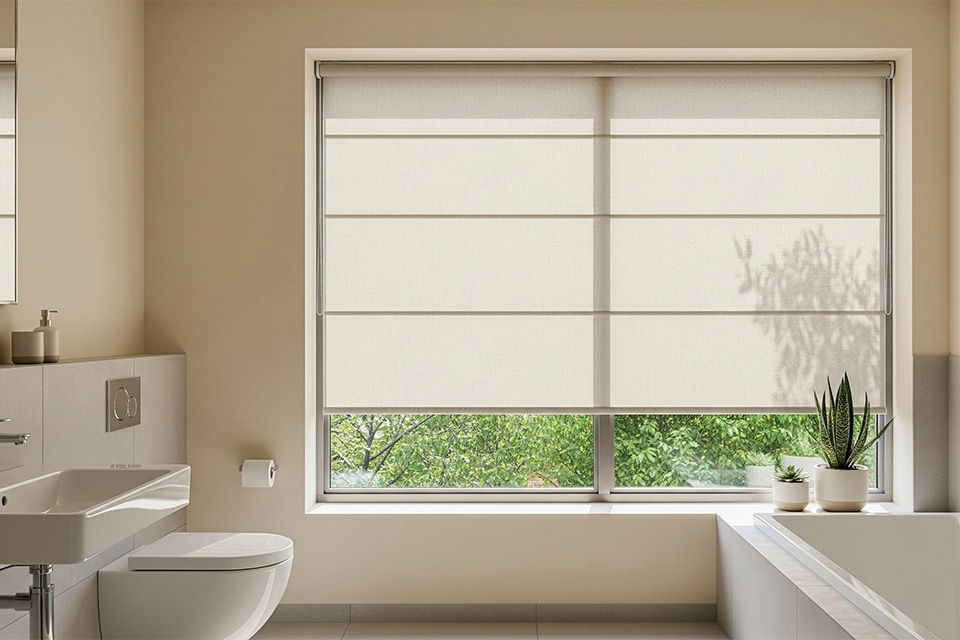
Through collaboration with a manufacturer, HSD Ecoscreen arrived at a cloth developed from sand. These HSD Ecoscreen sells under the name Solguard by Ecoscreen. These indoor screens are made from natural fiberglass, molten sand, which is spun into strong, safe and durable textiles. According to Huisbrink, this material is completely Cradle-to-Cradle, PVC-free, PFAS-free and halogen-free. “This is the only fabric that is truly 100% Cradle-to-Cradle. And it is also safer, because the material is fire-resistant.” These indoor screens are specifically designed for architects who want to combine sustainability, aesthetics and performance in their design. The partner's manufacturing process also aligned with HSD's ambitions, using sun and wind and low resource consumption. The market responded quickly. “Since January we have been putting this new product out there and architects are already calling us,” he says. One of the interested parties is Schiphol Airport, where existing interior blinds with PVC and PFAS are being replaced.
For HSD Ecoscreen, the new canvas does not stand alone. The company itself is also working to reduce its footprint, including a heat pump and solar panels. It is also expanding production capacity with a new hall so that growth and sustainability can run together. “We want to act footprint-free to the outside world. Then a product like this fits in very nicely.”