Platform on new construction, renovation, restoration and transformation
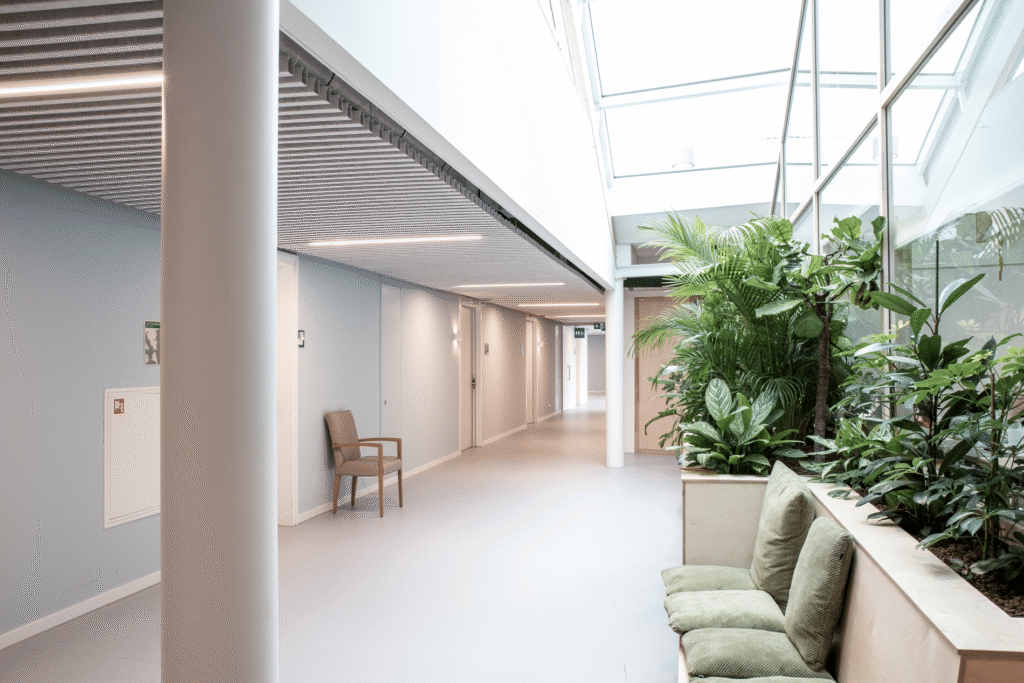
As a knowledge partner in the chain, Maas & Hagoort plays a crucial role in the transition to a circular and sustainable lighting industry. “Together with our partners, we have developed a comprehensive procedure for converting obsolete fluorescent fixtures,” says Ben Dorst, operational director at Maas & Hagoort. “As a result, obsolete but high-quality fixtures no longer end up on the waste heap, but are given a new chance as efficient LED fixtures. Of course, safety and quality are paramount here. By cooperating with a work development company in this, social, societal and environmental impact come together nicely.”
In practice, unfortunately, we still see it happen often: as a result of the phasing out of traditional fluorescent and energy-saving lamps in the EU, more and more places are switching to LED. In the process, obsolete fixtures that are still in excellent condition too often end up in landfills. “In many cases, the fixtures are made of high-quality materials, so they have very little wear and tear,” Dorst knows. “This makes the fixtures ideally suited to be harvested for reuse.” Maas & Hagoort is taking its responsibility in this by actively adopting old fixtures and converting them to LED. “In cooperation with work development company Rijnvicus, the obsolete fixtures are thoroughly cleaned. Parts such as fluorescent tubes, starters and old wiring are also dismantled. What then remains is a housing that can last for years to come as a basis for new light. In doing so, we offer full transparency in the CO2 reduction achieved.”
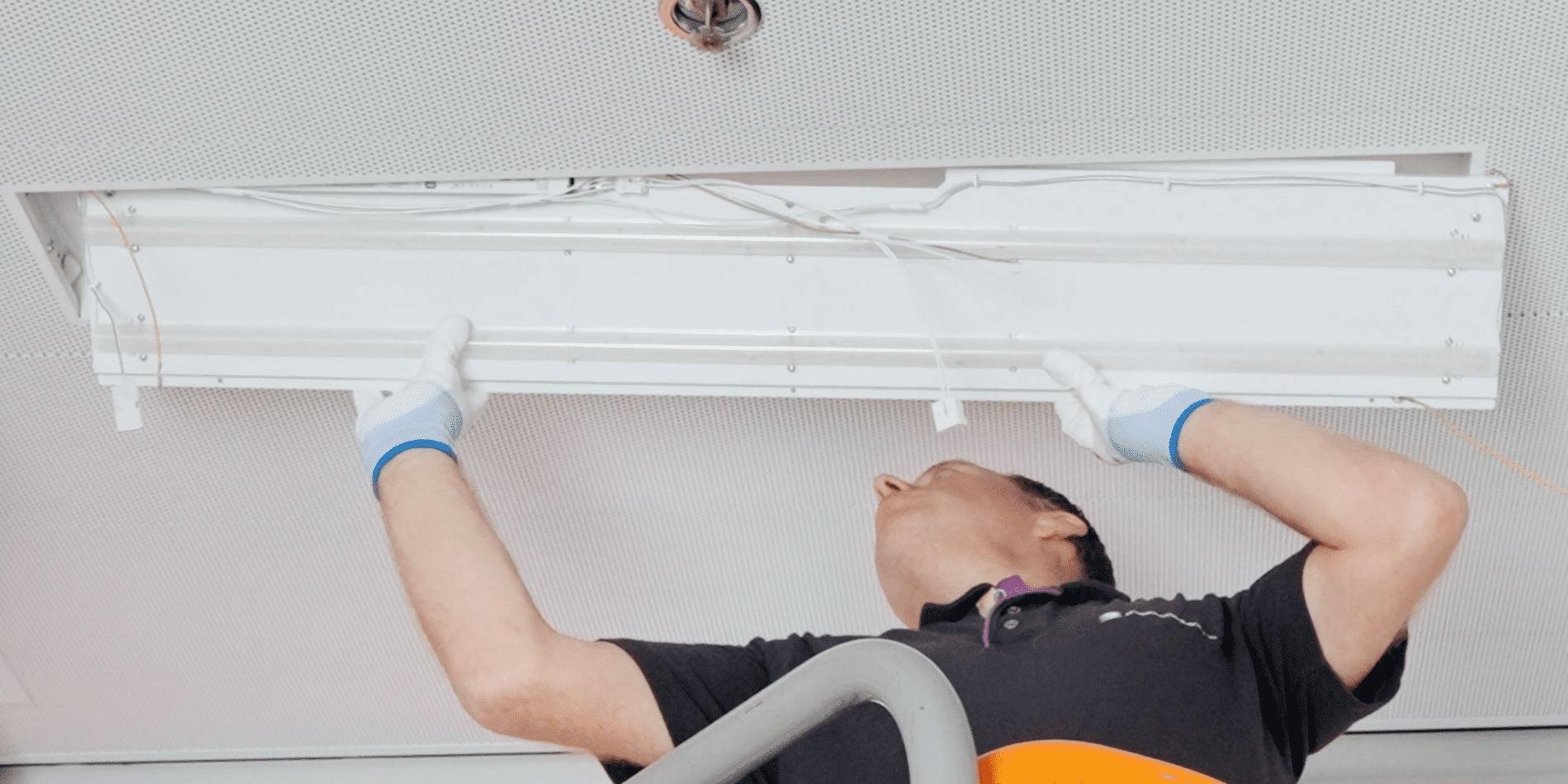
A nice first pilot was recently started with Deltion College in Zwolle; a regional training center that is at the forefront of sustainability. Following a WKO installation for heating and air conditioning and toilet flushing with rainwater, Deltion College has opted for a circular approach to lighting. For this, installer Croonwolter&dros joined forces with Maas & Hagoort. “In Building Red, 320 fixtures have been applied in a circular fashion,” Dorst explains. “Because we were able to leave about 70 to 80 percent of the existing fixtures intact in the process, a 60 percent CO2 reduction was possible compared to a new fixture.”
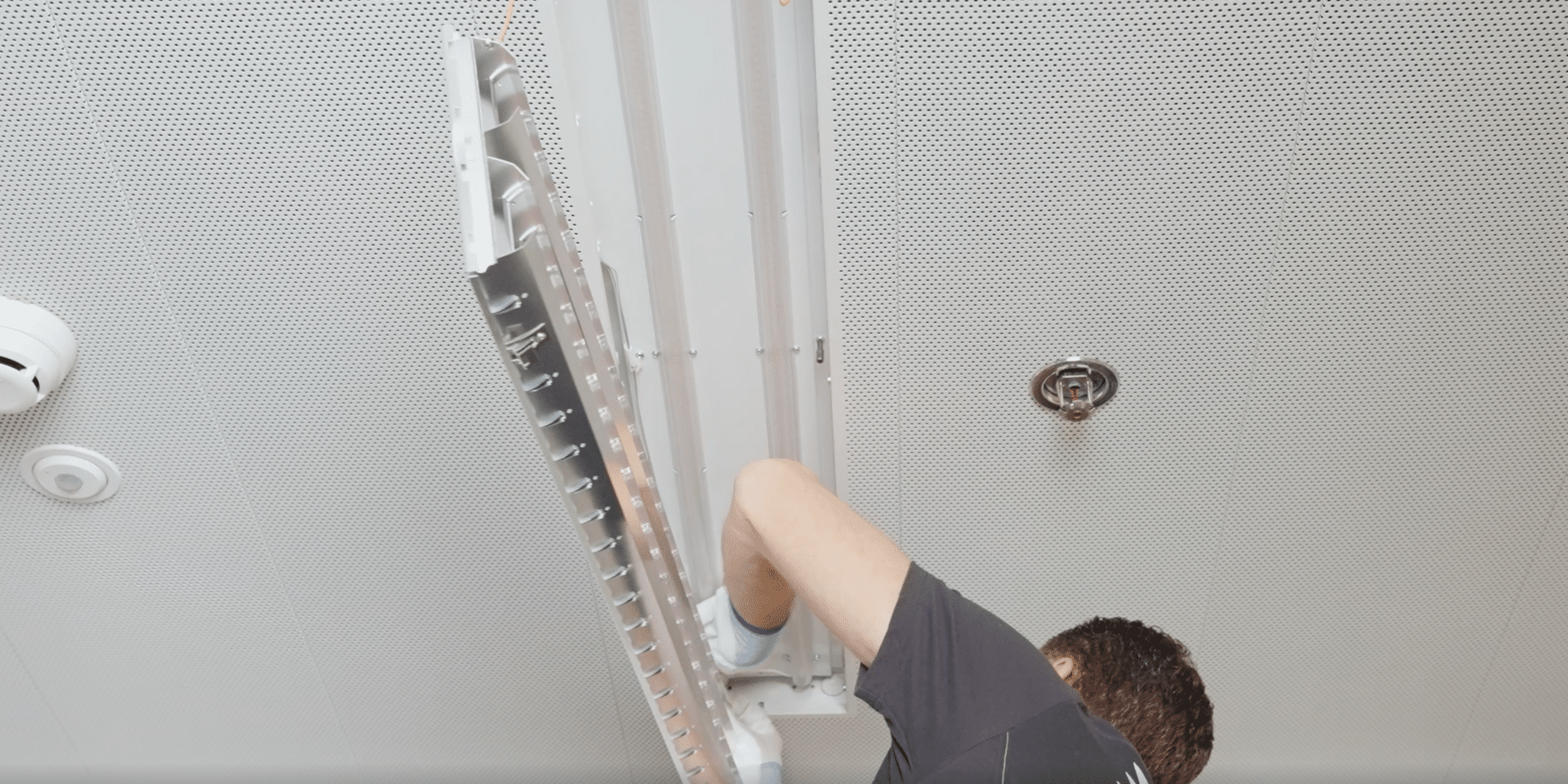
“In replacement projects, good project execution is essential. For example, to keep inconvenience to a minimum,” says Mike Stoll, project manager at Croonwolter&dros. “That's why we worked with Maas & Hagoort to find the most suitable LED solution for this project.” Says Dorst, “When selecting the components, it is important to have an insight into all the project and best requirements. We then searched our network for the right solution and manufacturer. Within this process, we had new interiors designed for the existing fixtures. Because these conversion modules (refit kits) fit seamlessly into the existing housings, no modifications were required in the existing climate ceilings.” Stoll: “After the refit process, the fixtures were replaced with minimal disruption. In the process, the fixtures were equipped with a DALI-2 LED driver, making the building ‘smart ready’ for the future.”
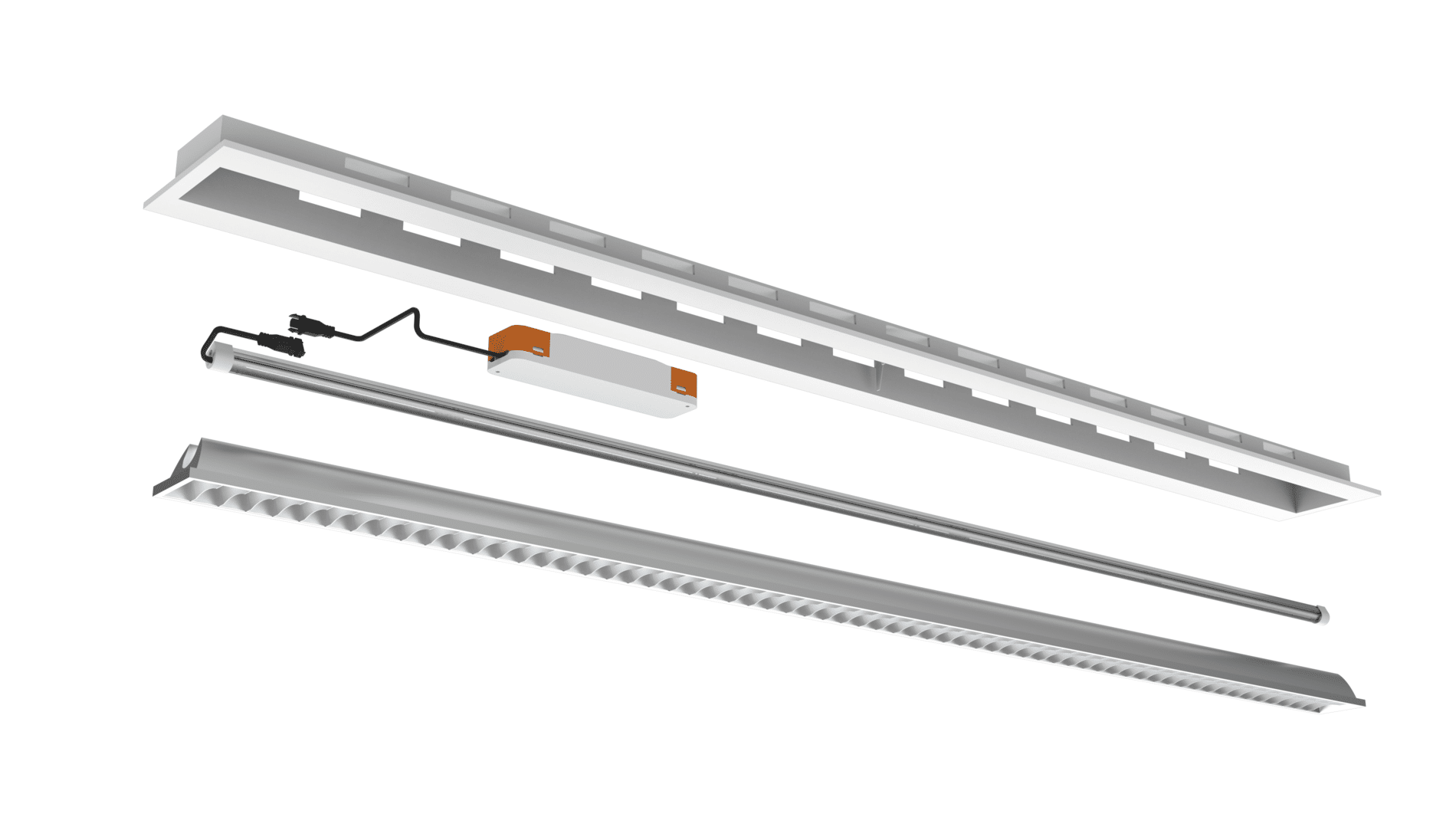
Following the refit process, more than four thousand fixtures from Deltion College have been harvested for reuse. “Refitted fixtures are not always applicable in the same project,” Dorst emphasizes. “This also applies to part of Deltion College. Instead of disposing of these fixtures, however, we carefully harvested and stored them, with the aim of making them available again in the chain. Of course, during this process, extensive quality checks can take place for ENEC and CE certification. LTD files are also prepared, by testing the lights for lighting data. In this way, we guarantee that the converted luminaires can be safely and responsibly reused in the chain. We do this with the aim of reaping all the sustainable and social benefits for each partner.”