Platform on new construction, renovation, restoration and transformation
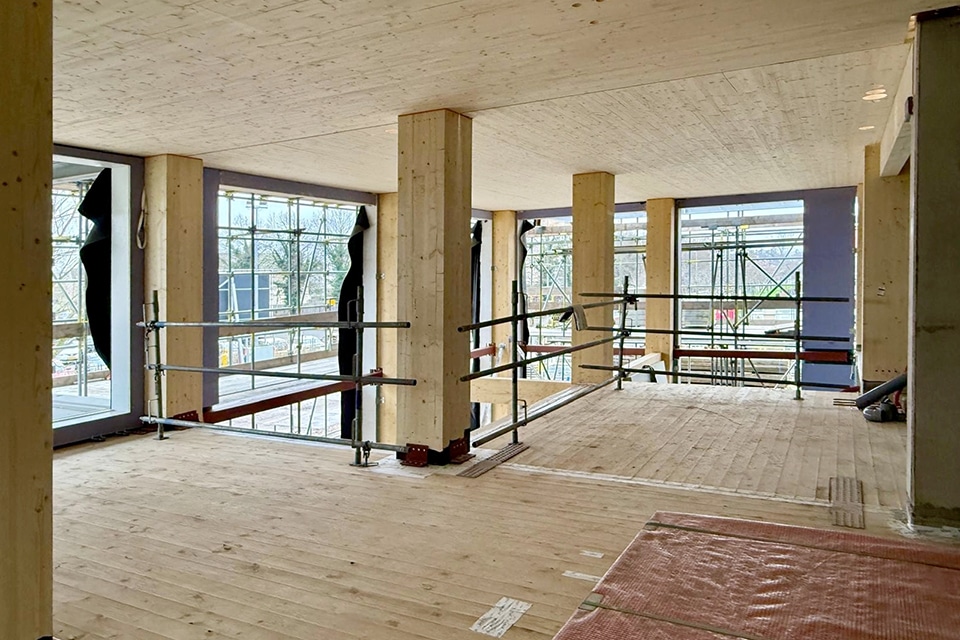
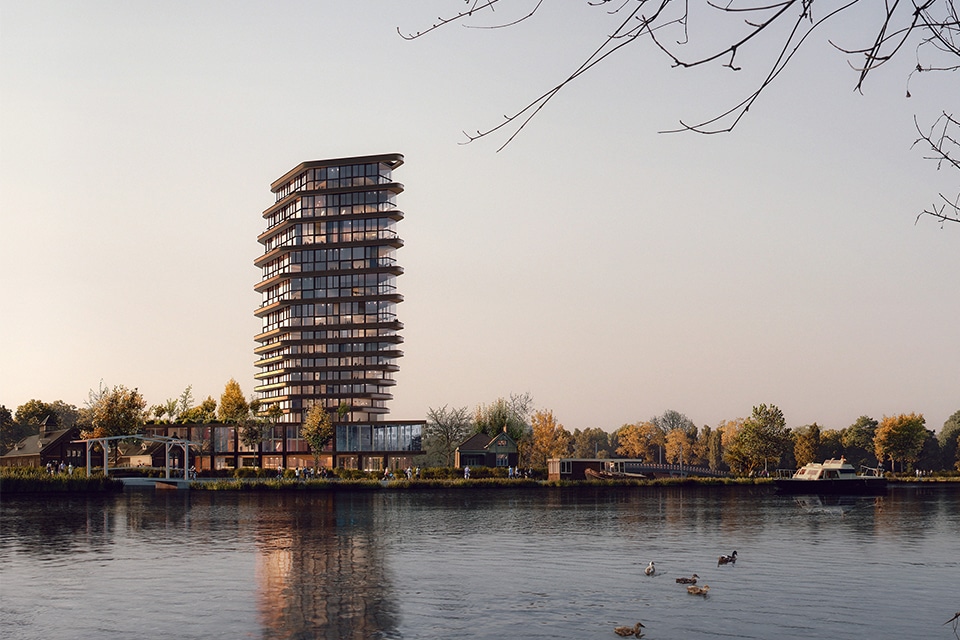
On the east side of Haarlem, the city is getting a new landmark: Oostpoort Kavel 1F, a social housing tower with a hybrid wooden support structure. The project fits exactly the course HSB Bouw has been steering for years. The Volendam-based builder is co-maker of Ymere and has invested heavily in knowledge of timber construction in recent years. Project manager Edwin Westmeijer is leading the project from the first plans.
HSB Bouw stepped in in 2023, when Ymere was looking for a construction team partner that could not only handle wood construction, but also dare to accelerate it. “We have been working closely with Ymere for a long time,” says Westmeijer. “She knows that we can think along from the initiation phase on technique, planning and manufacturability. That gives peace of mind in such a project with high time pressure.” That time pressure was real: to retain provincial funding, a pole had to be in the ground by the end of 2024. Within a month of the initial meeting, architect INBO and other advisors joined in. “Such a tight schedule only works if everyone is sharp-eyed right away. And that is exactly what we are strong at.”
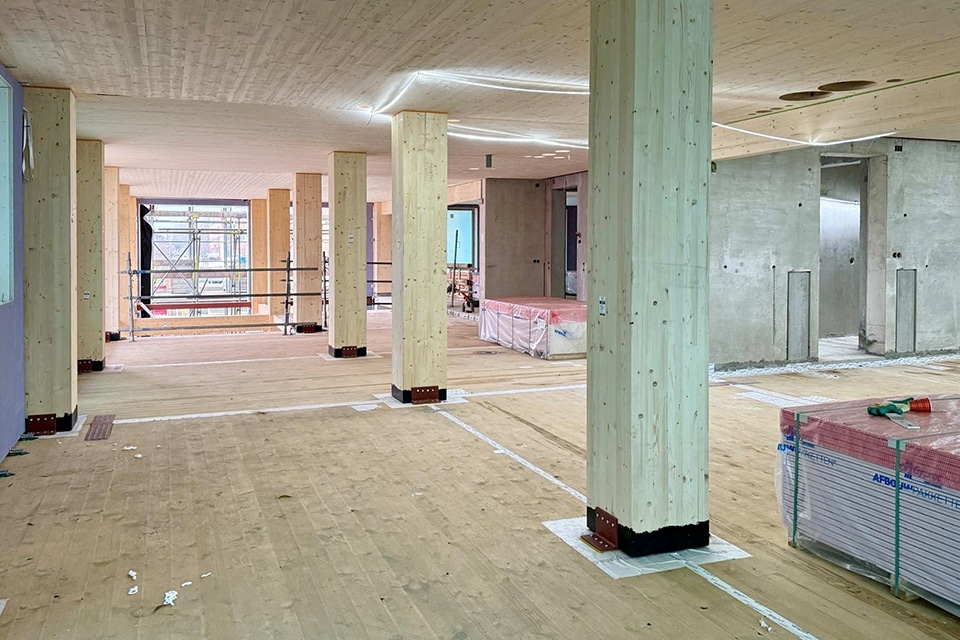
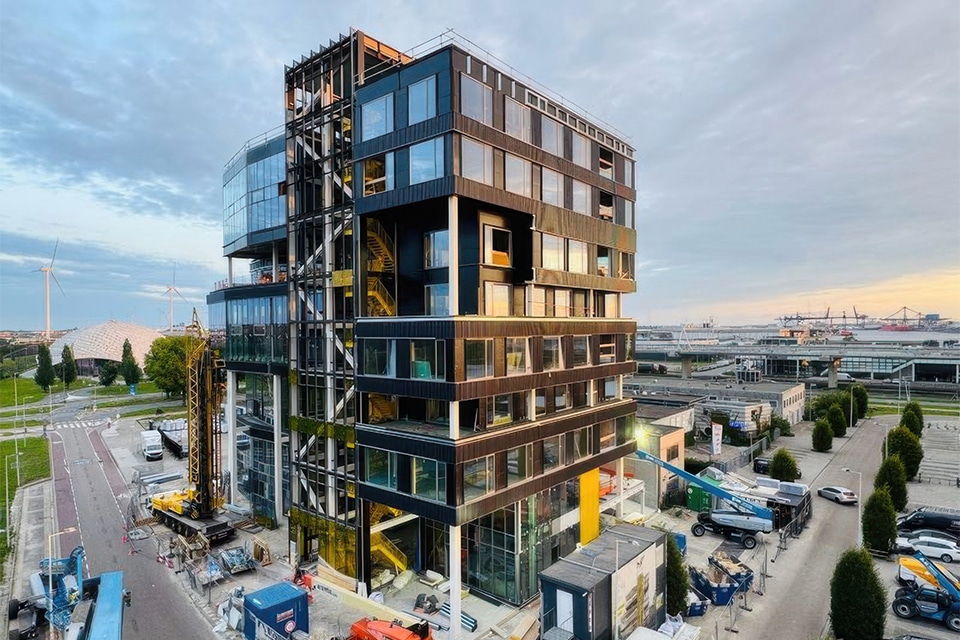
The residential tower will have 100 social housing units, a semi-underground parking garage and a mostly wooden support structure. It more than meets the biobased requirements of the Amsterdam Metropolitan Region. “Timber construction on this scale really requires routine in the construction team,” Westmeijer explains. “You can't work out fire safety, noise and construction in isolation. You have to assess each node integrally. We now do that very systematically, together with parties who have done this before.” This approach was also necessary to meet the conditions of the CAR insurer. After all, an all-wood shell brings additional requirements in terms of fire and moisture risks. “We developed a comprehensive risk analysis and management plan. This was reviewed by the insurer, including an audit on the construction site. That gave confidence and ensured that the project received coverage.”
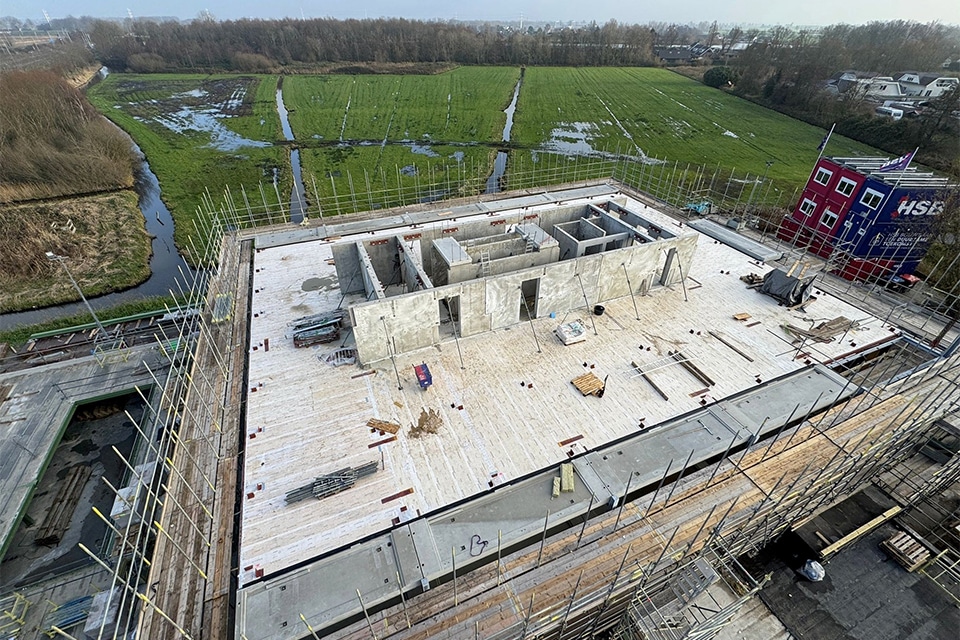
The building connects to the open landscape of the Defence Line of Amsterdam. INBO worked with repeating building parts, making the timber building system efficient to use. An extra façade was added on three sides to keep out noise, without making the design heavy. Rainwater is buffered on its own site.
On December 13, 2023, the first pole went into the ground, right on time. Thanks to tight organization, the pace remains high. Now that the rhythm of one floor every two weeks is established, the construction team can proceed in a controlled manner toward the upper floors. If this pace is maintained, Oostpoort Kavel 1F will be ready for completion by the end of 2026.