Platform on new construction, renovation, restoration and transformation
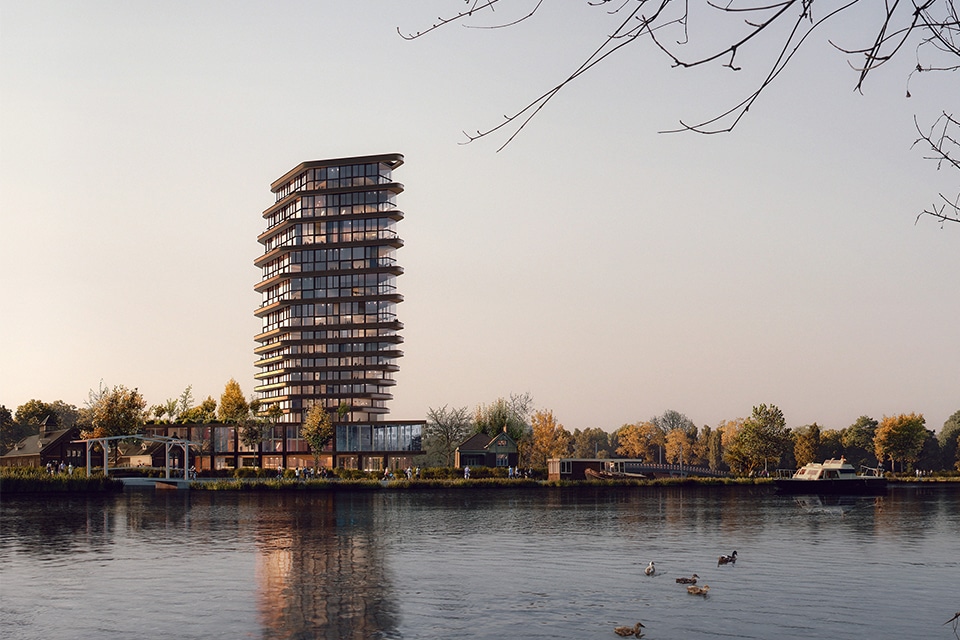
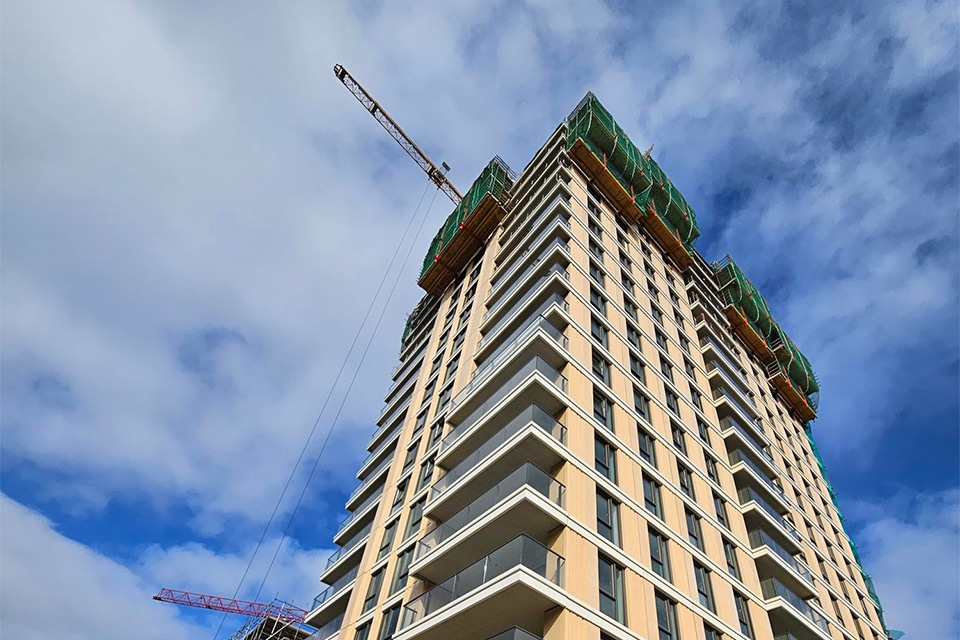
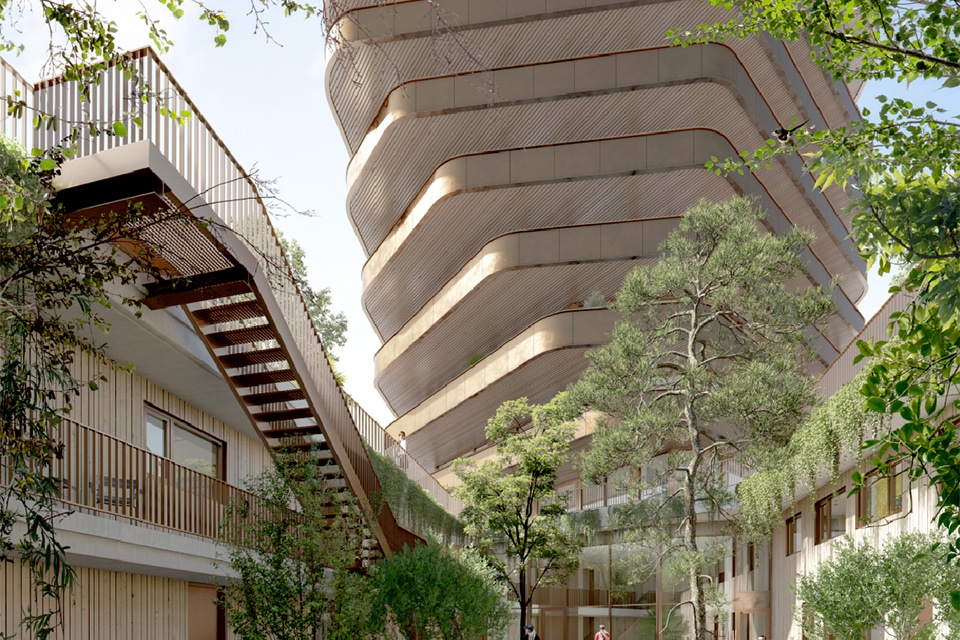
With its iconic, sculptural form, new construction project Elements completes the skyline of the Amstel Quarter. The hybrid and energy-generating residential tower was not designed in the traditional way by Koschuch Architects, but developed on the basis of the ‘elements’ and parametric algorithms. Here, sun, wind and energy are balanced with beautiful architecture, a broad mix of housing typologies and attention to nature.
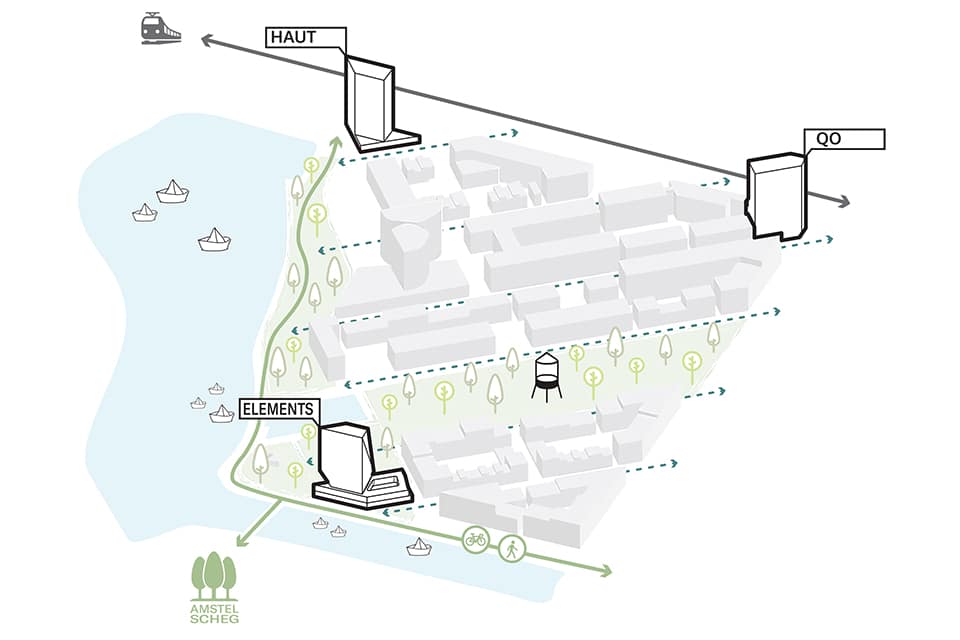
Koschuch Architects was approached by KondorWessels Vastgoed back in 2019 to participate in the tender process for Elements Amsterdam. “The initial design request was to add an icon to the head of the Amstel Quarter,” says Patrick Koschuch, director of Koschuch Architects. “Following HAUT and the QO hotel, Elements is the third landmark of the Amstel area. In its call for tenders, the municipality therefore asked for an image-defining design. But also a sustainable design, with attention to energy efficiency and biodiversity. In doing so, I drew inspiration from all the ‘elements’ that influence the brief.”
One special feature, for example, is its location, which makes Elements a stepping stone between the green Amstelscheg, Bella Vista Park and the city, Koschuch says. “The building stands very nicely on the water and on a dock. Also, an important bicycle route runs in front of it.” What is also interesting is that the high-rise tower is located in a world of low-rise buildings, giving the elements ‘free play’ on the building. “For this reason, the orbit of the sun, optimal daylight penetration, the possibilities for energy generation, efficient collection of rainwater, the influence of wind and the inclusion of greenery for more biodiversity were also emphatically considered.”
All elements were incorporated into a parametrically designed 3D model, in collaboration with structural engineer Arup. “This was then used to generate hundreds of tower variants,” Koschuch explains. “From a series of analyses, the most optimal and therefore most sustainable model was then selected.” The result is a sturdy pedestal or table that harmonizes with the scale of its surroundings. Atop this is the elegant and all-sided tower, which forms a recognizable landmark while relating to the other high-rise buildings in the area. “The articulation of the tower goes hand in hand with the various housing typologies. Moreover, in this way the homes and PV panels in the balcony edges benefit from optimal sunlight. Because Elements harvests energy when needed, the building will soon function energy-neutral. A godsend in a time of grid congestion. Moreover, a pleasant, windless climate has been realized on the street, in the park, in the inner garden and on the roof garden. The building shows a changing perspective from different angles and thus has multiple inviting faces.”
“A broad mix of housing typologies comes together in Elements. From studios to lofts, double-height lofts and duplexes, with the mid-rent homes very nicely nestled in between the exclusive condominiums,” Koschuch says. “The orthogonal plinth of the building provides space for various commercial spaces, co-working spaces and a cozy bar for the neighborhood. In addition, Elements provides a swimming pool and a wide variety of green spaces. This creates an adaptive city within the city, where people can live, work and stay very pleasantly.”
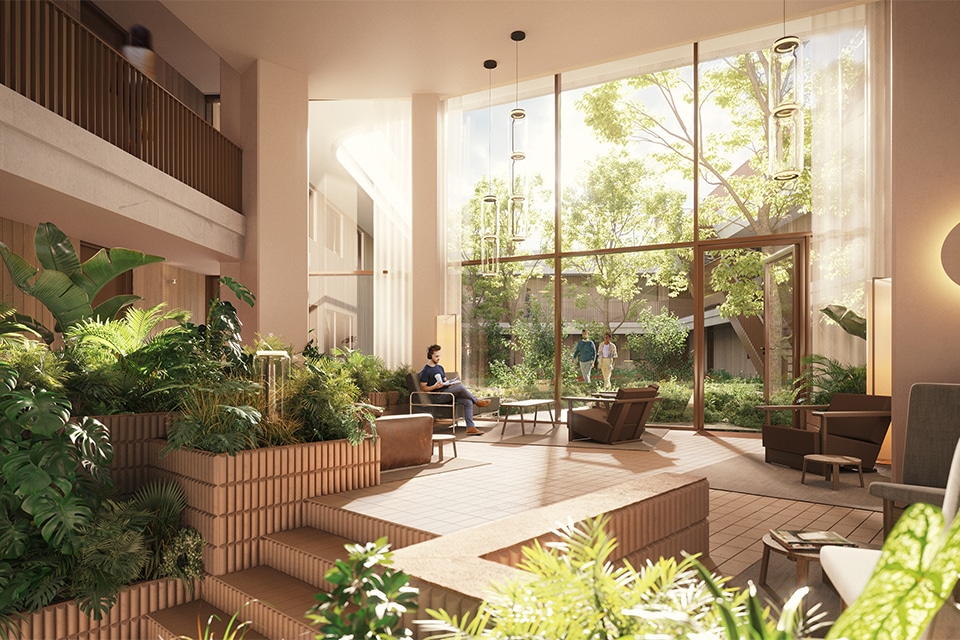
By green areas, Koschuch is referring, among other things, to the rooftop park on top of the plinth. But also to the sheltered sunny courtyard garden and the green entrance staircase, which doubles as a winter garden. “Combined with an adaptive hybrid building envelope and the use of materials that age beautifully and last for hundreds of years, Elements provides a very beautiful and sustainable foundation for the future.”