Platform on new construction, renovation, restoration and transformation
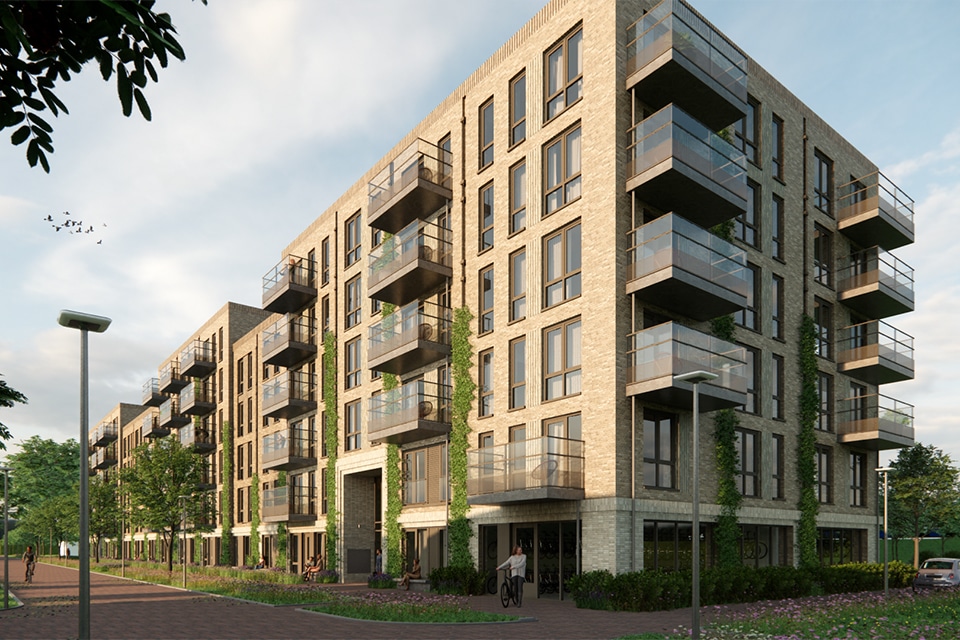
On Gildestraat in Heerhugowaard, Van Wijnen is developing and building ‘De Remise’. “In close cooperation with Woonwaard, we are realizing 106 social rental apartments,” explains company manager Remco IJzendoorn. “From small studios to 2- and 3-bedroom apartments, where comfortable and affordable living, sufficient social interaction, health and future value are paramount.”
The cooperation between Van Wijnen and Woonwaard (formerly: Woonstichting Langedijk) goes back some ten years. “This ensures that we know the housing foundation well, are quickly on the same page and have developed a successful approach for the realization of beautiful buildings and satisfied residents,” said IJzendoorn. “During the tender phase, Van Wijnen Bouw was invited to create a Plan of Approach and strategy for the realization of at least one hundred social housing units on Gildestraat. Here we worked closely with our colleagues at Van Wijnen Projectontwikkeling. In a team with Venster Architekten, Van Wijnen Engineering (construction), Nieman Raadgevende Ingenieurs (building physics), RRog stedenbouw & landschap (landscaping) and MarkusBV (building/zoning), we then developed the plan into an architecture that works: aesthetically strong, sustainable and with a good floor plan. But also technically and economically feasible. At a later stage, HVC Group was also involved for connection to the heat network.”
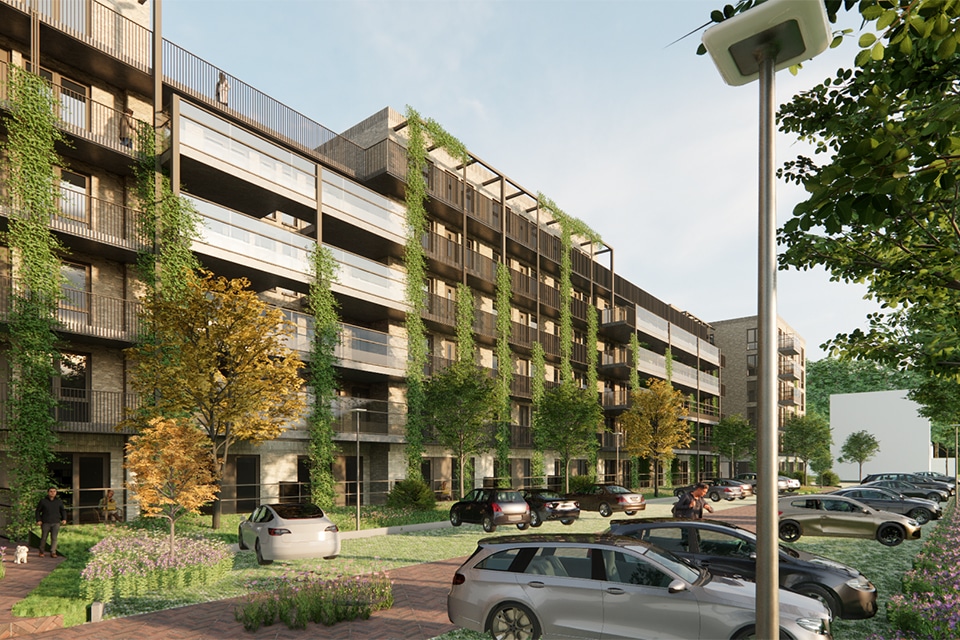
De Remise is part of the Stationsgebied Heerhugowaard Development Plan, which also includes Van Wijnen's new construction of the Vaanpark residential district (3 buildings/355 apartments). “In our design for De Remise, we have grasped various themes from the Development Plan,” said IJzendoorn. “For example, we paid extensive attention to pedestrians and cyclists, but also to social interaction and greenery. To make the Station Area an inviting public space, a lively plinth has been designed with - in addition to the main and individual residential entrances to The Remise - clearly visible bicycle parking facilities and a collective space with a social support center. Between the apartment building and the railroad tracks, a collective garden with various meeting places will be designed, and at the front of the new building there will be gable benches that reinforce the atmosphere of a ‘Delft sidewalk’.”
An important desire from the municipality was also to reduce heat stress and flooding, says IJzendoorn. “For this reason, various climate-adaptive measures are being taken, such as water buffering via infiltration crates in the ground. The design of the outdoor space also takes into account local nature, with sufficient habitat for the ‘Big 6’ of native species such as the dwarf bat, oystercatcher, goldfinch, earth bumblebee, early glazier and cabbage white.”
The Remise is being developed with a target GPR score of 8.5. “To make this possible, it will zoom in particularly on the themes of energy (GPR: 9.0), health (GPR: 8.5) and future value (GPR: 8.1),” says IJzendoorn. “On the roof of The Remise will be several hundred solar panels. In combination with an increased insulation value, excellent airtightness and low-temperature floor heating, residents” energy consumption will be kept under control.“ Health particularly relates to the noise-reducing measures, says Roy Klaver-Speets, project manager at Van Wijnen. ”For example, part of the shell has been made heavier to reduce noise pollution from the railroad. In addition, acoustic plates have been made on the underside of the balconies and glass parapets and facade screens are being used in select places."
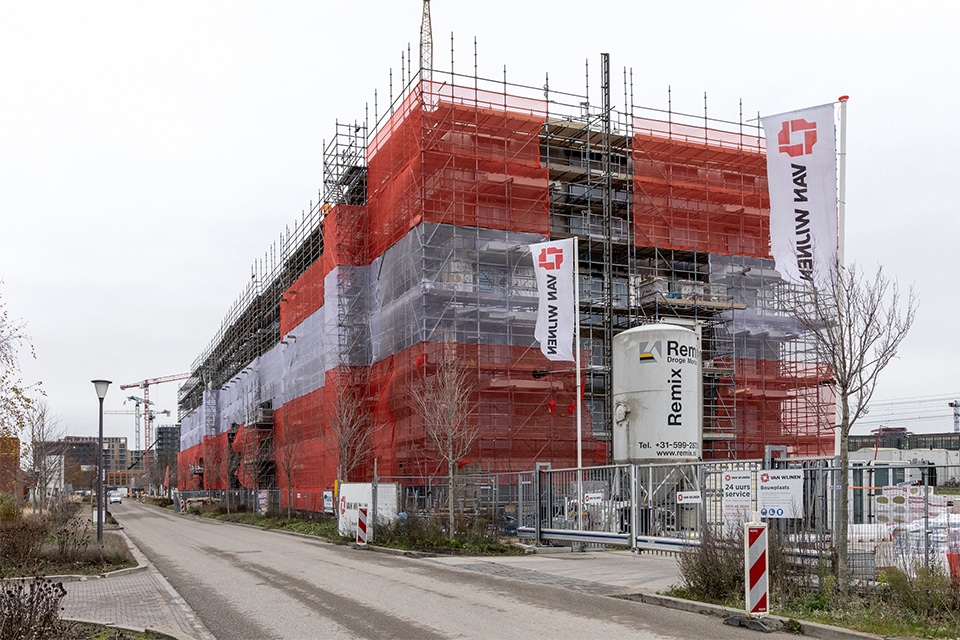
Construction began in December 2024. “Because The Remise is located in a row of new construction projects and right across from the North Holland Eye Center, a lot of attention was paid to the construction site layout,” says Klaver-Speets. “The same goes for the proper separation of construction and destination traffic.” In order not to disrupt operations at the Eye Center, a low-vibration foundation method with bored piles formed in the ground was chosen. “At the base of the building is a traditional wet foundation with the pipe runs for the utilities. On top of this is a hollow-core slab ground floor with a building envelope above it with high-rise sand-lime brick walls, wide-slab floors and a concrete roof floor with EPDM flat roof package. The front and rear facade are made of sand-lime brick in combination with plastic window frames. By supplying these window frames including a structural frame, an optimum in physical load, construction speed and quality is achieved. The building is immediately wind and watertight.”
Masonry was chosen as the facade finish. Differing colors, depths and dressings provide a special aesthetic quality here, says IJzendoorn. “The same applies to the entrance, stairwells and atrium, where wooden slatted cladding and high-quality lighting immediately attract attention. Anyone who visits The Remise soon will not see at first glance that it is social housing.”
“The Remise is more than a building,” IJzendoorn and Klaver-Speets conclude. “The fact that Van Wijnen has been involved from the initial planning to the handover of the keys allows us to add maximum value. Both in terms of aesthetics, functionality and affordability, and both for the residents and the neighborhood.”