Platform on new construction, renovation, restoration and transformation
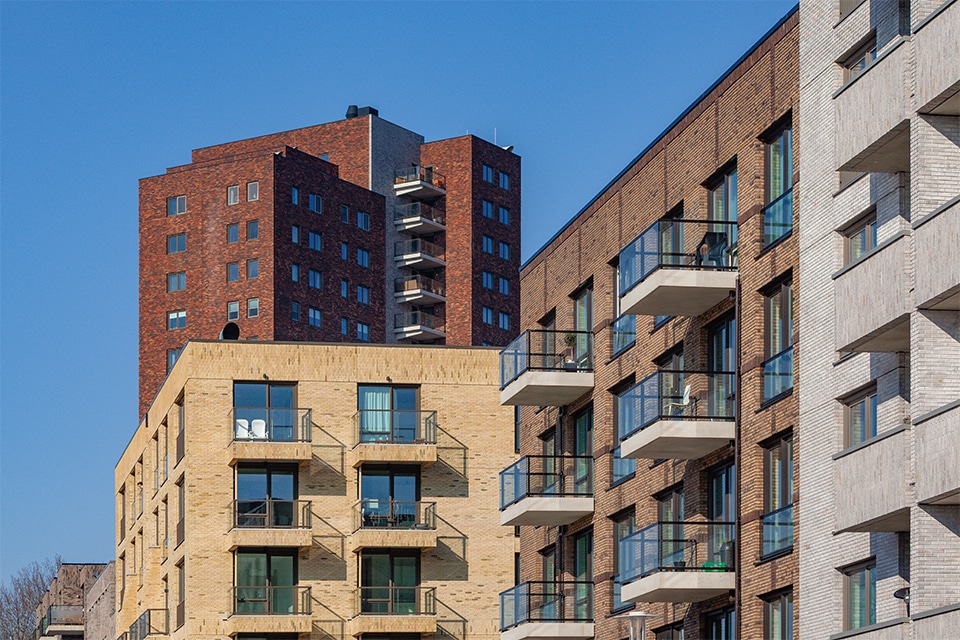
Rodruza has been a household name in the brick industry for more than three hundred years. What once began as a traditional family business in Rossum has grown into a modern manufacturer with branches in Rossum and Gendt. With this centuries-old experience as a solid foundation, Rodruza has set a clear course in recent years: a future in which sustainability, circularity and innovation are central. We speak to sustainability and quality manager Susan de Vries.
The construction industry is in the midst of a major transition. Developments in circular construction, CO2-reduction and biobased materials are rapidly following each other. Rodruza is actively responding to this. “We are increasingly focusing on applying secondary raw materials, which are given a second life in DC Bricks” new products,“ says De Vries. "In addition, we are constantly investigating ways to reduce CO2-footprint per brick and produce more energy efficiently.” A key tool in this regard is life cycle analysis (LCA), which calculates the environmental impact of products. “We want to underpin our sustainability journey with data, not gut feeling,” De Vries emphasizes. “That way we can make targeted choices that really contribute to a more sustainable future.”
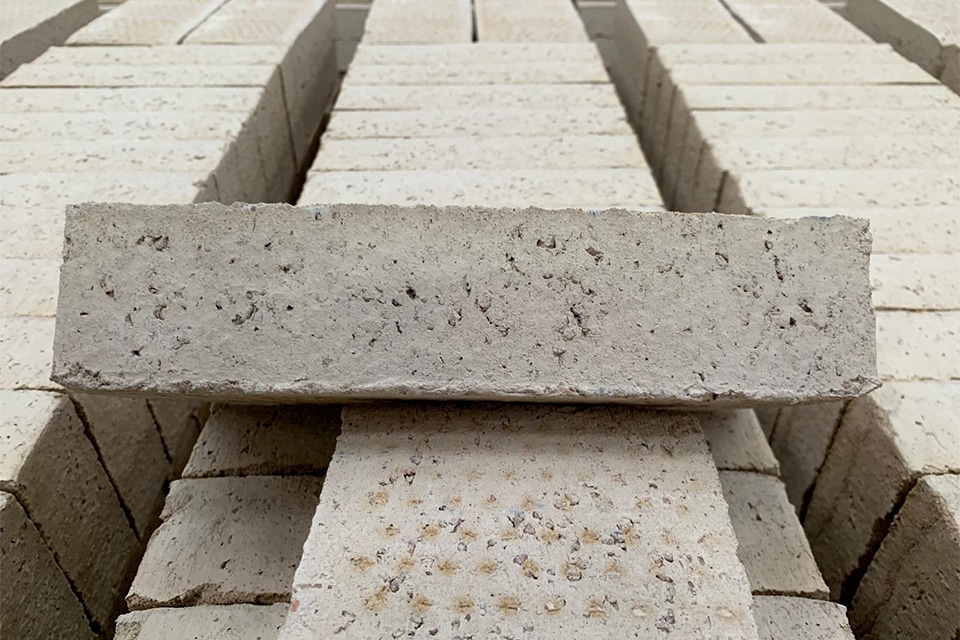
A tangible example of that sustainable course is DC Bricks, a joint venture between Rodruza and Zilverschoon Randwijk. Where Zilverschoon is known for its craftsmanship and power of innovation, Rodruza brings in its automated production process. “Together we have developed a new generation of facing brick that consists of up to 60% of secondary raw materials such as granules and glass flour, combined with 40% clay to maintain color and technical properties,” explains De Vries. The mixture allows for a more efficient production process: less drying time, lower kiln temperatures and thus less natural gas consumption. “The result is a product with a significantly lower environmental impact than a traditional brick, without compromising on quality or appearance.”
Sustainability goes beyond production at Rodruza. Through local clay extraction, the company contributes to conservation and biodiversity. “This approach not only helps improve river flow, but also maintains the cycle of renewable river clay.” It is an often underexposed form of sustainable resource use, according to De Vries. “The longevity of a facing brick is also an essential component. A brick can last for hundreds of years. That is insufficiently valued in current determination methods, such as in the MKI (Environmental Cost Indicator, ed.). And that's a shame. It is important that the MKI gives a realistic picture, so that building products can be compared fairly and thus the investment budget for sustainability in the long term is not put under pressure by producers such as Rodruza.”
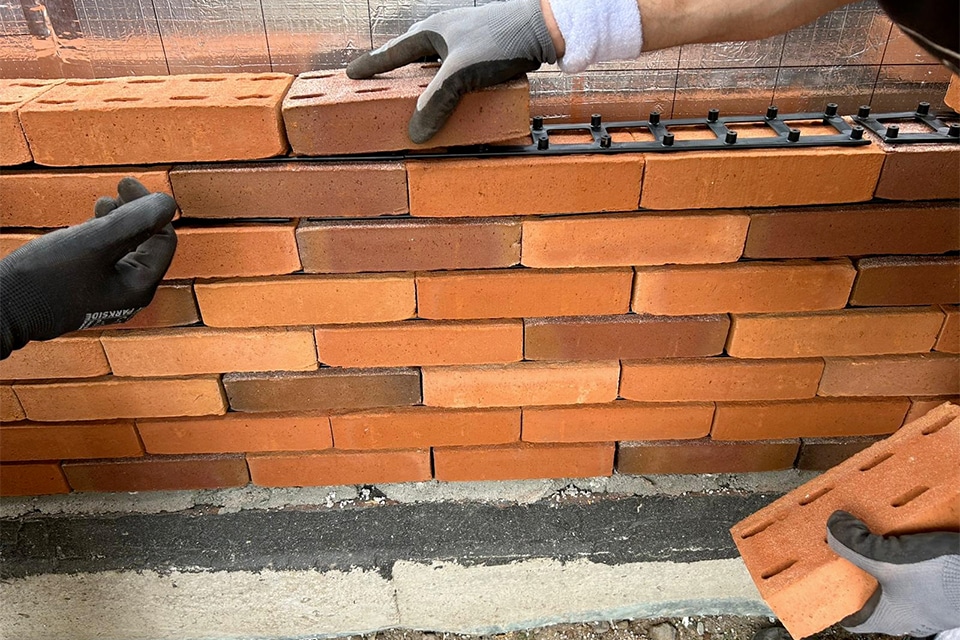
And those sustainable ambitions are in good shape. Rodruza, for example, is part of Brick Valley, an area-based partnership of four brick producers. “Our common ambition is to realize a collective sustainable and future-proof energy supply that will make it possible to produce paving and facing bricks completely climate-neutral in the long run. We do this, among other things, through knowledge sharing around electrification, hydrogen use and process optimization. Meanwhile, we are already taking steps to reduce our CO2-footprint, with DC Bricks as a tangible example.” The product was proudly presented to more than 140 (potential) customers, associates and partners during Dutch Green Building Week. “The reactions were overwhelmingly positive, a proof that the combination of tradition and innovation is the right way to go.”