Platform on new construction, renovation, restoration and transformation
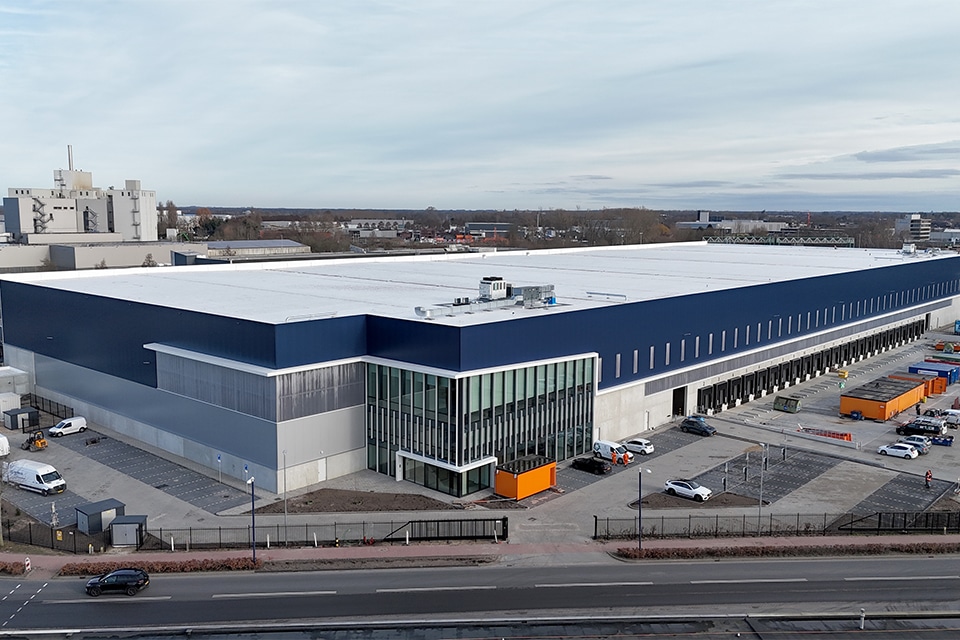
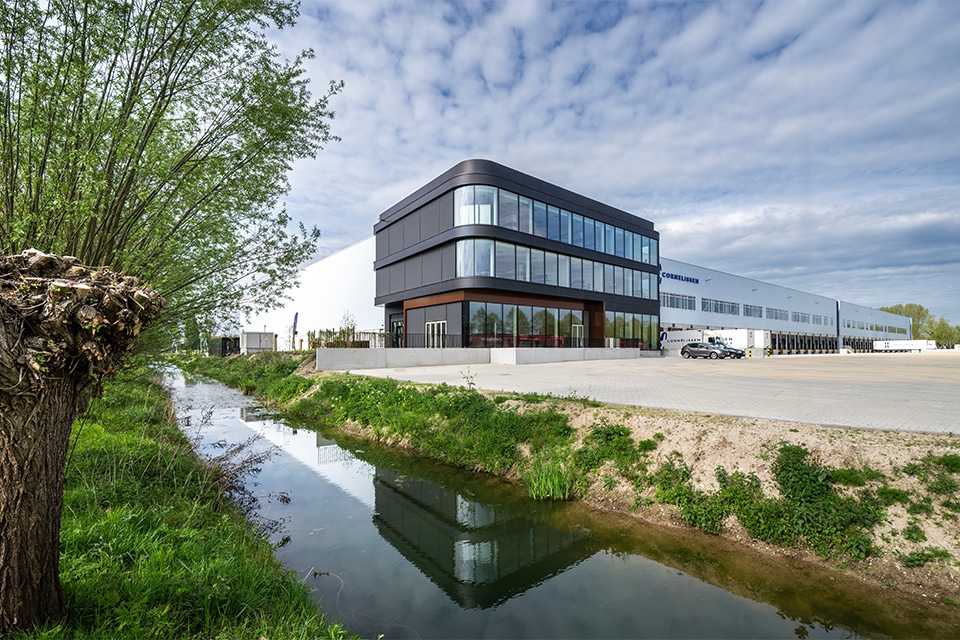
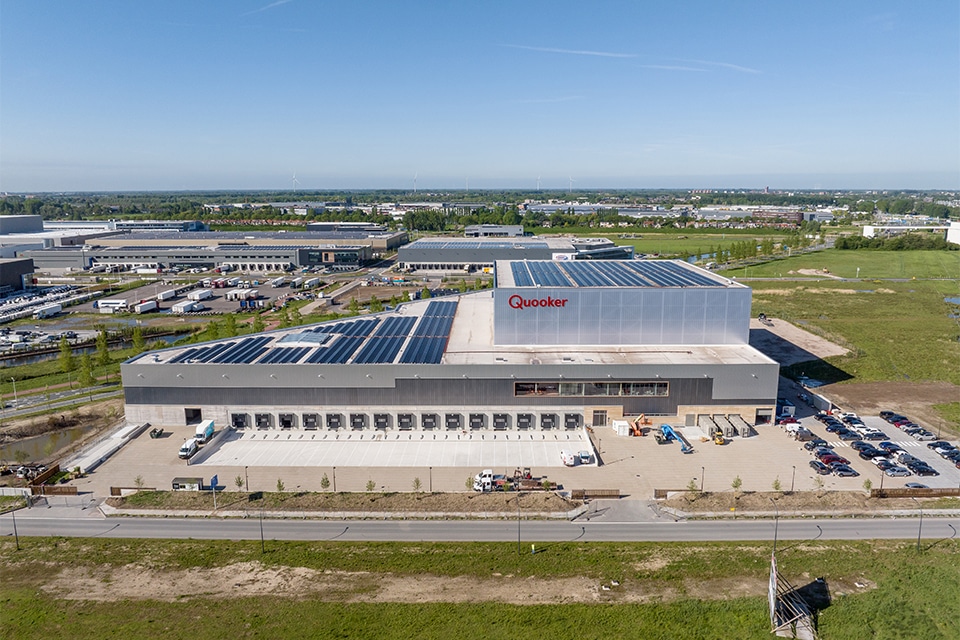
After a number of relatively quiet years within the logistics construction division, Bouwbedrijf van de Ven is now going full throttle again in this segment. Following on from a two-story warehouse for VTS in Boxmeer, a new distribution center for Bestseller in Lelystad and two logistics business premises for Prologis in Almere and Lisse, the Veghel-based construction company is now responsible for the realization of a new warehouse with enclosed offices for GARBE Industrial, against which the same volume can be built as an extension in the future. The new Veghel warehouse has an eaves height of no less than 17 meters, which means Bouwbedrijf van de Ven is keeping up with the latest developments. Moreover, it was built according to the BREEAM Excellent criteria, using raw materials released during demolition.
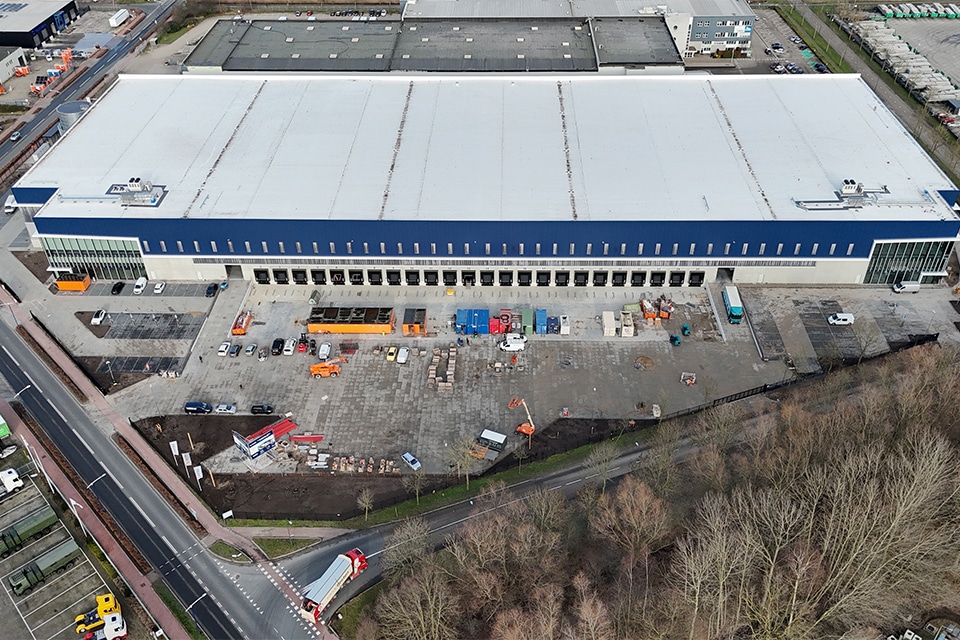
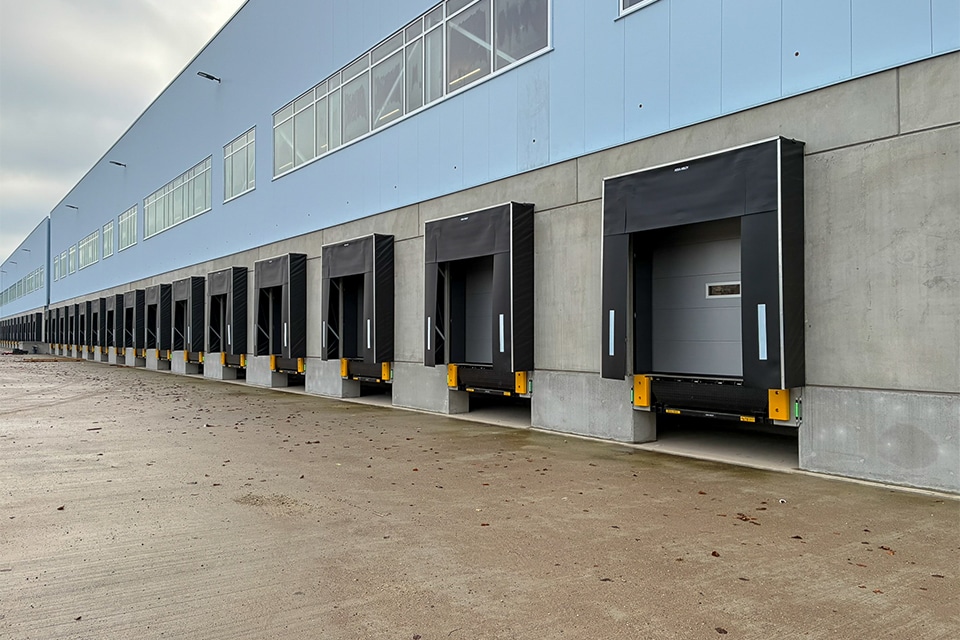
The new warehouse for GARBE Industrial was completed in mid-January. Bouwbedrijf van de Ven was awarded the repurposing project after a tender and was responsible for the complete demolition and new construction, which was carried out in just 12 months. “Because part of the existing building still housed a tenant, we demolished two-thirds of it,” says Chris van den Biggelaar, project manager at Bouwbedrijf van de Ven. “This created sufficient space for the first half of the new building, which consists of 18,870 m2 of warehouse with 24 loading docks, 2,600 m2 of mezzanine and two indoor offices of 915 and 395 m2, respectively. The offices are strategically positioned at the far corners of the building. And the installations are also laid out so that the new building can be leased to either one or two tenants.” A fun fact about this brownfield development is that the demolished building was also built in the past by Bouwbedrijf van de Ven.
When the existing building was demolished, as many materials as possible were recovered for reuse on site. As an example, Van den Biggelaar cites the crushed concrete rubble, which was used as the raw material for the foundation rubble package.
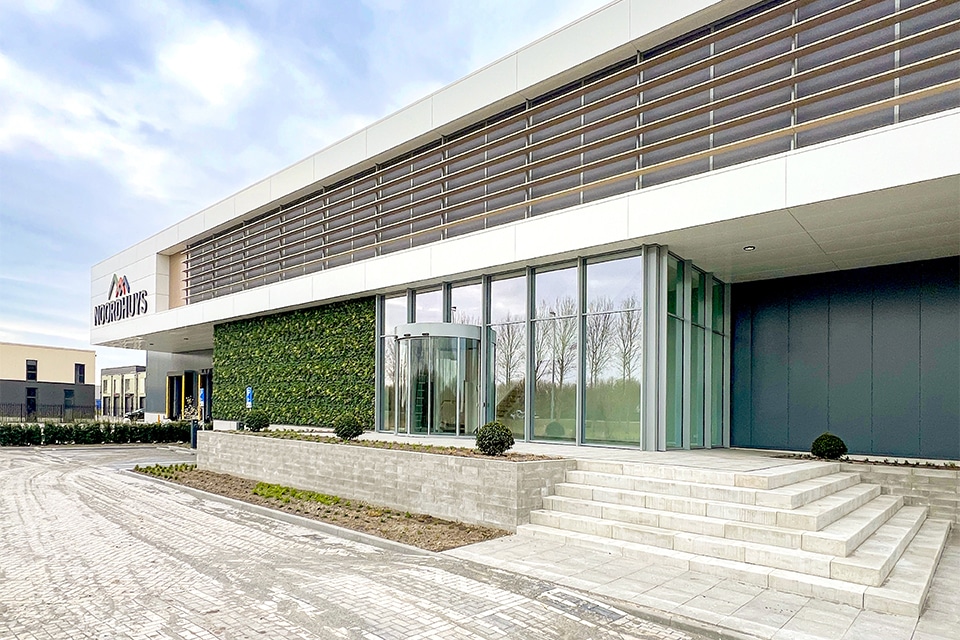
“We then installed a foundation with bored piles to properly transfer the weight of the steel structure to the ground. The walls and floors consisted of insulated concrete walls and hollow-core slabs, while sandwich panels and curtain walls were chosen for the facades. As soon as the building was wind and watertight, we started installing all the systems inside, pouring the concrete floors and building the offices, which were given two and three floors respectively. The offices were constructed with metal stud walls, glass walls and system ceilings and delivered completely finished, including wallpaper, painting and finished toilet groups.”
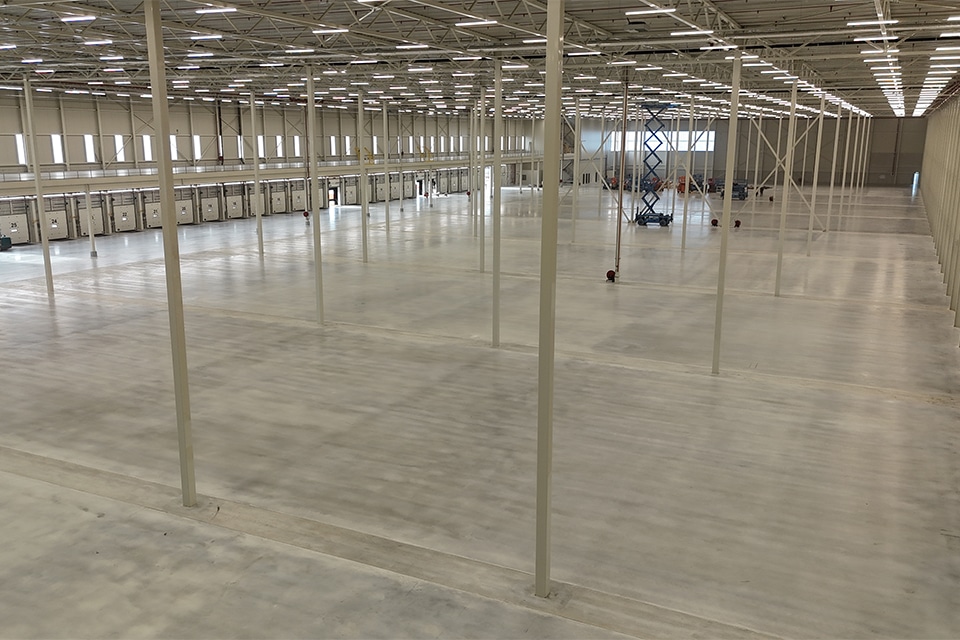
Where a free height of 12.2 meters is common, this warehouse has been given a free height of 15 meters. This allows for maximum free stack height, with only roof net sprinklers. Another special feature is that an energy square has been realized on the site, allowing the new warehouse to operate completely off-grid and without restrictions due to grid congestion, for example.