










A ‘typical’ waterbus stop becomes a bustling, vibrant square with offices, wellness, fitness and hospitality
Text Johan DebaerePhotography Den Dunnen Bouwonderneming B.V.
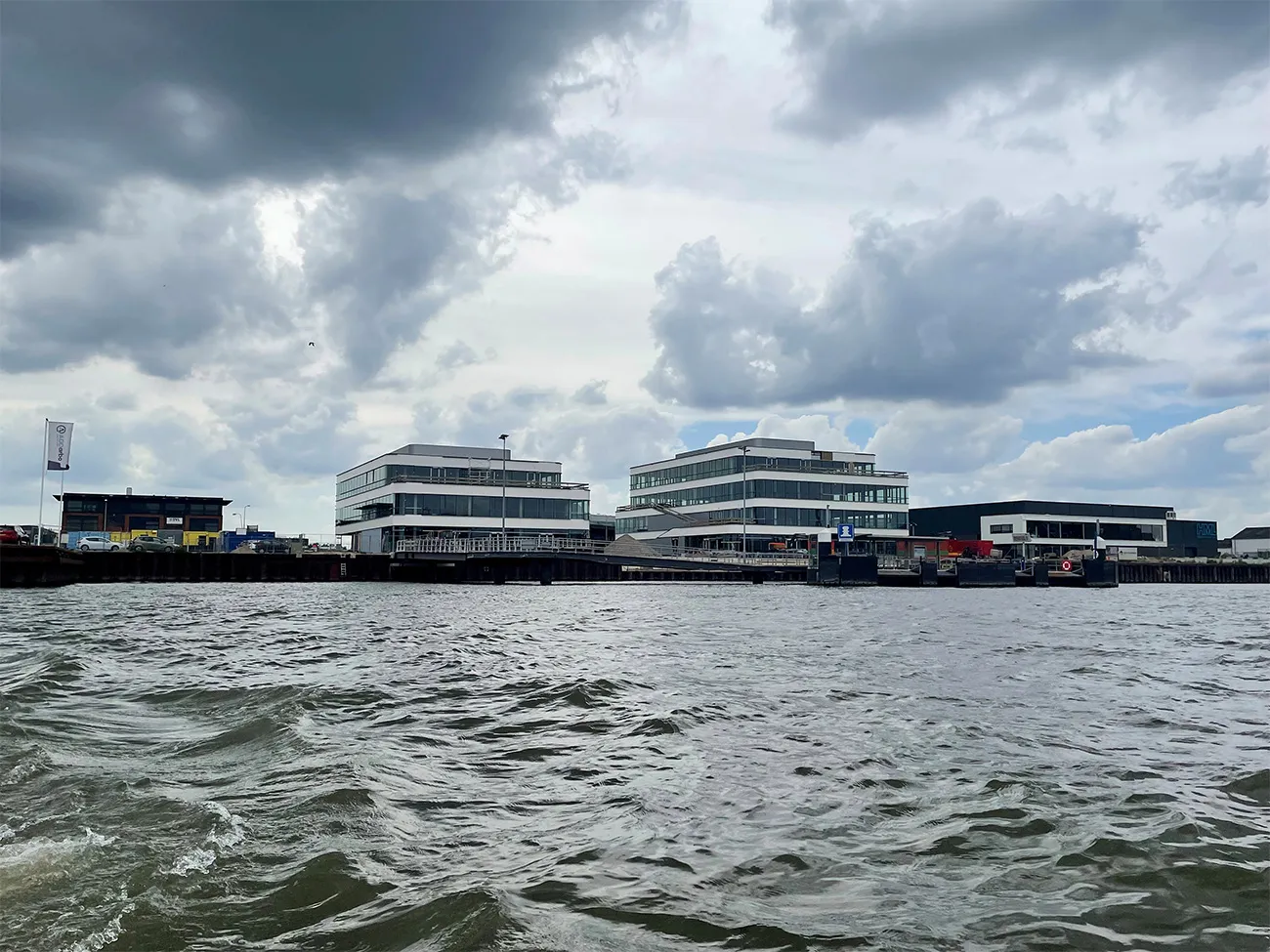
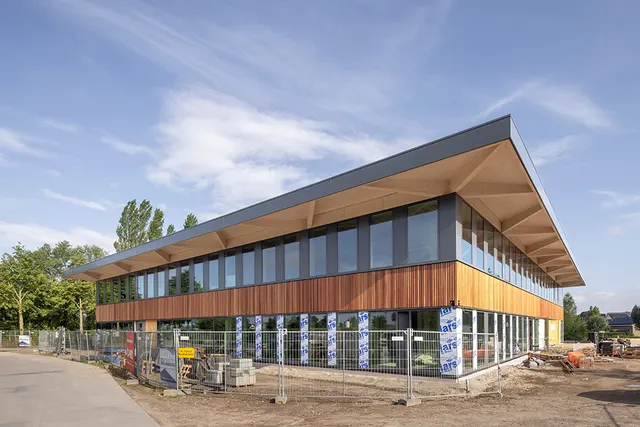
Noordkade in Hendrik-Ido-Ambacht has undergone a complete transformation: from an uninspiring waterbus stop where nobody wanted to linger to a lively square with stunning panoramic views. Commissioned by Stemar Projectontwikkeling and Getgripp, RoosRos architecten designed two functional buildings. One is a maritime business centre with offices and meeting facilities, while the other is dedicated to wellness, sport and health. There is also plenty of space for hospitality venues. Den Dunnen Bouwonderneming of Hardinxveld-Giessendam built the striking buildings, which are characterised by glass, flowing lines, rounded forms, curved corners and horizontal detailing. With a nod to the past, they look like two ships moored side by side.
Noordkade is to once again become an attractive link between the river and the village centre. For many years, ships came and went at this site to be assembled, dismantled or repaired. With this history and the project developers’ wishes in mind, architect Chi-Hang Chim of RoosRos architecten designed two buildings resembling yachts, set around a square with terraces and steps leading down to the river. It looks as though two new ships are moored at the former shipyard. The historic ship’s crane completes the picture.
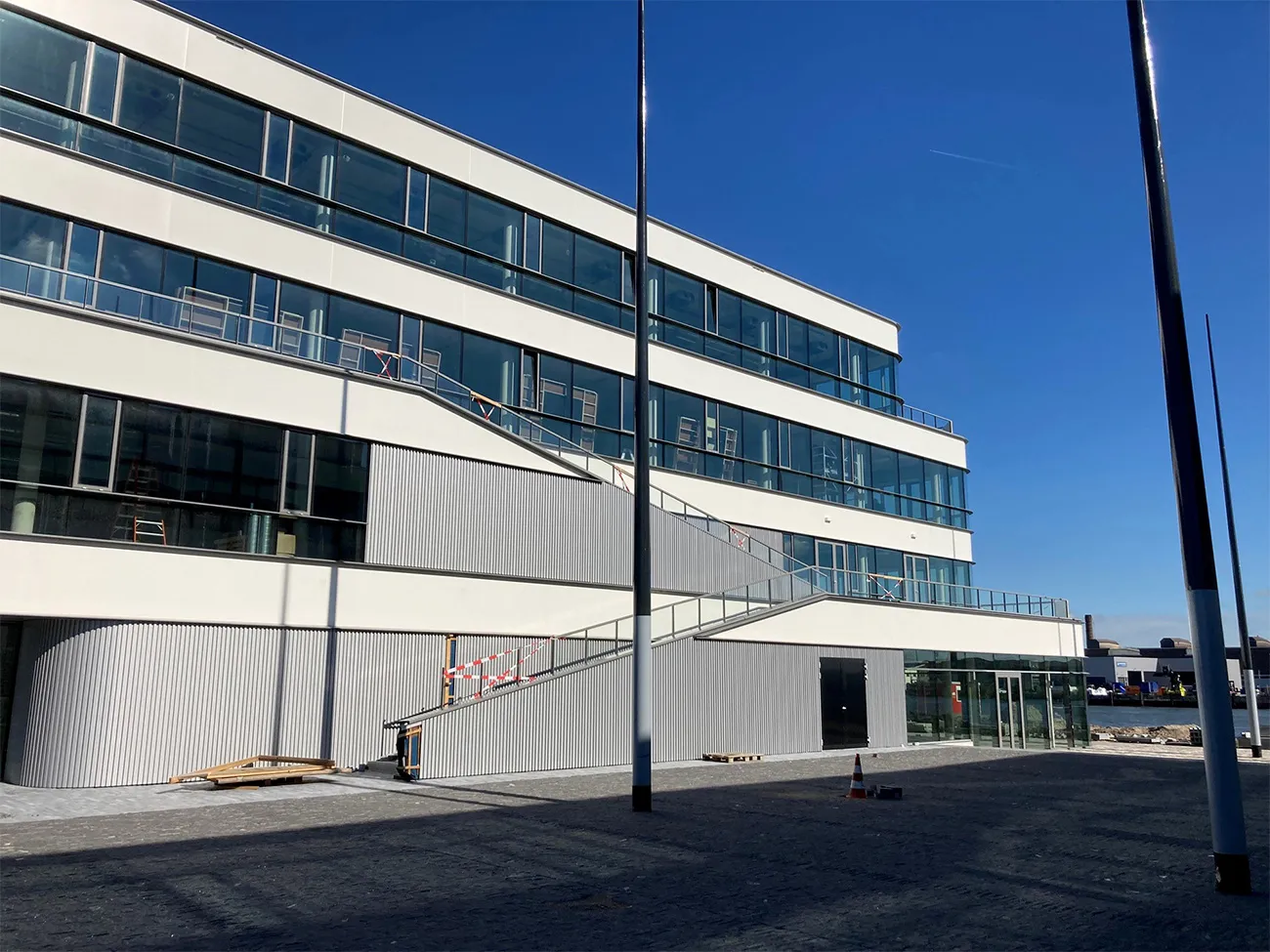
Two yachts at the shipyard
The first building, with four storeys, houses the maritime business centre, including offices, meeting rooms and conference halls. The second, with three storeys, is dedicated to sport and health, with facilities including a gym, wellness centre and physiotherapist. The ground floors, measuring just over 1,000 m² and just under 1,000 m² respectively, accommodate hospitality venues with terraces. Each upper floor is smaller than the one below and has glass balustrades, creating the impression of standing on a ship’s deck. The developers and architects carefully thought through the plans in advance, and all permits had been applied for. Commissioned by Stemar and Getgripp, contractor Den Dunnen took responsibility for the detailed design and construction work, working as part of a design and build team.
Concrete frame surrounded by a curtain wall
“The slender buildings are based on a concrete frame structure and were assembled floor by floor using SKYDECK slab formwork. The systematic assembly sequence and lightweight system components speed up the work. The drophead system also allows for quick striking, significantly reducing the amount of material on site. It also means fewer props are needed, giving more room to move beneath the formwork,” explains managing director John den Dunnen. “We wrapped the concrete frame in a curtain wall with plenty of glass, sandwich panels and white cover trims on the outside. Flowing lines, rounded forms, curved corners and horizontal detailing are the main features of the architecture. The large glazed areas bring plenty of daylight into every room and connect the inside with the outside.”
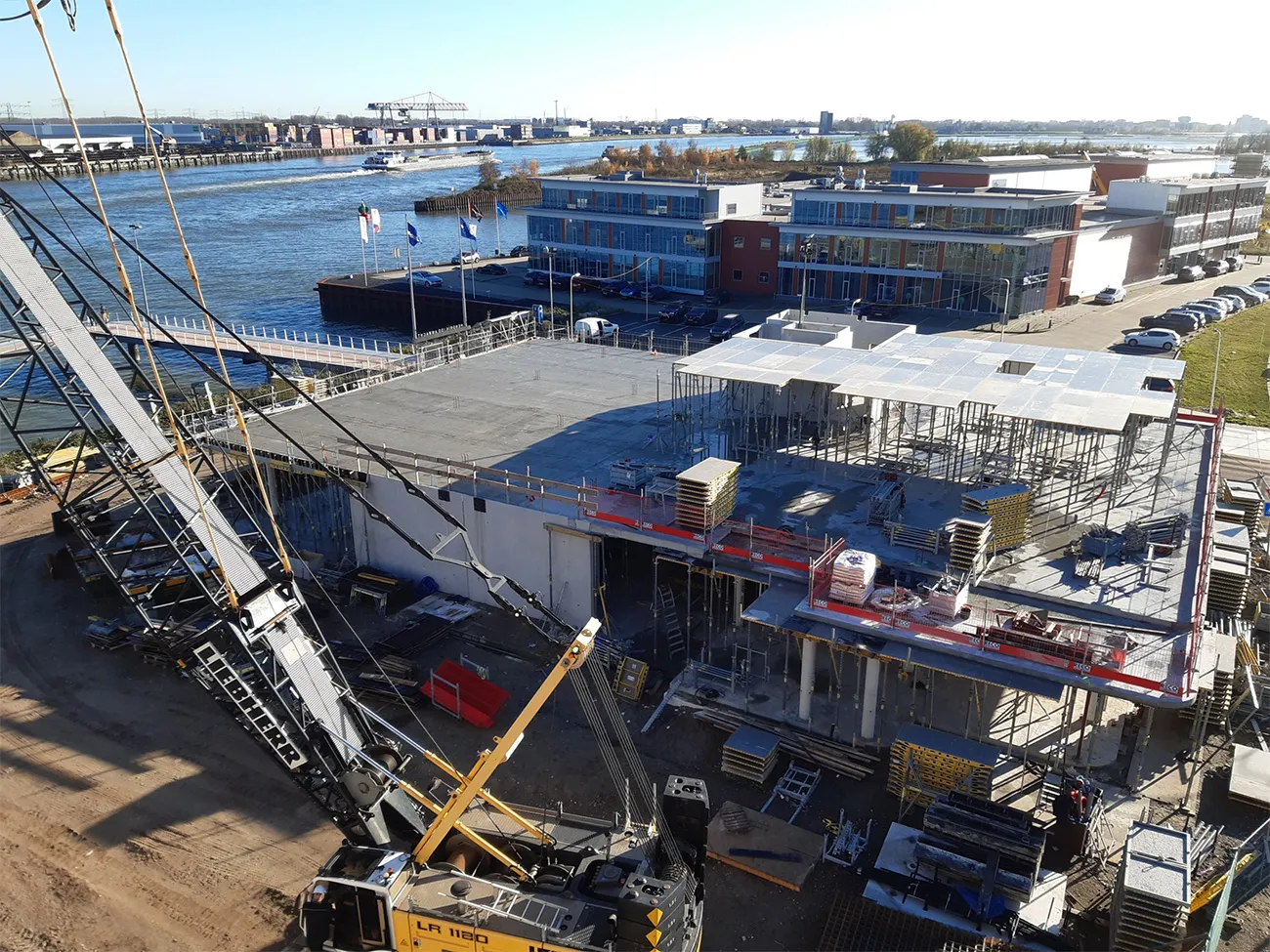
Challenging construction project
The first offices in the maritime business centre will be occupied shortly, and the MyLife fitness club has already opened. The various hospitality operators are busy completing their fit-outs and are expected to open their doors at the end of this year. “Everyone has their own ideas about layout and interior design, so we handed over all the spaces as shells. We also carried out the fit-out of the fitness hall, except for the furniture,” Den Dunnen concludes. “This is an excellent reference project, even though it was very challenging, partly because of external factors such as the pandemic, late deliveries of materials, price rises and the difficulty of finding staff. Our flat organisational structure and short lines of communication allowed us to respond flexibly and complete everything on time.”
Question about this story? Ask your question
Who worked on it
- Project developersStemar Groep, Hendrik-Ido-Ambacht and Getgripp, Rotterdam
- ArchitectRoosRos architecten, Oud-Beijerland
- Main contractorDen Dunnen Bouwonderneming BV, Hardinxveld-Giessendam
Keep following this
Get an email when a new story is published. No account needed.
- SubjectConstruction projects