Platform on new construction, renovation, restoration and transformation
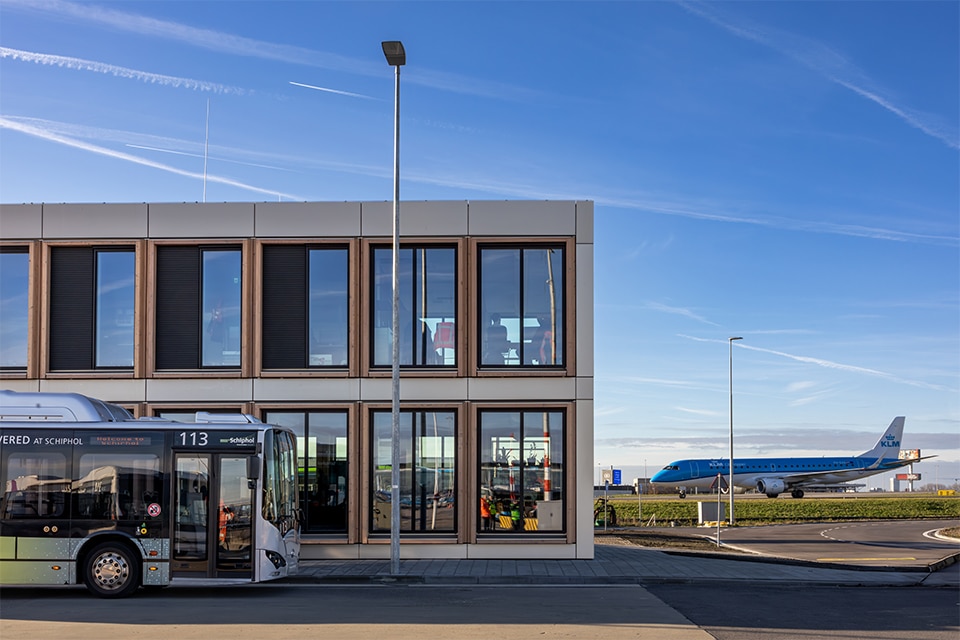
A special moment: on December 10, the very first modular wood construction project at Schiphol was officially opened: Stuurhut Tenderplein Schiphol. The innovative rest room for bus drivers is constructed entirely of circular wooden units that can be both detached and reused. Without compromising on user comfort and acoustics. Benthem Crouwel Naco has been involved in the project as architect from the initiation phase. “From structural design to technical design and together with all partners and colleagues we worked towards a circular end result,” says Alina Heemstra, Senior Architect at Benthem Crouwel Naco. “Sustainability and appearance as well as building and installations are perfectly in harmony.”
The new driver's area was built as part of the VDR (Completion of Double Lane System) project, which necessitated the redesign of the existing bus plaza. Benthem Crouwel Naco (BCN) was awarded the design contract. In the recent past, the architectural team also designed the new Permit Station at Schiphol Airport, in which existing steel structures, windows, doors, plumbing, kitchens and LED lighting were given a sustainable second life. As a result, the circular Hangarage achieved a Building Circularity Index (BCI) score of 68 percent (where 80 percent is the maximum). With Stuurhut Tenderplein, BCN is going even further. By making clever use of the existing foundation slab of the former bus shelter and thanks to the use of wooden modules, the building has a low CO2 footprint and an impressive BCI score of no less than 70 percent.
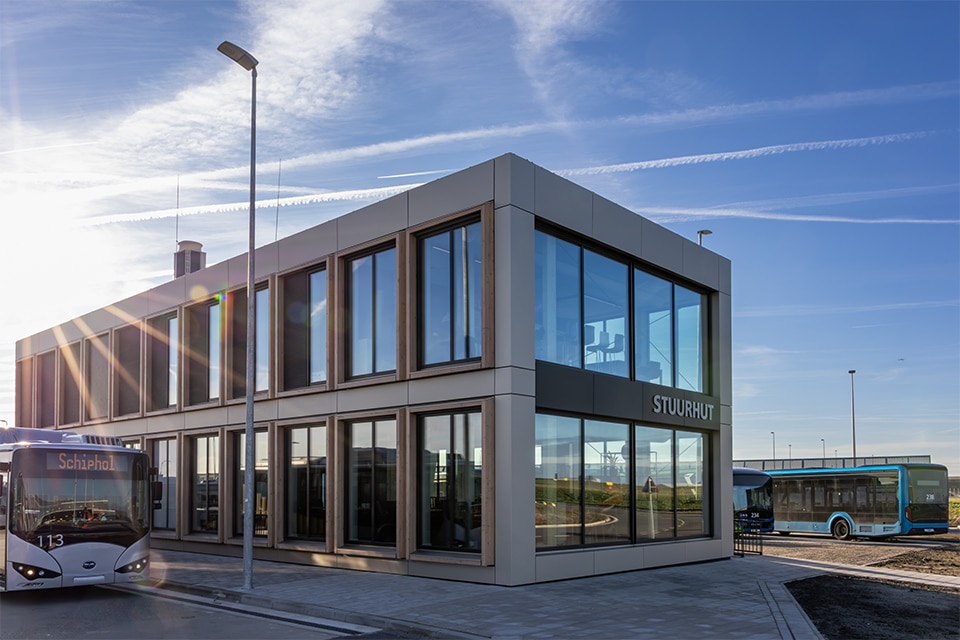
“Leading the design of Stuurhut Tenderplein was the high sustainability ambition,” says Heemstra. “Moreover, Schiphol had drawn up an extensive Program of Requirements, in which a robust building and the application of as many bio-based materials as possible with a long lifespan, high fire rating, high anti-slip value (skid resistance) and excellent cleanability were important starting points.” Because the rest room may eventually be relocated, high requirements were also placed on detachability and reusability, says Alberte van Santen-Harmsen, project manager at Benthem Crouwel Naco. “For this reason, module construction was considered, for example.”
“Because the building must be able to last for years even after its eventual relocation, container construction was not an option,” says Van Santen-Harmsen. “Instead, high-quality modular construction with a permanent aesthetic and residential quality was chosen.” Heemstra: “With this, we are very much in line with the building quality at the Amsterdam airport. In the new rest room, one can work and stay very comfortably, without noise pollution from bus or air traffic.”
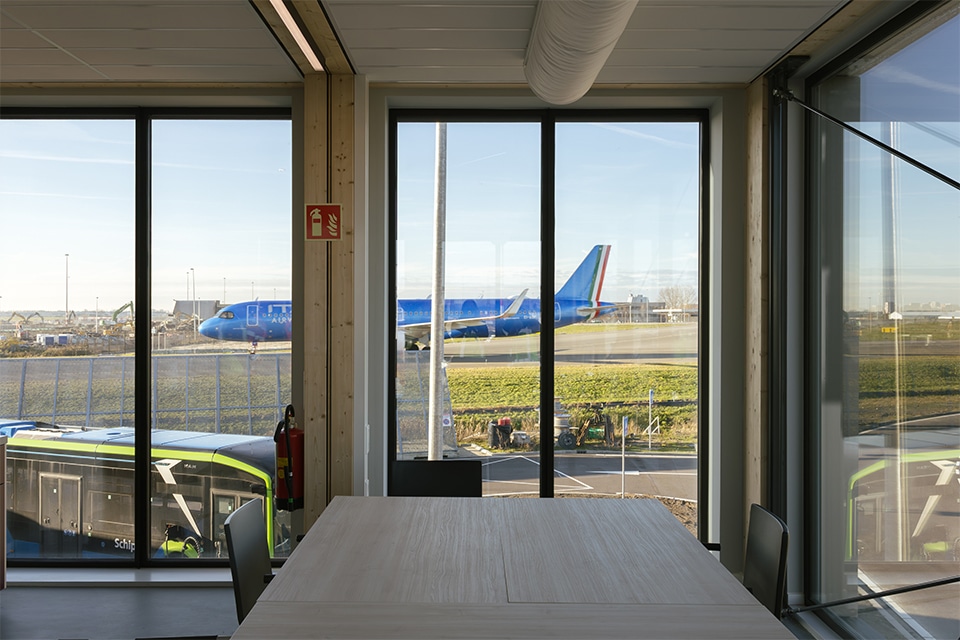
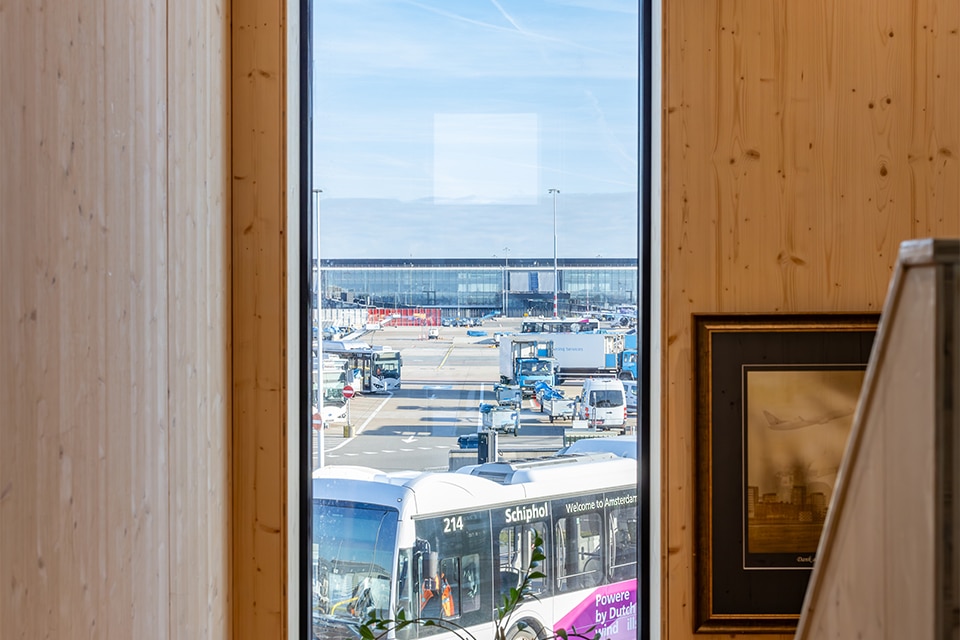
Wheelhouse Tenderplein consists largely of biobased materials, such as wood. As an example, Heemstra mentions the modules of Cross-Laminated Timber (CLT), in combination with the prefabricated wood-frame facades with cellulose insulation. The wood is also reflected in the frames around the facade frames, in which the blinds are aesthetically incorporated. “Depending on the space function, open, semi-closed or closed frame fillings were chosen so that a phenomenal view of the bus platform and privacy harmonize nicely,” she says. “The wooden frames are interspersed with aluminum panels, in which 70 percent recycled aluminum was used. Anodizing the aluminum instead of coating also ensures excellent recyclability toward the future.”
To make the detachable nature of the modules visible from the outside as well, the facade is made up of individual elements. “The design is simple, logical and sturdy and creates the impression of the buses in which the drivers drive every day. This brings form and function together nicely.”