Platform on new construction, renovation, restoration and transformation
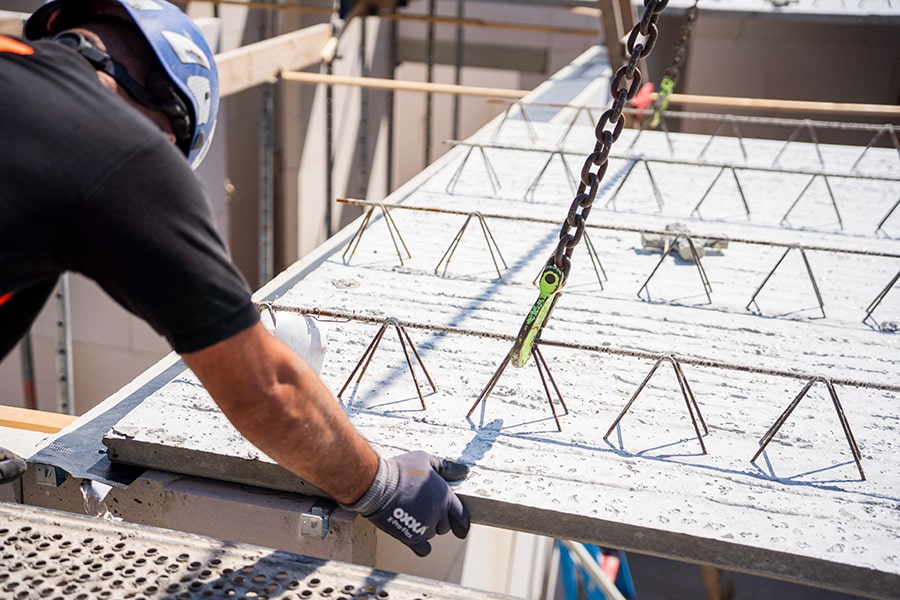
Making the construction industry more sustainable isn’t just about ambitions and climate goals; it’s primarily about how these goals are practically implemented in a production environment. At De Hoop Pekso in Oosterhout, that energy transition is taking on an increasingly concrete form. There, sustainability isn’t a standalone project, but an integral part of the daily production of wide-slab floors. The focus is on reducing dependence on fossil fuels, gaining greater control over the company’s own energy consumption, and improving data-driven management.
According to Frits Simons, CEO of De Hoop Pekso, real progress is only made when sustainability is integrated into the factory and its processes. This requires a step-by-step change in the way we work. A visible example of this is the solar panels at the Oosterhout site. The electricity generated is used directly in the production process. This transforms energy from an uncertain cost item into a strategic production factor.
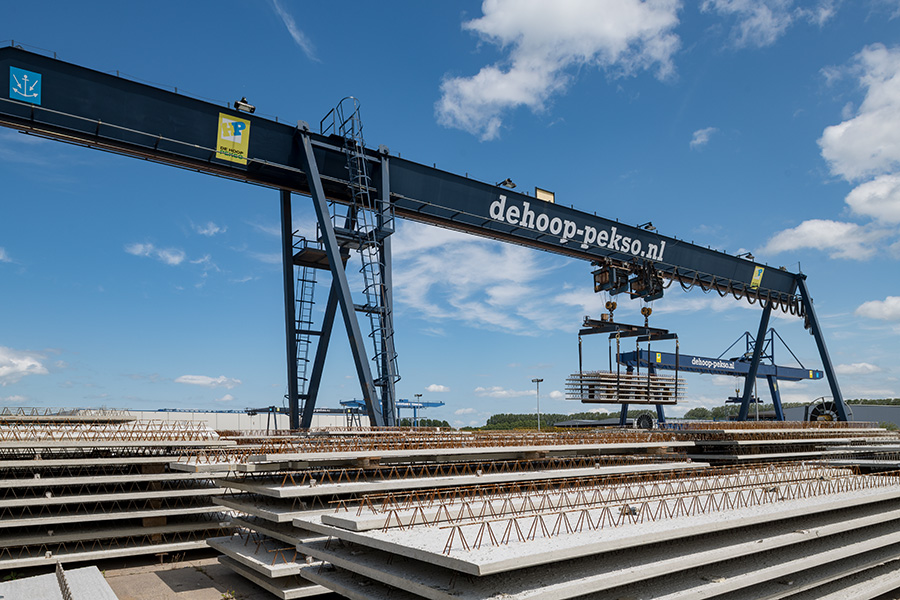
This change affects the organization of production. Energy is no longer viewed as a given input, but as a variable that can be actively managed. An important example is the curing chamber, where concrete elements cure under controlled conditions. This process was traditionally heavily dependent on natural gas. Through partial electrification and the use of in-house solar energy, natural gas consumption is now being significantly reduced. This results in lower CO2 emissions, greater control over energy costs, and reduced vulnerability to price fluctuations.
Heat pumps also play a role in this. In various locations, they are replacing the use of natural gas for heating processes and spaces. Combined with on-site energy generation, this creates a system in which these measures reinforce one another. That requires investment and a long-term commitment, but according to Simons, thinking ahead is essential. Anyone who waits until everything is certain will be too late.
Data plays a key role. Through an energy management system, De Hoop Pekso gains real-time insight into consumption, peak loads, and efficiency. This allows not only for retrospective analysis but also for active adjustments. Production processes can be better aligned with times when ample in-house energy is available, while consumption peaks can be more effectively limited. In this way, energy management, planning, and production are increasingly converging into a single, integrated system.
Internal transportation is also being made more sustainable step by step. Diesel vehicles are being replaced by electric alternatives, taking into account the harsh conditions in the production environment. This reduces emissions and contributes to a cleaner and quieter work environment. This development is becoming increasingly relevant for contractors and clients. Sustainability plays a growing role in tenders, regulations, and reporting requirements. Customers are asking not only about price and scheduling, but also about CO2 reduction, energy consumption, and the origin of materials. According to René Verstraete, Head of Sales at De Hoop Pekso, it is therefore important not only to have a compelling narrative, but also the data to back it up.
De Hoop Pekso’s approach demonstrates that sustainability in the prefab sector goes beyond isolated measures. By integrating energy generation, electrification, and data-driven optimization, a production environment is created in which sustainability and efficiency reinforce one another. As a result, sustainability becomes not only an obligation but also a means of making the organization stronger, more stable, and better prepared for the future.
Neem dan rechtstreeks contact op met The Hope Pekso.
 Contact opnemen
We are a manufacturer and supplier of a total package of structural building products: from the foundation element to the storey floor. Wide range of building products available from depots from stock Our wide range of products find their application mainly in residential and commercial construction. Our products can be divided into three product categories: Floors and Walls EPS products (expanded polystyrene) Reinforcing steel Service [...]
Bekijk Bedrijfsprofiel