Platform on new construction, renovation, restoration and transformation
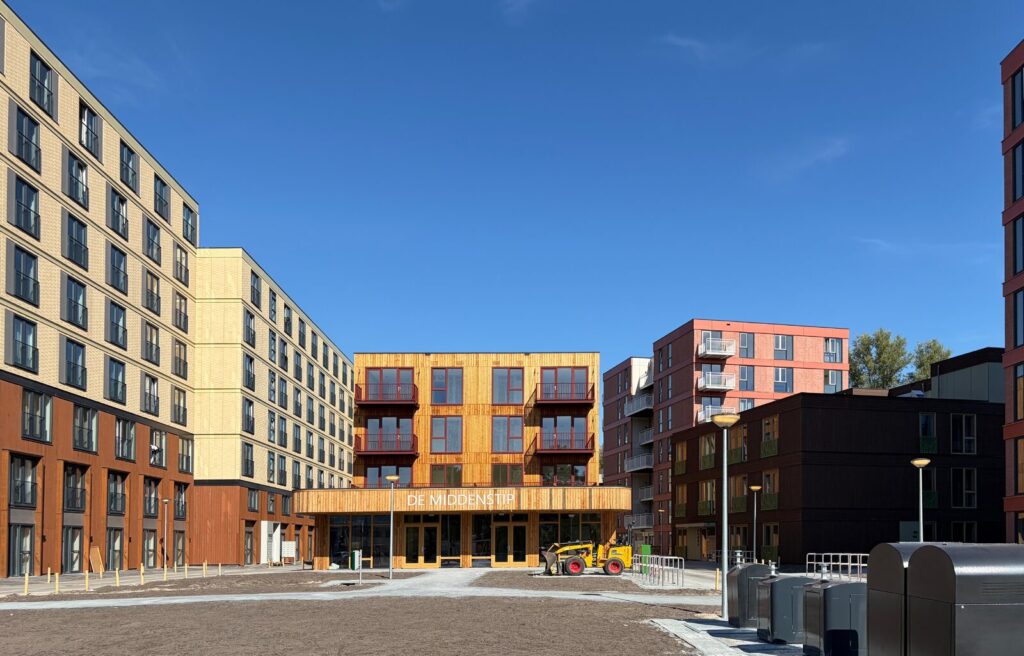
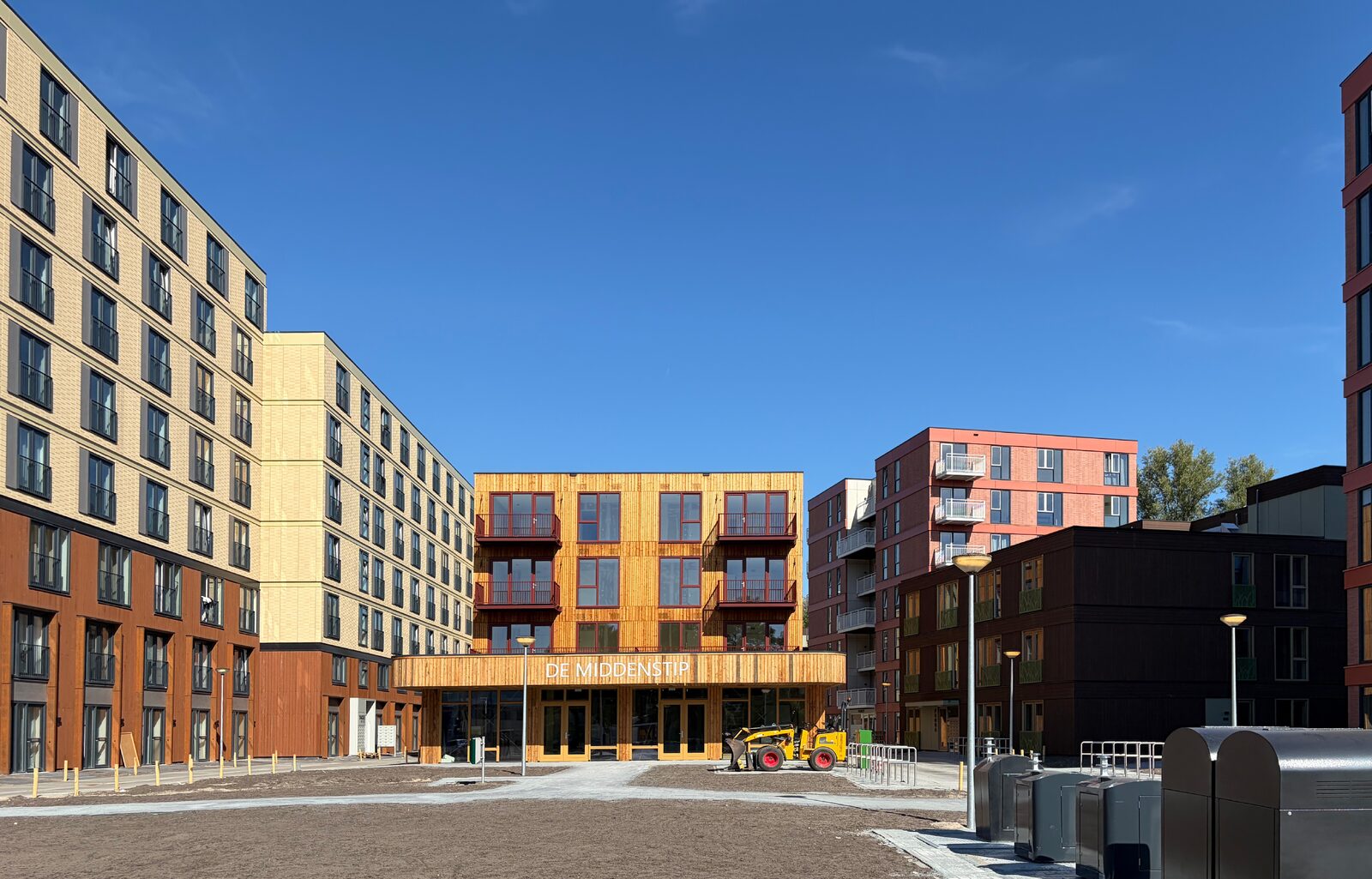
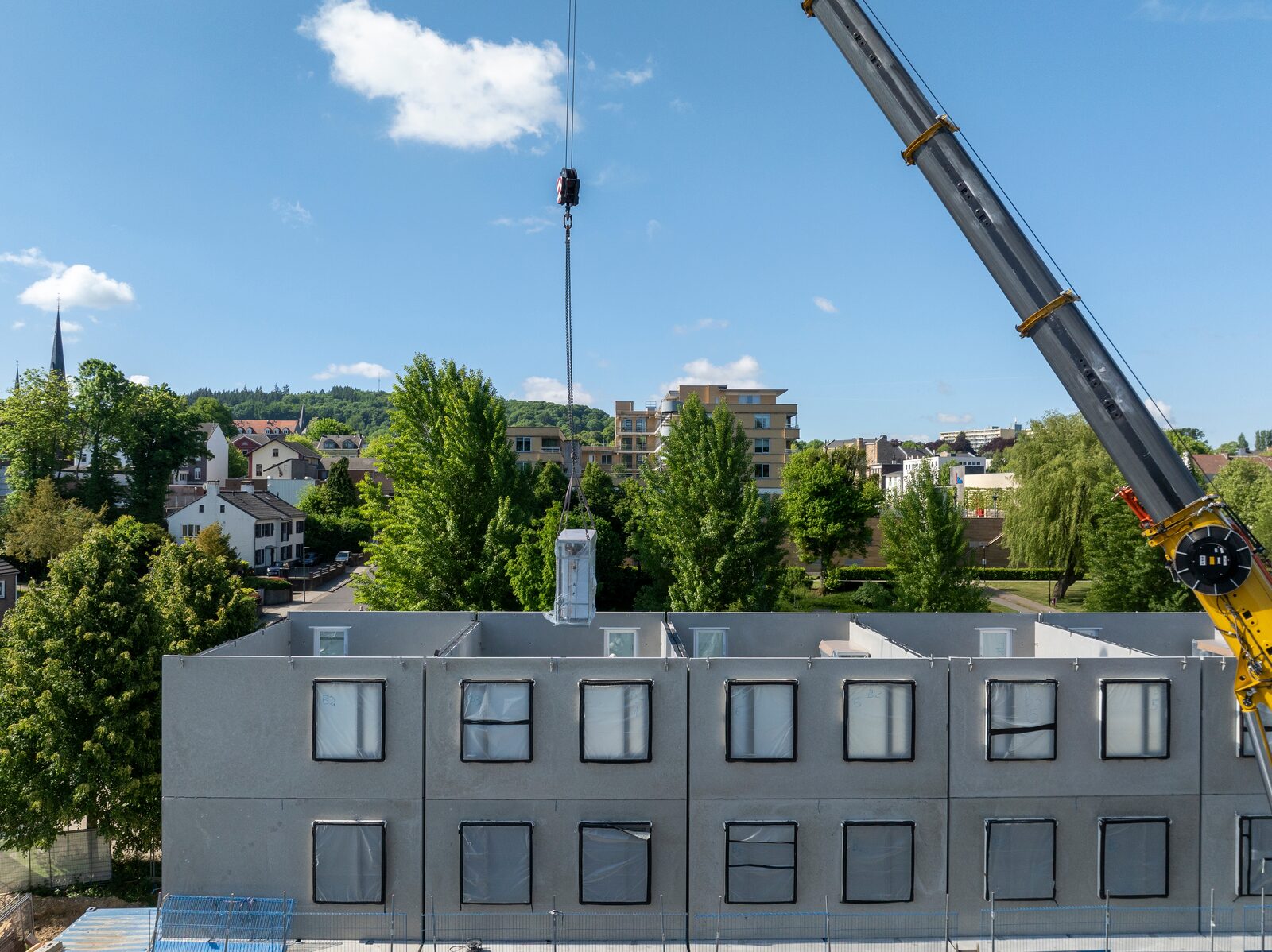
You can think of a modular home as a construction kit. Each modular home arrives at the construction site ready-made from the factory, ready to be assembled. That’s only possible if the steel also stays within tight tolerances. For the De Nieuwe Kern project in Ouder-Amstel, the challenge went a step further. The building turned out to be taller than the system had calculated, and therefore heavier. Vic Obdam Staalbouw supplied the steel and adapted part of its own factory to accommodate this.
Vic Obdam has been active in the steel construction industry for over forty years. The family-owned business employs about 85 people and manufactures steel structures for a wide range of projects, from large-scale renovations—such as the Binnenhof in The Hague—to modular housing. “Our strength lies in the fact that we don’t just follow the blueprints,” says Technical Director Pieter Klijn. “Our people are used to thinking creatively. If something isn’t immediately possible, we figure out how to make it work.”
This approach to collaboration is a good fit for Ursem Modular Building Systems. The two companies have been working together for many years. Among other things, Vic Obdam manufactures steel components for the modular homes that Ursem produces in its factory. “We strongly believe in long-term relationships,” says Klijn. “That way, you get to know each other and each other’s processes well. You’re not just a supplier, but a true supply chain partner.”
For De Nieuwe Kern, that collaboration came in handy. The project called for a different approach than previous modular housing projects. The new construction system had to be suitable for buildings up to eight stories tall. This meant larger and heavier steel sections were needed. “You can’t simply scale up the existing system,” explains production team leader Paul Hoedjes. “With larger sections, for example, you also have to deal with different tolerances. So we sat down together to figure out: which sections should we use, how do we manufacture the components, and how do we ensure that Ursem can process them quickly and smoothly in the factory?”
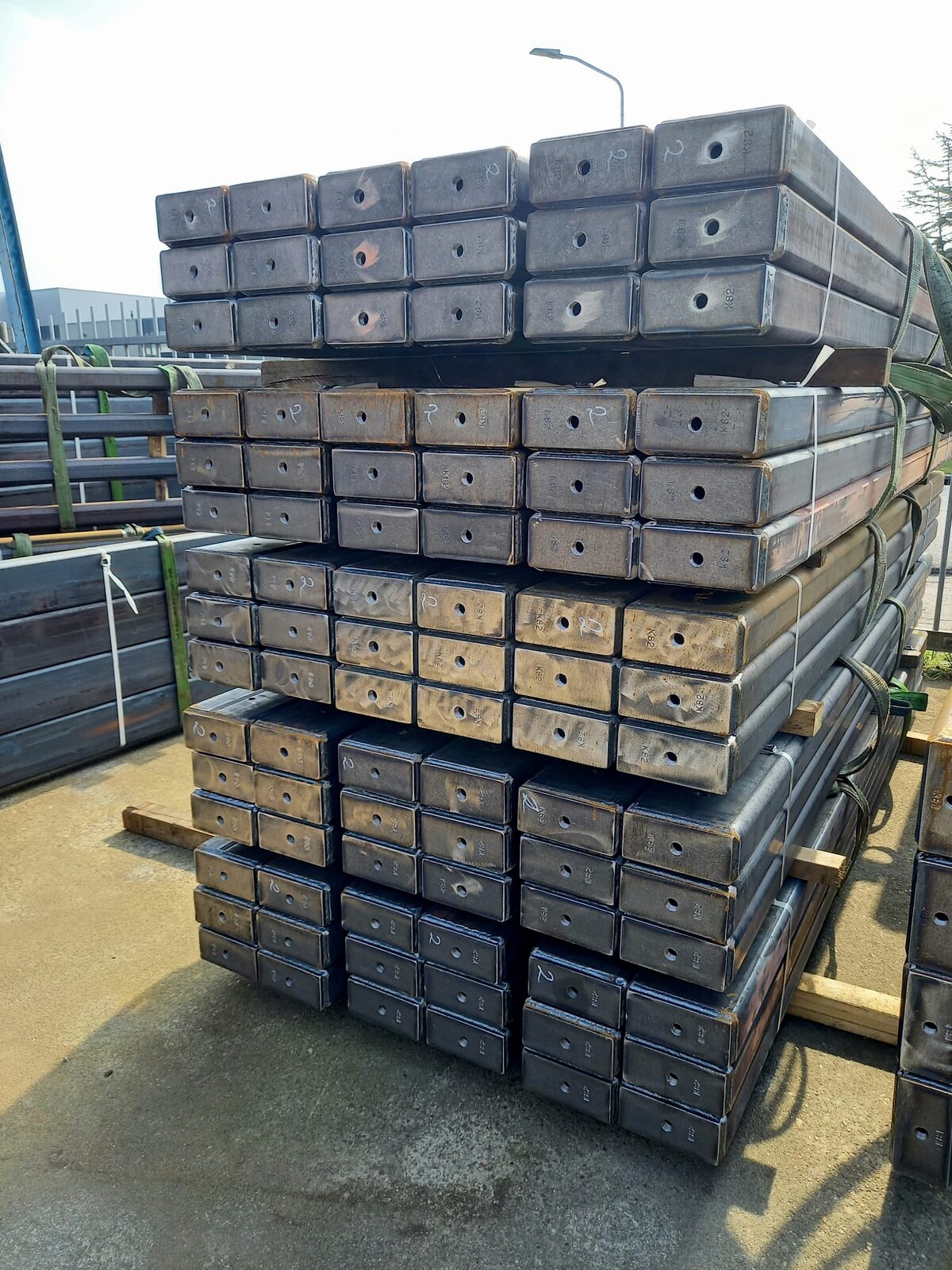
That involved a lot of consultation, calculations, and testing. Prototypes and mock-ups were created, and various solutions were compared side by side. It wasn’t just a matter of technical feasibility; the availability and cost of the profiles also played a role. “Some steel profiles are rolled more frequently and are therefore easier to obtain and more cost-effective,” explains Klijn. “You take all of that into account during the preliminary phase.” Attention was also paid to material usage. By carefully considering standard lengths and the required components, Vic Obdam sought to minimize scrap material as much as possible.
Next, the solution had to be suitable for mass production. Dimensional accuracy is essential, especially in modular construction: every component must fit perfectly every single time. Vic Obdam therefore developed special production molds for the heavy components. Hoedjes: “We’ve also adapted part of our factory for this purpose. This allows us to tilt the molds and produce the components with as few manual steps as possible. That speeds up the process, but above all, it helps us deliver the same quality every time.”
It is precisely that combination of craftsmanship, production expertise, and proactive problem-solving that makes the project interesting for Vic Obdam. “The great thing is that we can use our expertise to work with our client to find a solution,” says Klijn. “It’s not just about saying, ”Here’s the steel you asked for,’ but working together to figure out how to actually make something feasible. That’s exactly the kind of collaboration that energizes us.”
Neem dan rechtstreeks contact op met Vic Obdam Steel Construction B.V..
 Contact opnemen
We operate in the steel construction industry, providing complete services for the entire construction chain. Our activities include engineering, manufacturing, conserving, and assembling steel structures for various construction projects. We excel in the process of translating preliminary designs into final designs, using our extensive expertise in steel structures to fully [...] our clients.
Bekijk Bedrijfsprofiel