Platform on new construction, renovation, restoration and transformation
Housing authorities have a strong interest in knowing exactly where asbestos is located in their housing stock. For this reason, asbestos surveys are regularly conducted whenever there are changes in occupancy, and the results are documented in an asbestos report. However, during a renovation, suspicions may still arise that asbestos has spread to unexpected locations. This is what happened at Akkers 3 in Spijkenisse. Due to the conditions on site, a routine inspection was virtually impossible, and it was not immediately clear which materials might have been affected.
“Based on available reports and extensive desk research—such as reviewing archives and specifications—we develop a plan that our inspectors use to carry out their fieldwork,” explains Olmo Roest, founder and director of Roest Environmental Control (R.E.C.). “On site, we then verify all the leads. Sometimes this leads us to suspect that there is more going on than could be expected based on the existing information.”
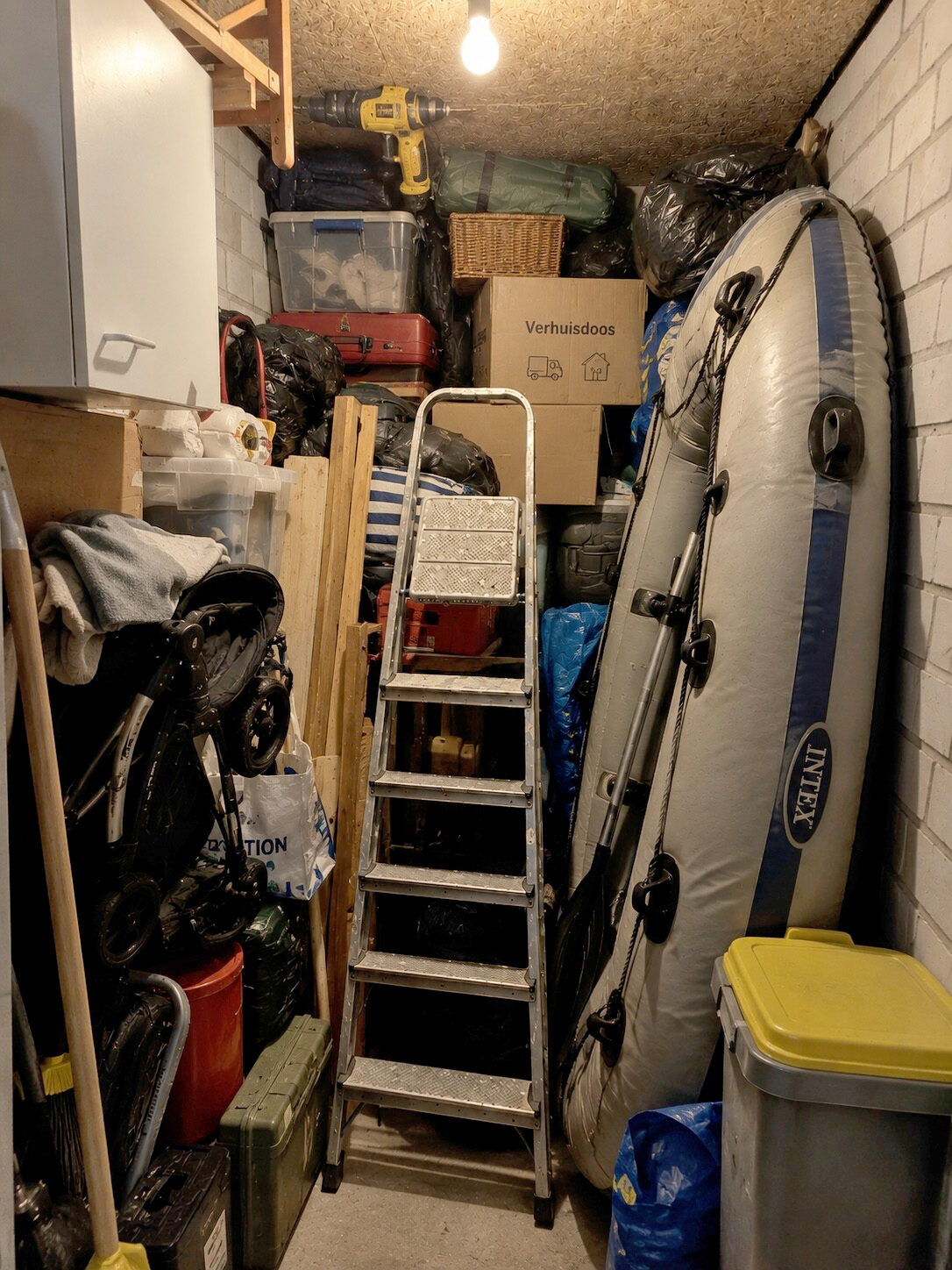
At Akkers 3, the situation was unique because large quantities of belongings had been stored there. Some were piled up almost to the ceiling. An inflatable boat, boxes, and other items made it practically impossible to reach everything immediately. At the same time, caution was required: moving items without first knowing whether they might have been exposed could actually make the situation worse. “That raises the question: how do you assess the situation properly and safely without immediately moving everything?” said Roest. “You can, so to speak, replace a car tire. But a photo album or collection can have irreplaceable emotional value.”
R.E.C. therefore drew up a specific investigation plan that combined various measurement and sampling techniques. Suspicious areas and objects were examined using methods such as air and contact sampling. Other parts of the stored items were also examined on a preventive and random basis. This made it possible to better determine whether and where there was potential contamination and what follow-up steps were necessary.
The results of the investigation then formed the basis for a customized recommendation. The focus was not only on safety, but also on preserving valuable possessions as much as possible. “Situations like this show why a one-size-fits-all approach isn’t always sufficient,” says Roest. “You have to think carefully about what you’re investigating, how to do it safely, and what information is needed. A thorough investigation not only provides clarity on safety but also offers the best possible chance of preserving valuable and sometimes irreplaceable possessions.”