Platform on new construction, renovation, restoration and transformation

Hilversum Noord is a neighborhood with a large stock of small, inexpensive rental housing on the border of the Gooi heath. 138 housing association De Alliantie's porch apartments around and on Erfgooiersstraat are currently being replaced by new blocks of buildings tailored to the neighborhood - sustainable where possible. "A future-proof replacement in the service of the residents, also where it concerns the energy transition," says project manager Jelle de Jong of De Alliantie.
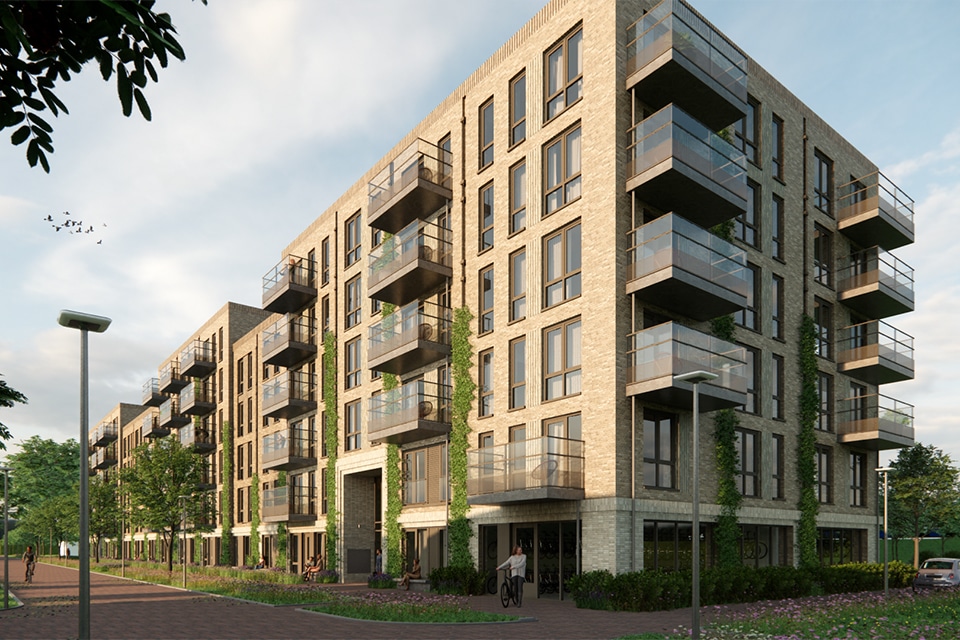
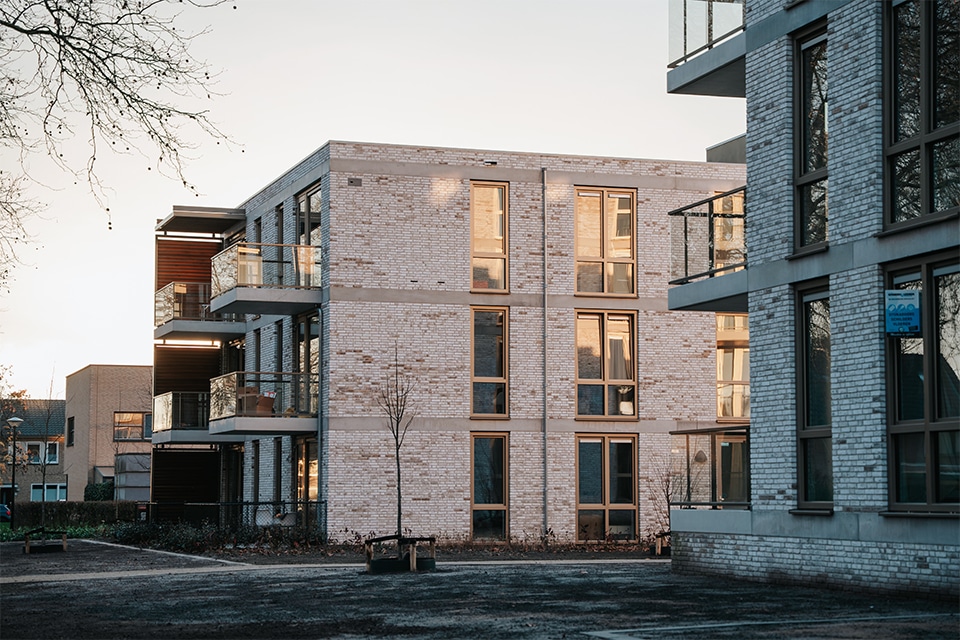
From starters in the housing market to those moving on, from families to one- and two-person households, the 166 new construction apartments on the outside of Hilversum North serve a broad target group. The apartments are divided into five blocks; these will have a brick façade with vertical articulation. The project will be delivered in two phases. The already occupied phase 1, delivered in December 2018, involves a block of houses on Dasselaarstraat with 26 apartments and a block on Erfgooiersstraat with 46 apartments. In phase 2 (start of realization 2019), the block on Verschurestraat (42 apartments) and two blocks (2×26 apartments) on Van Dijkstraat will be delivered. The apartments on the upper floors are accessible by elevator, have a private balcony and their own individual storage in the building. The apartments on the first floor have a private garden with storage.

Trento building concept
Nijhuis Bouw's Trento concept, with a variant for stacked construction, gives executive form to the wishes of the commissioning housing corporation. The project is encapsulated in a Design & Build contract, which includes architectural firm DVDP as a consultant. "That gives the contractor the opportunity to shape the brief and the design in its own way," De Jong said. "The Trento concept offers great architectural freedom and assumes repetitive components." says Nijhuis project manager Patrick Zweekhorst. "Including a precast concrete shell and prestressed balcony floors, as well as repeat processes with regular co-makers, in this case seventeen of them. The customization is keyed into the specific job requirements, such as low-temperature floor heating, wooden rather than plastic window frames and various sustainability solutions in the individual construction phases."
Pellet stove
The first phase was carried out with a regular gas connection and central heating; the remaining blocks will soon be heated using biomass, for which a pellet stove installation will be built. De Jong: "During the preparation process, De Alliantie indicated that it would look into whether it was possible to make the project even more sustainable and whether, for example, it could be gasless. In the end it turned out that full connection to the Mediapark heat grid - on the other side of the railroad - was not feasible in the desired time frame. We came up with a nice compromise. The Alliance made this choice because, as an organization, we want to learn from different solution approaches. We don't want to saddle our target group with rigid solutions. The apartments are obviously very well insulated, keeping energy consumption and additional expenses as low as possible. Electric cooking is used in all homes. The residents will not notice any difference; even the homes in the first phase, equipped with a low-temperature system and extra-large pipe shafts, can easily be connected to the biomass system in the future."
Residents involved
Out of a desire to preserve urban design characteristics in size and facade appearance, DVDP modeled the blocks after Dudok's porch houses from the 1950s, with light masonry, facade ornamentation and indoor galleries. The houses are more spacious in area than the old porch houses. The precast concrete façade elements reuse ornaments from the demolished storey houses. Indoor bicycle racks allow the surrounding streets to retain their green design, another important environmental desire. The tenants returning (approximately 30%) have been extensively involved in the development process, such as in determining the house floor plans. The project has since been nominated for the 2019 Hilversum Architecture Prize.

Align
Architectural customization proved possible with Nijhuis' Trento concept, which in turn learned a lot from this project. "During the ongoing process, a number of principles were still changed, for example the installation of underfloor heating instead of radiators," says Zweekhorst. "With this we have demonstrated the flexibility of conceptual construction in Trento. The high-rise variant will need further fine-tuning, though. In this project, for example, it proved complicated to perform the installation of underfloor heating and pre-tensioned balconies at the same time; we are learning from that." De Jong: "Matching wishes and requirements is understandably difficult for a contractor building conceptually. Perhaps in future projects it will be possible to align PvEs and conceptual construction even better, based on total cost of ownership."