Platform on new construction, renovation, restoration and transformation
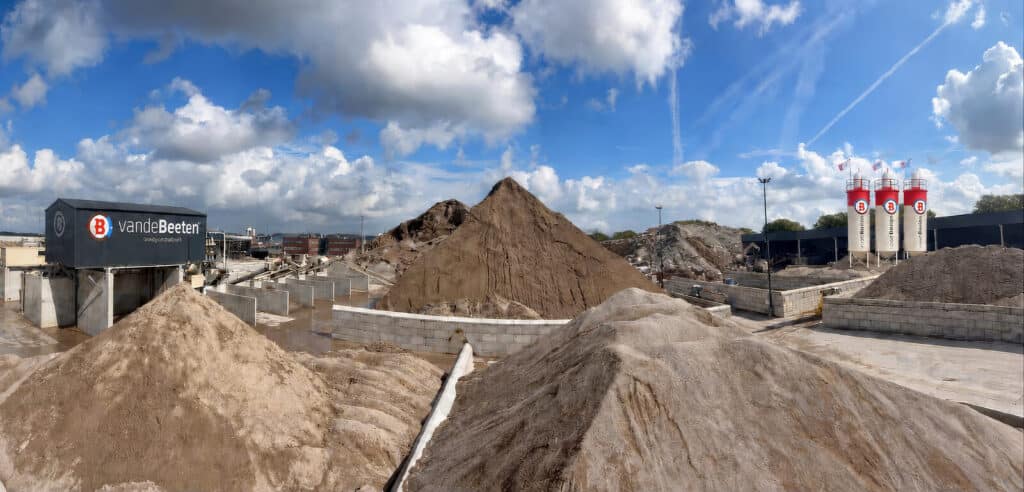
For Van de Beeten, concrete rubble and other stone-like waste streams from infrastructure and construction projects are not the end of the line, but the beginning of a new supply chain. The contractor built a sorting plant in Oosterhout that precisely separates fine fractions from these waste streams and processes them into consistent raw materials for the infrastructure and concrete sectors.
Van de Beeten was already processing rubble streams into various aggregates. Coarse aggregates were used, among other things, in the concrete sector, while fine aggregates were primarily used in paving and other infrastructure applications. “Since the acquisition of our facility in Oosterhout, we’ve had many more opportunities to put the rubble streams to better use,” says Jordy Redding, director of operations. “With crushing, washing, and screening lines, we were already able to prepare the coarse aggregate for the concrete industry. With this new facility, we’re now also processing the fine fractions.”
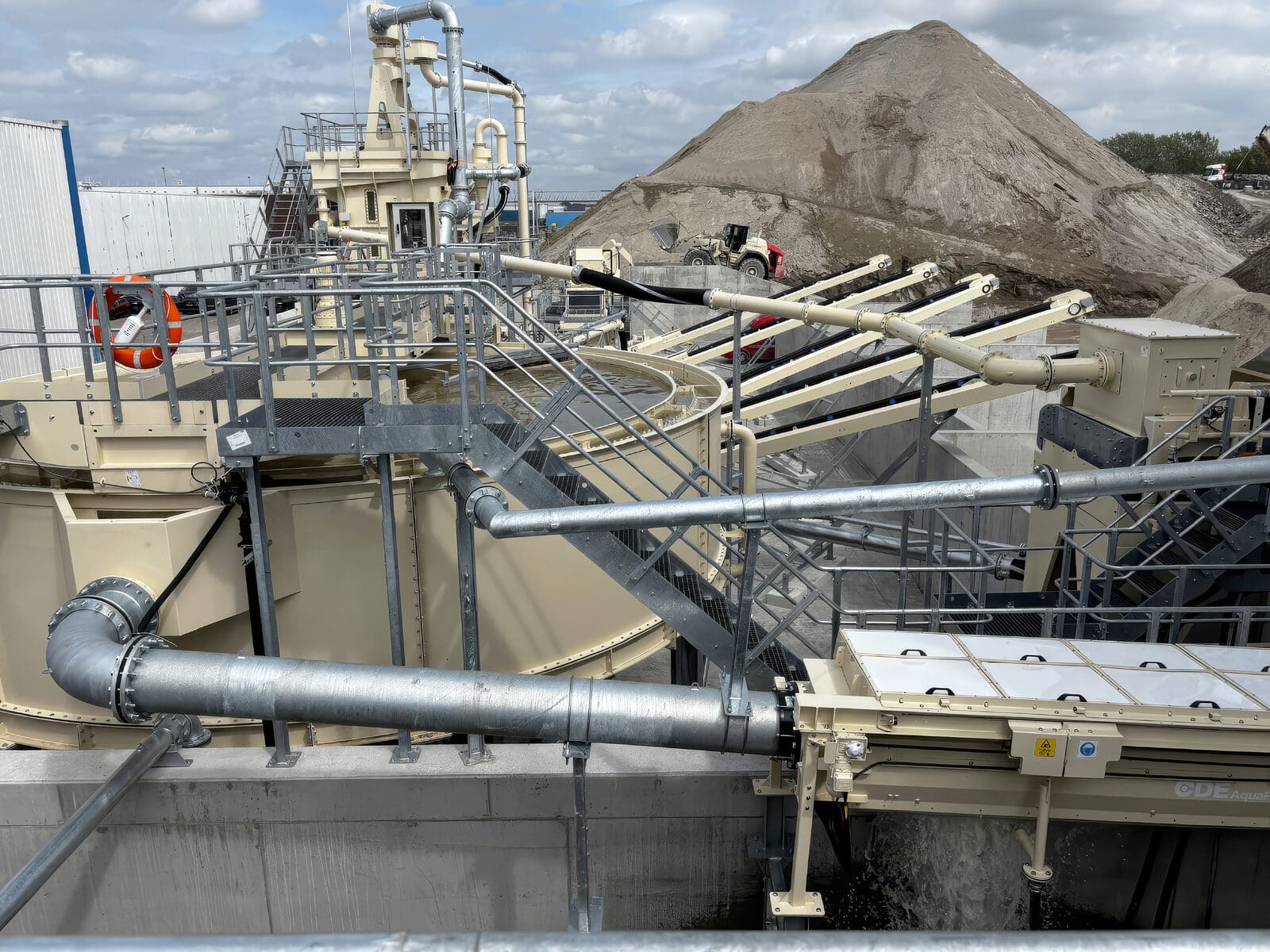
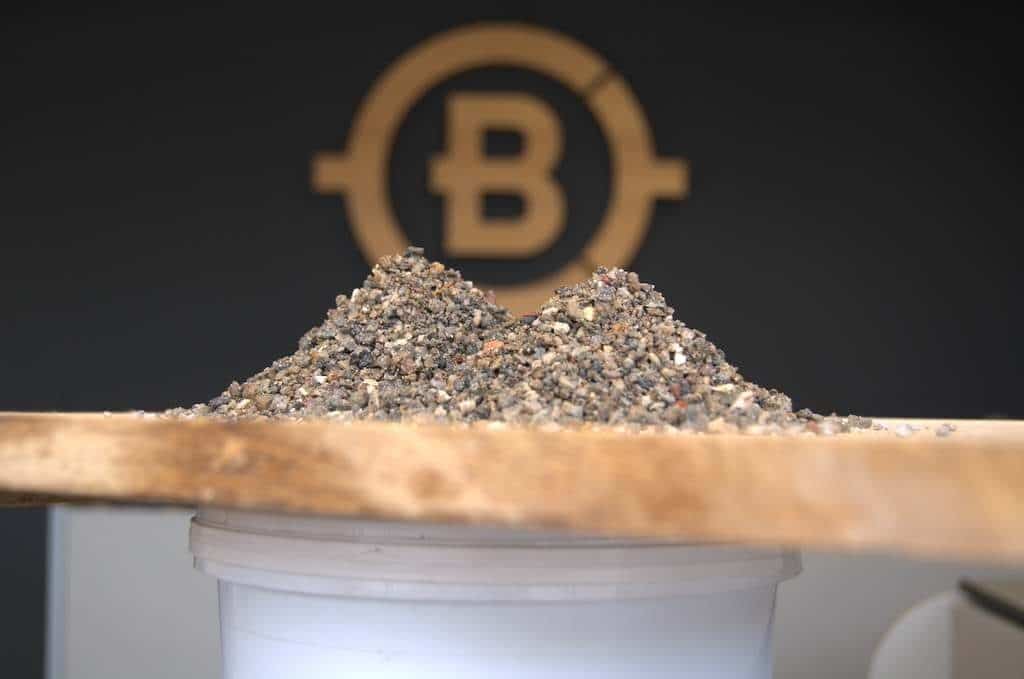
Those fine fractions, in particular, are difficult to reintroduce into the supply chain at a high quality. By wet-washing the material, carefully separating it, and classifying it, clean sand and aggregate fractions with predictable quality are produced. “The input is variable, the output is standardized,” Redding summarizes. Daphne Sijtsma, R&D department coordinator, explains that the plant can process various stony waste streams. Each input stream is processed separately. “For example, concrete pavers are generated from our infrastructure division. Concrete rubble and mixed rubble are also usable. Depending on the composition, strength, and grain size, a different product is produced. This allows us to deliver an end product with consistent, guaranteed quality to our customers.”
The system was designed specifically for Van de Beeten. Existing technologies were combined into a configuration tailored to the company’s material flows and desired products. Laboratory tests and pilot runs were conducted at the manufacturer’s facility beforehand. “You look at the capacity of each component, the size of the screen deck, and the nozzle settings,” says Sijtsma. “We’re still learning and fine-tuning the system even now.”
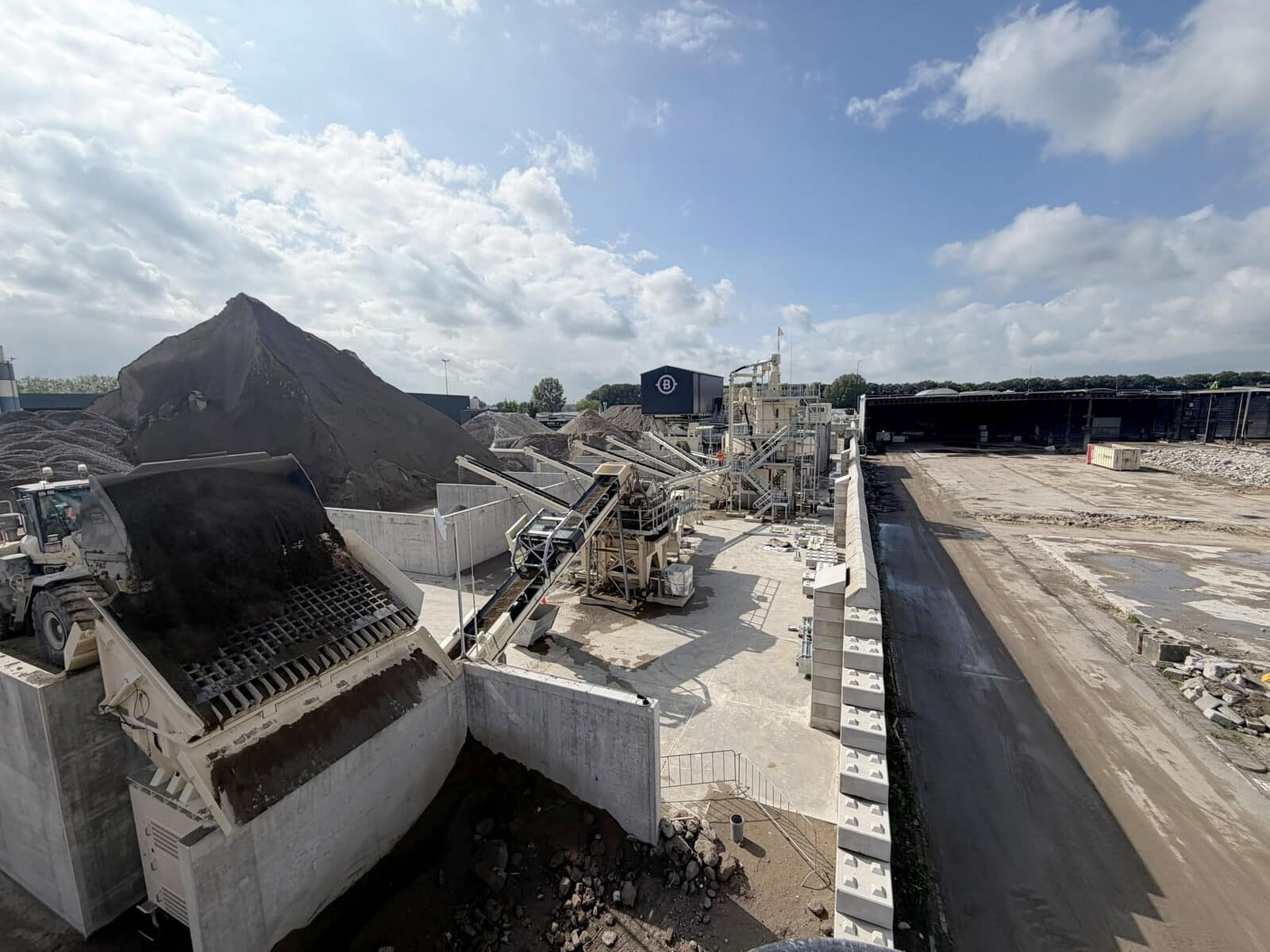
A clean raw material is essential for use in concrete. That is why Van de Beeten also invested in the pre-processing stage. During pre-processing, metal and reinforcing steel scraps, among other things, are removed. Redding: “The concrete industry cannot use even a single piece of old rebar in the material. By first carefully pre-sorting, washing, and screening the material, we create the foundation for a stream that can be further separated.”
The recycled aggregates are certified under BRL 2506 and can be used as aggregate in concrete and road construction. For specific applications, products are also NL BSB-certified and comply with the applicable RAW requirements for various infrastructure applications. The proportion of recycled material in concrete is determined by product, mix design, and certification. Depending on the type of aggregate, the concrete application, and the applicable standards and recommendations, significant substitution rates can be achieved. “In certain applications, up to 50 percent can now be replaced,” says Sijtsma. “We’ve been using 100 percent concrete aggregate in our own stacking blocks for years. Naturally, different requirements apply to structural products, such as pile foundations.”
Van de Beeten works with customers to test materials in existing products and to fine-tune the desired particle size distribution. “It often starts with a customer’s sieve curve,” says Redding. “We can replicate that in our lab using secondary material. Then the testing begins—both technical and logistical. That’s how you work toward a continuous supply.”
In the infrastructure sector, these products can be used for applications such as embankments, fill material, pavement layers, and foundation layers. In the concrete sector, they can partially replace primary sand, gravel, or crushed stone in applications such as concrete pavers, tiles, curbs, piles, pipes, wells, and precast elements. The circular approach brings together all of Van de Beeten’s areas of expertise: Infrastructure Projects, Ports and Industry, Housing and Recreation, Energy and Water, Raw Materials and Recycling, Service and Rental, and Soil and Environment. The most direct connection lies between Infrastructure Projects and Raw Materials and Recycling. This is evident in the take-back system. Van de Beeten supplies concrete granulate to the paving manufacturer, which uses it to make new products. The infrastructure division then incorporates these back into projects. When these products are disposed of, the material can be reclaimed and reprocessed. “You supply raw materials, purchase products, and reclaim the material that’s left over,” says Redding.
The waterfront facility in Oosterhout also facilitates the efficient transport of large volumes. “We now also ship to Groningen, Amsterdam, and Maastricht,” says Redding. The R&D department is also investigating how recycled concrete aggregate can absorb more CO2 during processing and storage. Fine fractions are particularly interesting due to their larger specific surface area. Sijtsma emphasizes that the actual sequestration is still being investigated and substantiated: “We’re looking at how we can optimize the process and storage without compromising the quality that customers require.”
This project is being carried out with a grant from the Ministry of Climate and Green Growth as part of the Energy and Climate Innovation Demonstration (DEI+) program.