Platform on new construction, renovation, restoration and transformation
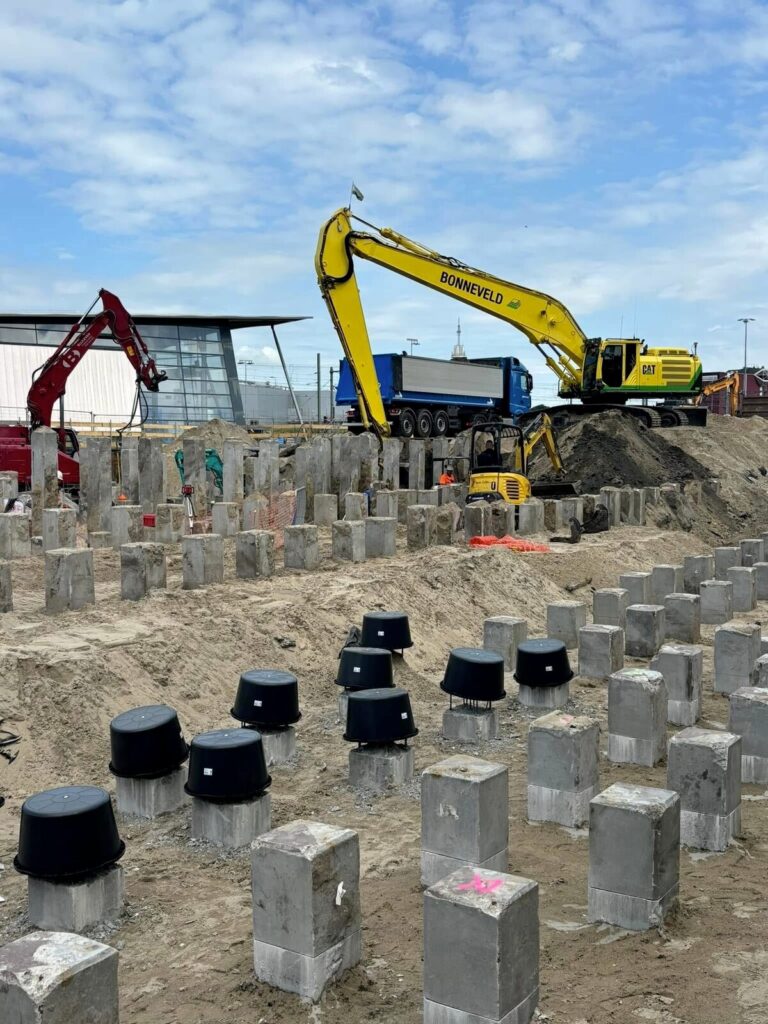
Construction is underway at the NSTM rail yard in Haarlem on a modern train hall for the maintenance of train sets. Before construction could begin, the subsoil had to be addressed. This proved to be extremely complex, with eleven different soil flows and very limited working space around the construction site, which spans over 9,300 m². But here, too, Bonneveld once again made a difference.
“We’ve been working for general contractor Visser & Smit Bouw for over 25 years,” begins Harry van der Heiden of Bonneveld. “The request came in relatively late, but thanks to our experience, we immediately saw opportunities to approach the work more efficiently.” That experience proved to be a welcome asset. The site has a history of more than 185 years of heavy rail industry. Since the first workshops were built in 1844, the subsoil has been modified countless times.
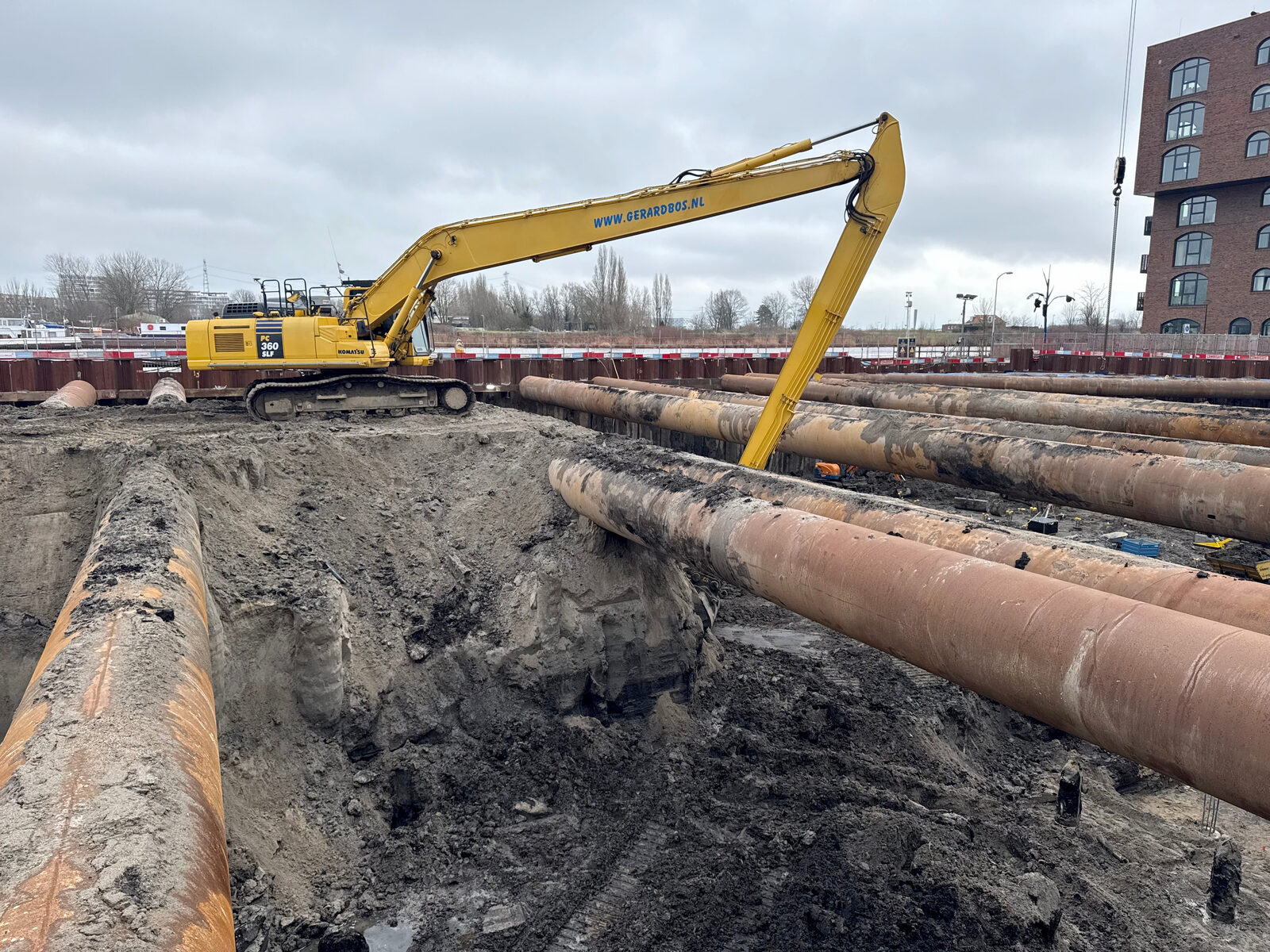
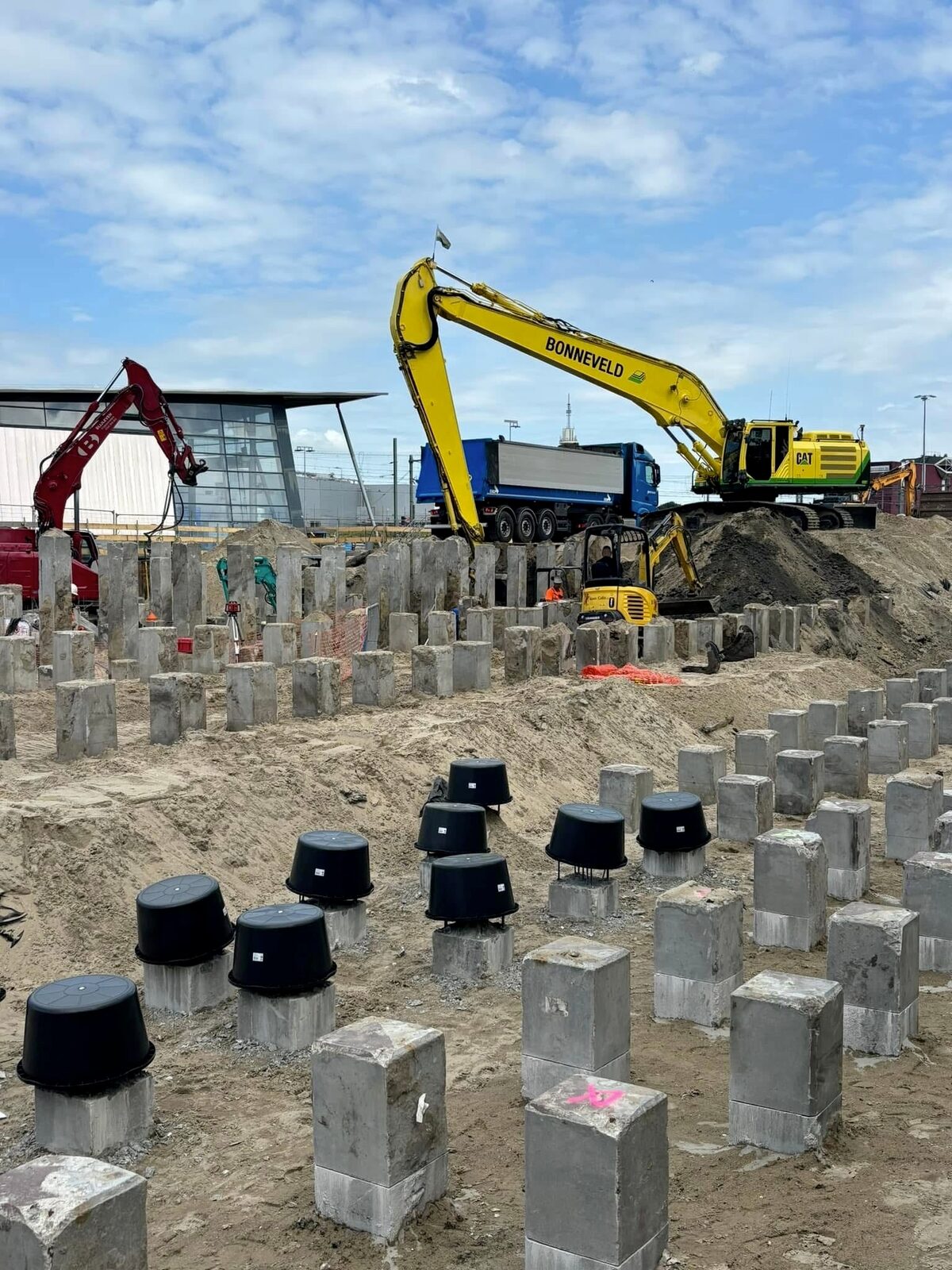
“The construction site contained a mix of old foundations, newer pile structures, and all kinds of contaminants,” says Anco van der Heiden of Bonneveld. “We ultimately excavated eleven different soil streams completely separately, a large portion of which was transported to specialized processors.” That was no easy task. The excavation had to be carried out among the 1,800 newly installed foundation piles. “This is where our specialized equipment—and in particular the large excavators with extended booms—comes in extremely handy. It allowed us to work with extreme precision around the piles and better separate the different soil streams,” explains Harry van der Heiden. “Because landfill costs are high, careful sorting yields immediate benefits.”
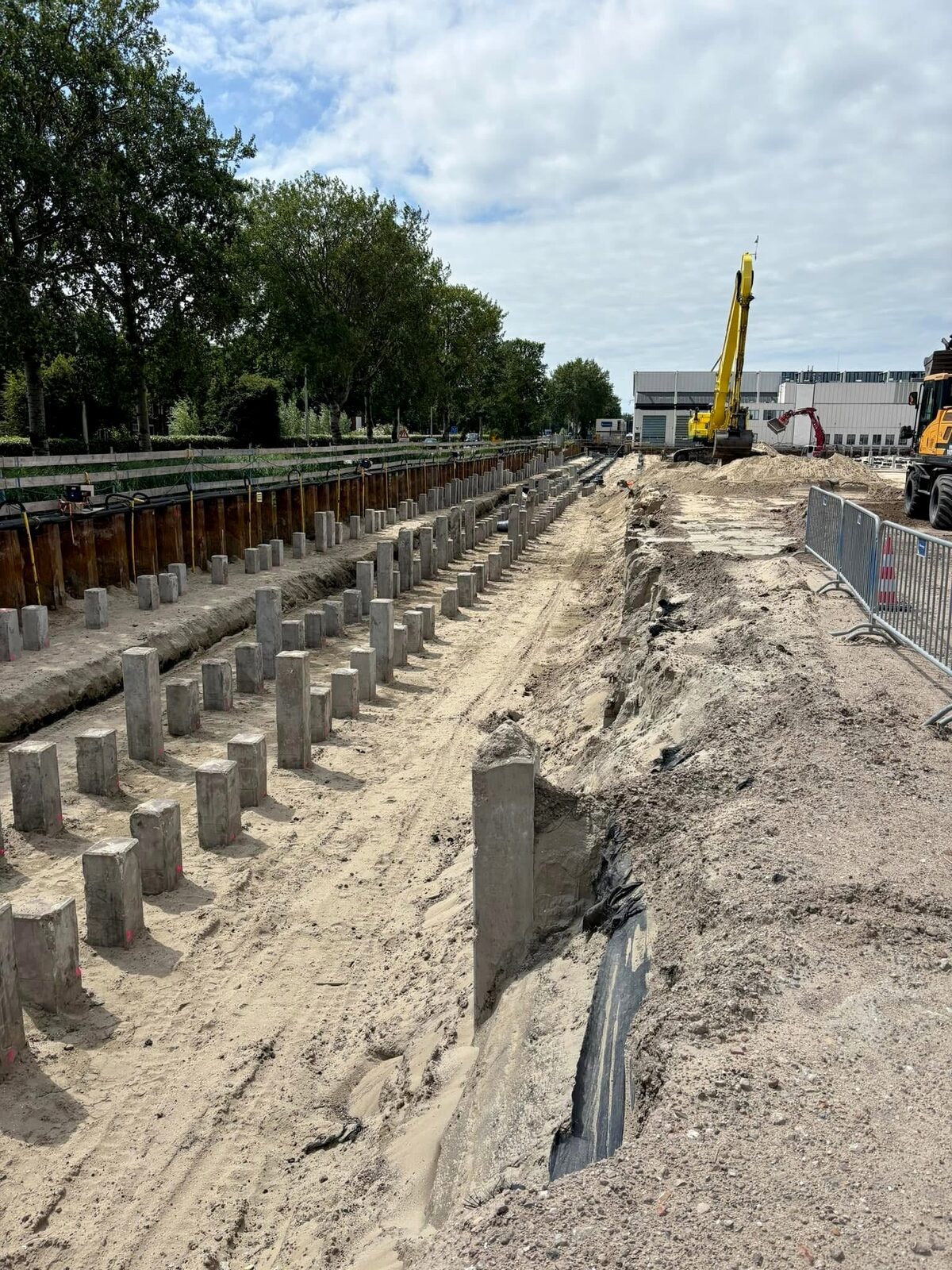
Even before the remediation began, Bonneveld first prepared the site for construction. “The old sewer system was removed or rerouted, and a temporary construction site was set up, including a temporary pumping station with a capacity of 1,000 m³ per hour,” says Anco van der Heiden. “During the dewatering process, special attention had to be paid to the surrounding area. The project is located in a groundwater-sensitive area with many historic buildings on wooden foundation piles. In addition, we laid 10,000 m² of mixed aggregate to support the heavy foundation machinery from Van ’t Hek and Drukpaal, which were responsible for installing the sheet piles and foundation piles, respectively.”
The construction site is surrounded by existing railroad tracks, a workshop building, a waterway, and a public road. “To enable phased work with heavy equipment, a reinforced crane runway was constructed down the middle of the construction site. In addition, we temporarily filled in part of the waterway, installed double culverts, and converted it into an additional entrance and exit. All in all, it was a special project for us that brought together a large number of our disciplines,” says Harry van der Heiden, who adds that Bonneveld is currently working on yet another ‘special project’ 500 meters away at the Koepel Prison. More on that in a future issue.