Platform on new construction, renovation, restoration and transformation
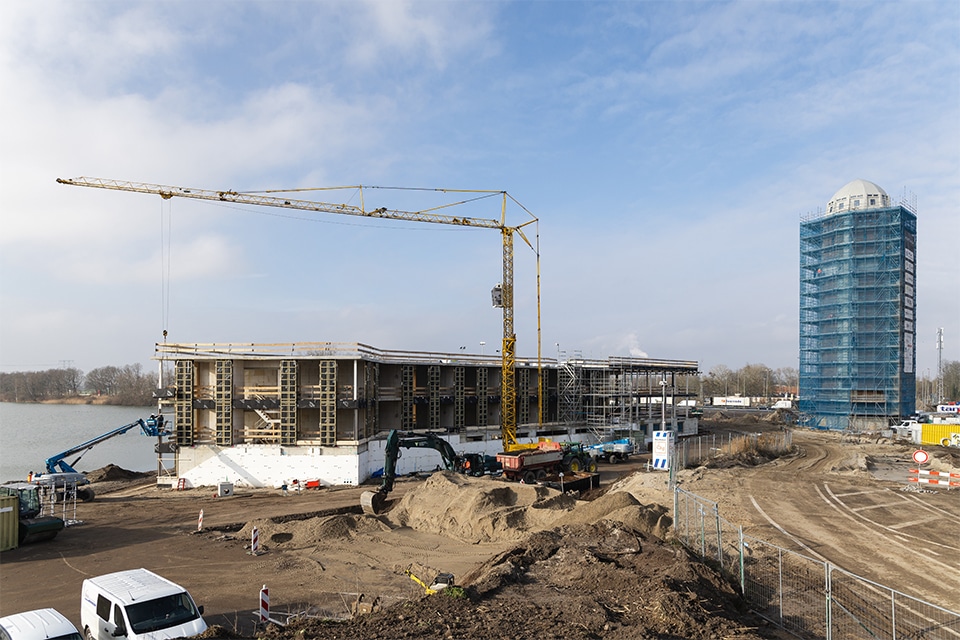
Vissers specializes in (circular) demolition, asbestos removal, hexavalent chromium remediation, and soil remediation. More than eighty specialists combine craftsmanship with modern techniques, with the goal of delivering safe, efficient, and sustainable solutions. Following projects such as Post, Eureka!, and The Greenery in Breda, as well as the complete demolition of the Rabobank and Arendshof in Oosterhout, Vissers‘ expertise was recently called upon for the strip demolition of the ’Veerse Toren.”.
“The Veerse Tower is not only a gathering place for Raamsdonksveer, but also the place where Vissers and Oome Raamsdonk BV rediscovered each other,” says Marc van Zon of Vissers. “Our expertise was fully showcased in this unique project. For example, to restore the nationally listed water tower to its former glory, we removed all the old, plaster-covered masonry sections.” A particular challenge here was the building’s round shape. “The masonry was conically enclosed within the concrete structure, which meant our people had to constantly chisel against resistance. To make their work easier and increase demolition efficiency, we used a diamond ring saw to cut vertical strips to loosen the masonry.” Vissers also chiseled away the original ornamental elements.
To adapt the former water tower for its new purpose, Vissers cut numerous openings into the building’s shell—for the windows, skylights, elevator, staircase, and doors, for example. “One of the complexities here was the 300 m³ concrete water reservoir, in which we used chain hoists and diamond wall saws to cut all the wall and floor openings,” explains Van Zon. “It was quite a challenge, given the great height at which we had to work. A 1 m² opening that’s 20 cm thick easily weighs 500 kilograms. While we can normally hoist these sections with a forklift or a crane, that wasn’t possible in the Veerse Tower. That’s why we fell back on the techniques of the ancient Egyptians.”
Instead of 500-kilogram sections, Vissers cut sections weighing up to 140 kilograms, which were suspended from old-fashioned chain hoists, placed on carts, and then rolled outside along scaffolding pipes. “They were then handled on the scaffolding and rolled into the construction elevator using a hand truck,” says Van Zon. “Because of the great distance between the floors and the resulting high risk of falling, we worked with safety lines extensively. Our guys couldn’t afford to be afraid of heights.”
Before starting the masonry work and creating the openings, Vissers also removed the wooden paneling, wooden floors, and steel staircases. “Due to the limited space, we worked from the bottom up,” Van Zon concludes. “Safety was our top priority throughout the process.”