
Platform on new construction, renovation, restoration and transformation
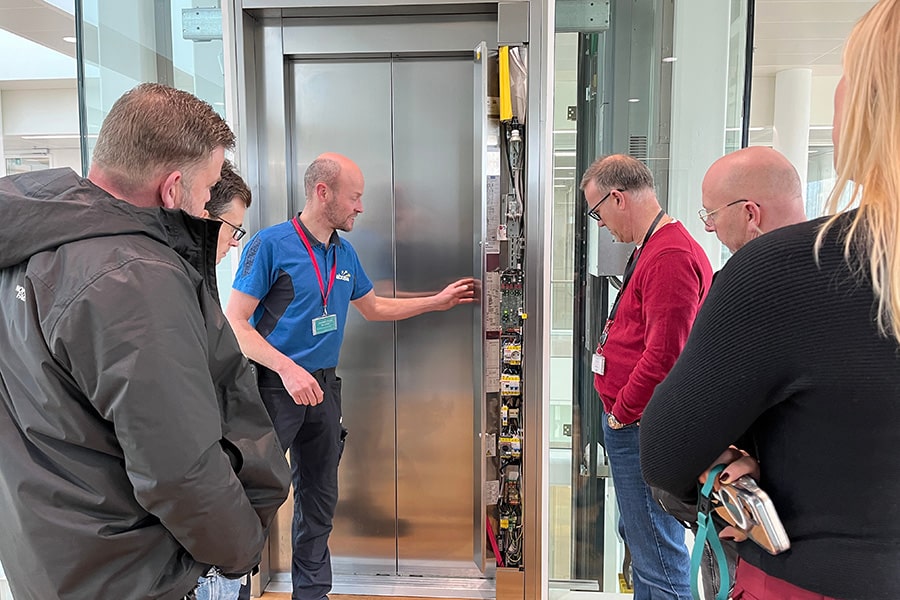
Stuck in an elevator. What now? People trapped in an elevator often panic and immediately call the fire department. In many cases, these people can be easily freed, making the situation less urgent for the fire department. But who is authorized to do so? Anyone who has completed Aboma’s ‘Rescuing People from Elevators’ training course. Indispensable for building managers, concierges, members of homeowners’ associations, technical service staff, emergency response team members, etc.
Elevator breakdowns are a common occurrence. “The causes of being trapped vary widely,” says Ton van Heeren, an inspector at Aboma. “These include wear and tear on parts, electrical malfunctions in the circuit, or an incorrect signal in the control system. Vandalism also sometimes plays a role. For example, jumping inside an elevator car can cause vibrations, which trigger safety systems such as the safety brake and cause the elevator to stop.”
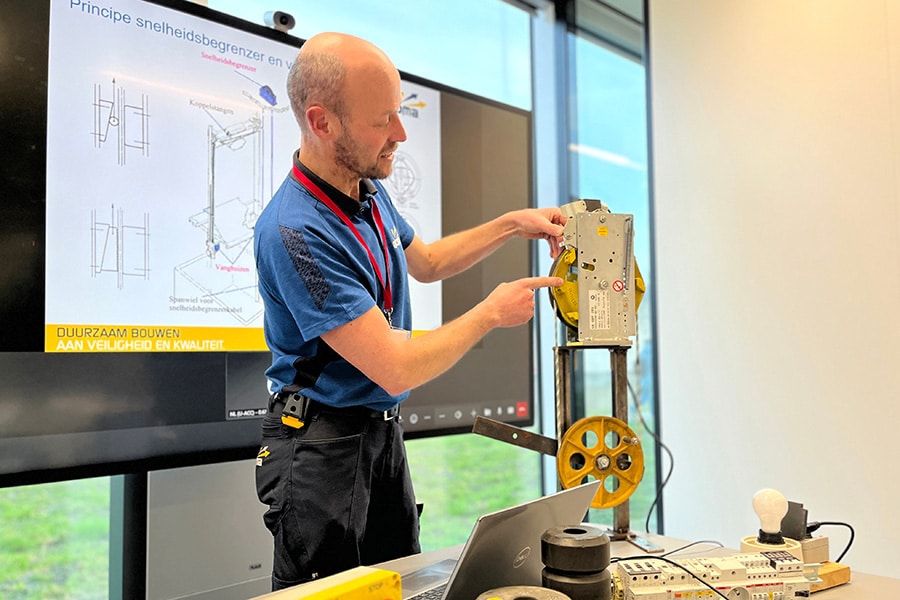
The first thing people trapped in an elevator do is call emergency services out of panic. “Although maintenance crews can often arrive on time, in practice, a shortage of technicians regularly leads to long travel times and failure to meet acceptable response times,” says Heeren. “To reduce the strain on emergency services and prevent panic situations, we offer specialized training courses on rescuing people from elevators. Acting recklessly or on one’s own initiative without the necessary knowledge can lead to dangerous situations for both the rescuer and the trapped individuals. These training sessions are therefore preferably held on-site, so that participants can work with the specific elevator systems they encounter in real-world situations.”
The training consists of a theoretical and a practical component. “The theoretical part explains how elevators work and what safety features are in place,” says Martijn Barreveld, an elevator inspector at Aboma. “It also distinguishes between hydraulic elevators and traction elevators. Hydraulic elevators use oil pressure to drive a cylinder, while traction elevators use steel cables and a counterweight. In the practical portion, participants learn how to safely move an elevator and rescue people trapped inside. For example, they practice precisely positioning the elevator car at a specific floor level and opening the doors. Attention is also given to various methods of moving the elevator, such as electric winching and manual winching in the event of a power outage.”
The goal of the training is to ensure safety, Barreveld assures us. “Participants learn not only what they should do, but above all what they should not do.” The training sessions are suitable for a broad audience. “A technical background isn’t required, but some technical understanding is desirable,” says Heeren. “Trained individuals reduce the strain on emergency services by resolving entrapments more quickly and safely.”