Platform on new construction, renovation, restoration and transformation
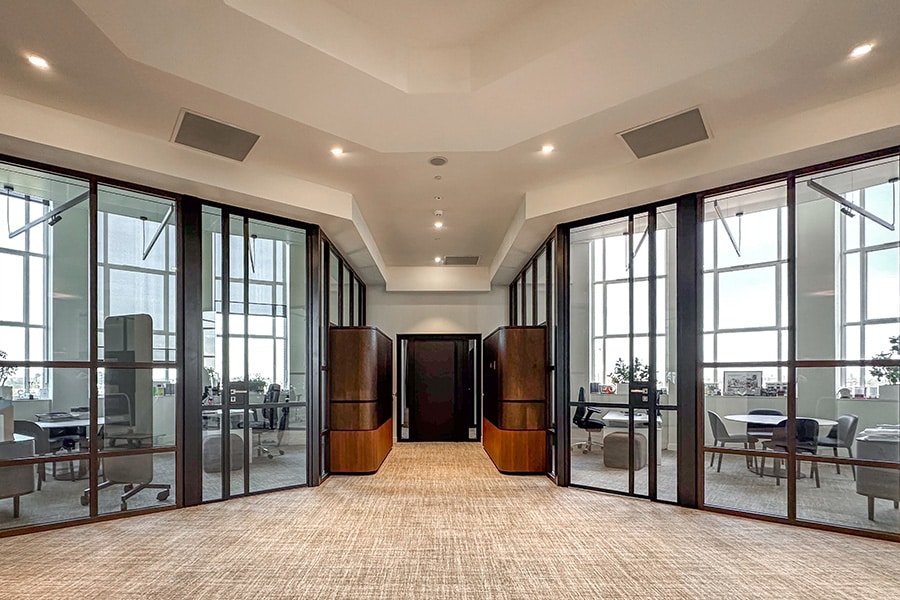
What if a building isn’t the end of a product, but rather the beginning? That idea has been the foundation of Brakel Systeemwanden since 1974. A modular wall system was born on a drawing board and is still in use today.
Brakel Systeemwanden uses a system that was conceived 50 years ago by architect Jaap Bongers, and the patent for which has since been transferred to the company. The core principles of reusability and relocatability have remained the same, but the system has been continuously innovated over the years. The partition walls are manufactured in Hilversum, making them a truly Dutch product.
Sales Manager Niels Geniets: “Is a company planning to expand or relocate? If so, we can easily reuse the walls. That’s why we don’t register our systems by name, but by address and floor. This way, we know exactly where everything is, and we can redeliver or modify anything at any time.”
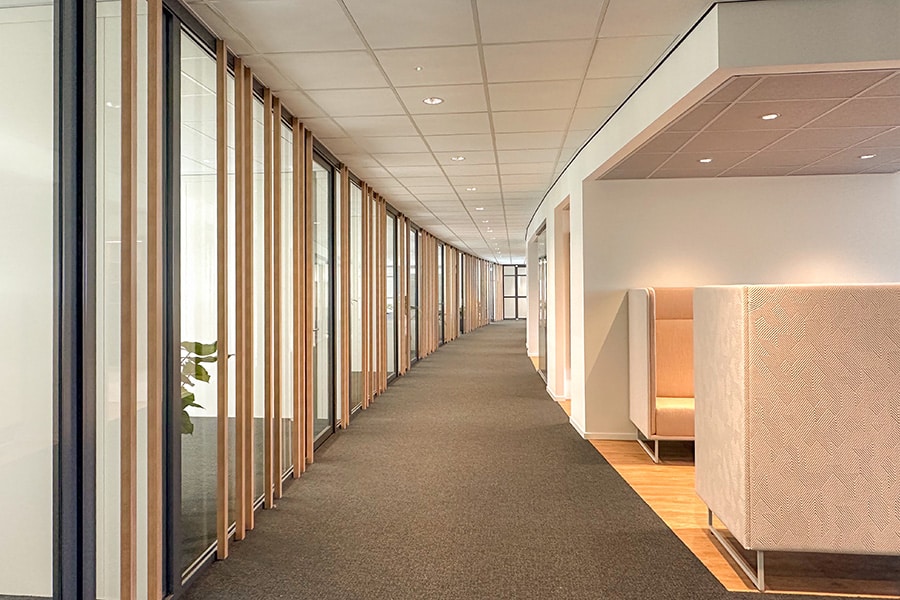
While many circular solutions revolve around recycling, Brakel has made a conscious choice to focus on direct reuse. This saves energy and materials. “We say: use the product as is. That way, you don’t need energy to produce it again,” says Geniets.
The Brakel ‘All-in Wall’ system can be completely dismantled and leaves no damage to the floor or ceiling. Colors, finishes, and features can be changed without having to replace the system. This makes the system a versatile and dynamic solution for organizations that are changing, growing, or relocating.
Brakel Systeemwanden is currently working on the Koninklijke Metaalunie building. Geniets: “Our walls have been in the building since 1996. There was a major renovation back in 2011, and now another one. And every time, the walls are reused—each time in a different color and in a different location.”
In the Malietoren in The Hague, the existing walls in the VNO-NCW office were given a new purpose. Solid hallway walls were transformed into office partition walls in a new color. “With new glass solutions on the hallway side, the building took on a whole new look, with circularity taking center stage—exactly as the client and architect had envisioned.”
That flexibility also proved important at the Apollo House in Amsterdam. Geniets: “Nothing was allowed to be changed in this historic building. Here, the walls could be modified and expanded without altering the existing structure.” And Intergamma? “They’ve been using our wall solutions since the 1970s. Each time, the walls are slightly adapted to the new office layout.’
According to Geniets, sustainability doesn’t end with completion. “That’s just where it begins. You have to think about what a user can do with it later on. And that’s exactly how we work.” You can see this reflected in new applications, such as modular workstations and phone booths that stand freestanding in the space. Also known as Brakel Qubes. These elements are movable and reusable, just like the wall system itself. “This shifts the focus from production to continued use. And that is precisely the essence of circular construction.”