









Nutricia | Haps
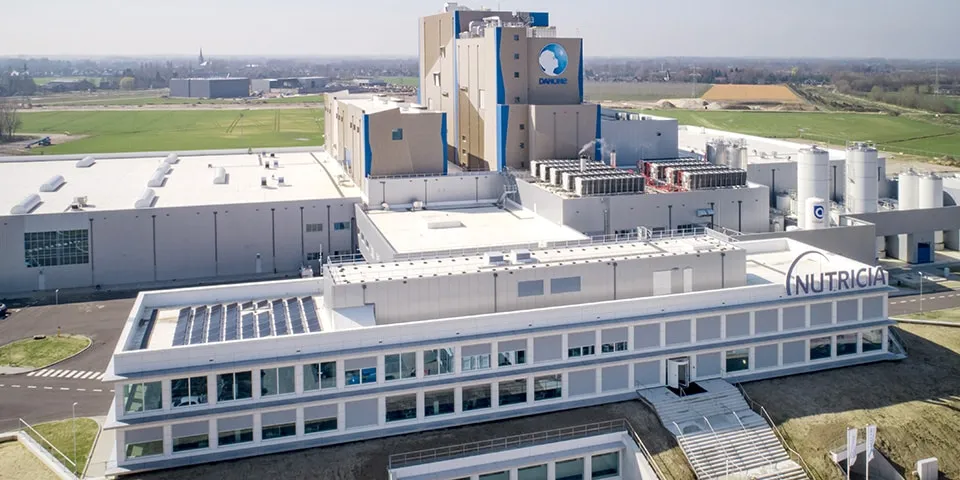
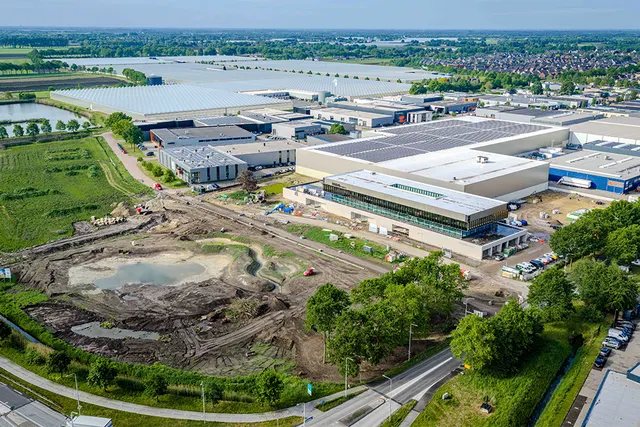
Danone, the French parent company of Nutricia Cuijk, has recently moved into new premises at Laarakker business park in Haps (municipality of Cuijk). The new-build facility, covering more than 49,000 m², includes two drying towers, various production areas and a laboratory. It produces standard baby food and specialised food for babies and young children for more than ninety countries. The baby food factory was designed by Architektenburo Klamer bna. Consultancy and engineering firm Het4kant was responsible for the structural design. Aannemingsmaatschappij Friso (part of Friso Bouwgroep) carried out the construction work.
“As a construction consortium, we built the complete structural envelope for the baby food production process,” says Pier Zwerver, Project Leader at Aannemingsmaatschappij Friso. “The factory as a whole comprises a product processing department, a drying tower for the production of standard baby powder and a drying tower for hypoallergenic products, as well as a powder processing department and a warehouse/storage facility. To support the factory, we also built a utilities building, a pump house for process water discharge, a garage and a sprinkler building. Finally, a modern office and laboratory building was constructed on the site.”
Heavy concrete work
“Initially, we were only commissioned to build the factory structure,” says Zwerver. “The entire foundation of the building is made of cast-in-situ concrete, from the foundations through to the load-bearing structures, floors and walls, which had to be exceptionally robust. This was necessary not only to support the weight of the food production equipment, but also to absorb vibrations from centrifuges, mixers and other machine components, for example in the drying towers.”
During this work, Aannemingsmaatschappij Friso was also awarded the contract to build all the support buildings. “In close consultation with Danone, we developed these projects further, taking into account Danone’s requirements as well as the most cost-effective solutions.”
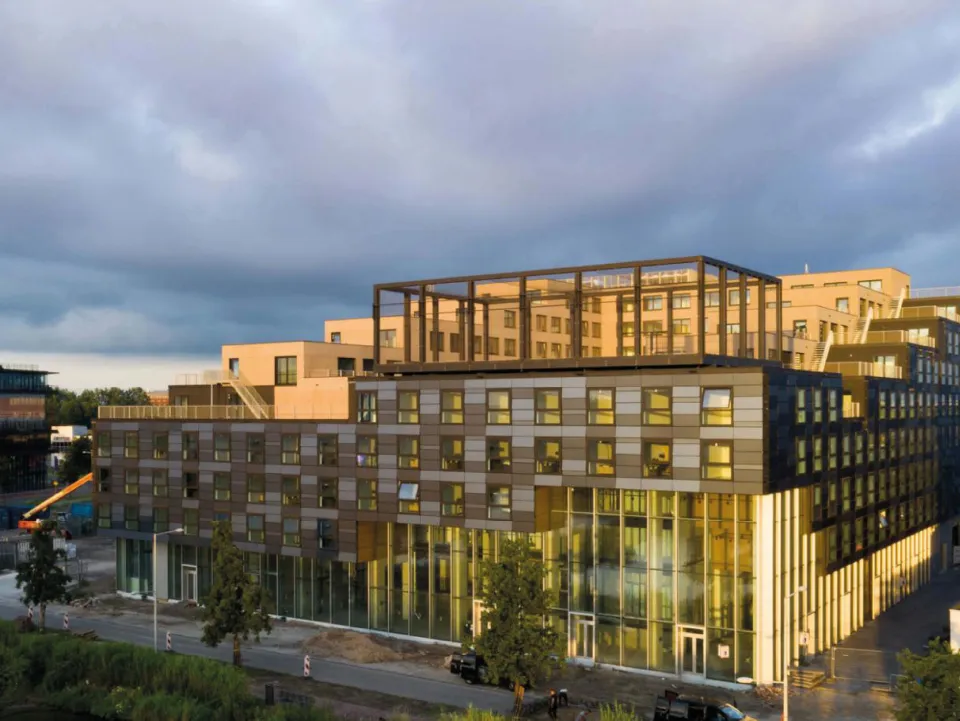
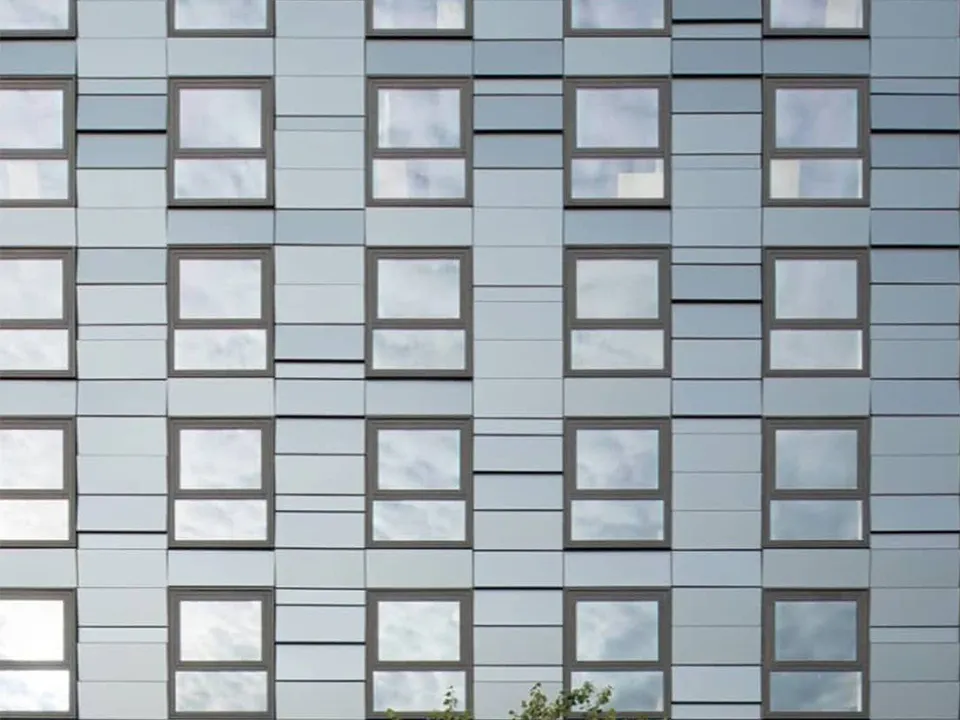
The façades of the new-build facility consist largely of profiled steel sheeting and aluminium curtain walling. Zwerver says: “In the low-rise sections, sandwich panels with inner and outer skins were installed. In the high-rise sections, external cladding was fixed to steel omega profiles, which were attached directly to the concrete wall. We applied Sarnafil reinforced synthetic roofing membrane to the roofs. All roof edges were finished with aluminium cappings. Inside the factory, the concrete walls and floors were given a synthetic coating to ensure optimum hygiene and ease of cleaning.”
The new-build facility, covering more than 49,000 m², produces standard baby food and specialised food for babies and young children for more than ninety countries.
Food-safe
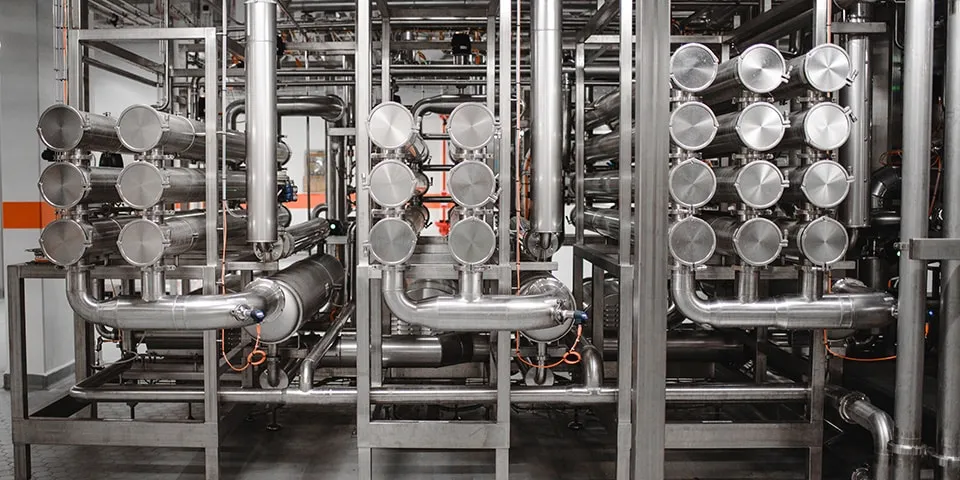
“This project involved some very specific requirements,” says Zwerver. “These included requirements relating to vibration, point loads, hygiene and ease of cleaning. Above all, however, we had to ensure that the new-build facility was food-safe.” To achieve this, the factory was divided into four zones. Alongside the ‘out of care zone’, where no food products are present, and the low-care zone, where only packaged products are processed and stored, medium-care areas for semi-packaged products and high-care areas for unpackaged products were also created. “The medium- and high-care areas in particular were subject to extremely stringent requirements. For example, any edges where dirt and dust could accumulate were prohibited. We therefore used plain frames in a flush finish, without rebates or reveals. As carbon steel was not permitted, all frames, suspension structures and so on were made of stainless steel.”
“This project involved some very specific requirements. These included requirements relating to vibration, point loads, hygiene and ease of cleaning. Above all, however, we had to ensure that the new-build facility was food-safe.”
The construction phase was formally handed over on 5 December. “The pace of construction was extremely fast,” Zwerver concludes. “We completed the entire project in just 2 years. This was no mean feat, because we were working under an unusual contractual arrangement. Danone was formally the main contractor for the project and was responsible for health and safety coordination. We and all the process and utilities installers worked together as separate contractors. To set and maintain the project’s priorities, we had to hold regular coordination meetings, sometimes with 15 different parties around the table. It was a unique approach, but the result was a success.”
Vraag over dit verhaal? Stel je vraag
Wie eraan werkte
Babyvoedingsfabriek Danone Haps in Land van Cuijk, nieuwbouw
- hoofdaannemerDanone
- aannemerAannemingsmaatschappij Friso
Blijf dit volgen
Bij een nieuw verhaal krijg je een e-mail. Geen account nodig.
- ProjectBabyvoedingsfabriek Danone Haps
- OnderwerpConstruction projects
- BedrijfDanone
- BedrijfAannemingsmaatschappij Friso