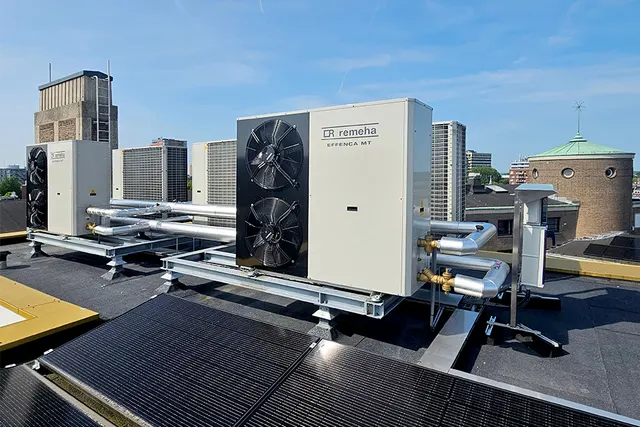











‘Air handling unit on its side’ preserves the building’s appearance
Text Lieke van ZuilekomPhotography Ned Air
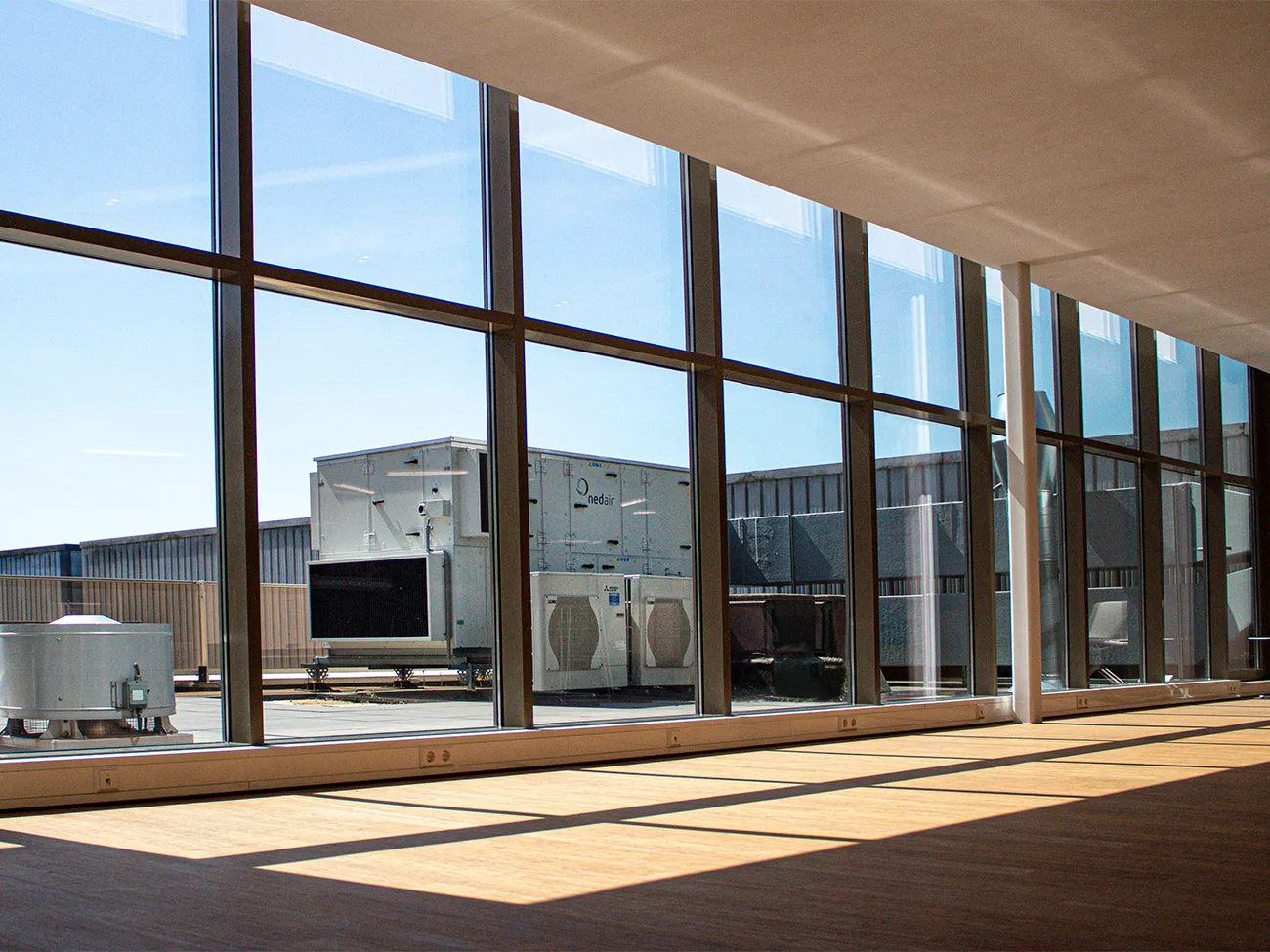
Whether they are designing offices, schools, hotels, healthcare buildings or homes, architects devote enormous attention to the form and appearance of their buildings. They design with an eye for detail and respect for the surroundings, people and the environment. “When the aesthetic design is shared with the building services consultant, air handling units and other installations are still too often added in ways that negatively affect the building’s appearance,” says Wouter Wijma, managing director of Ned Air. He cites a new-build project for an SME along the N50 in Kampen, where a large air handling unit and ductwork draw all the attention away from the building below. “With the SkyLine, architects and consultants can anticipate this, preserving the aesthetic design.” The ‘air handling unit on its side’ was developed in co-creation with the client, consultant and installer, and is now proving popular in the market.
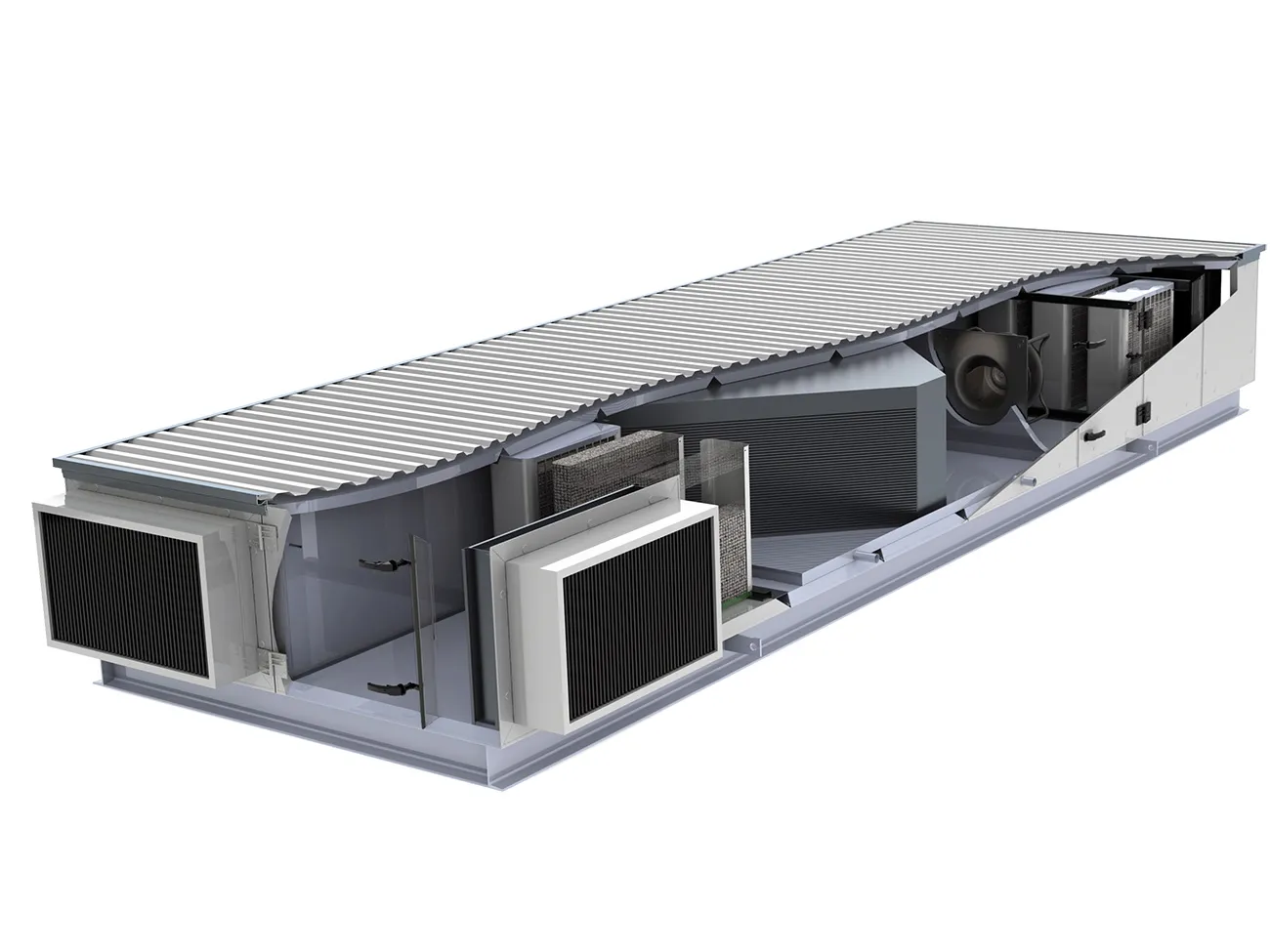
The SkyLine was initially developed for a school project in Amsterdam, where the Welstand committee did not want the air handling units to be visible from street level. “Air handling units are often 1.5 to 2 metres high,” says Wijma. “On large projects, they can be as much as 3.5 metres high, while the Welstand committee increasingly stipulates a maximum height of 1 metre. To meet this requirement, we turned our existing air handling units on their sides and assessed the possibilities. Based on our findings, we developed a completely new range of heat recovery units, the first of which have now been delivered and installed. Initially available in 1,000 and 2,000 m3/h models, the range now also includes 4,000 and 7,000 m3/h units, with the largest model still just 1 metre high. We can also seamlessly integrate customer-specific features such as steam humidification, adiabatic cooling and sound attenuation. Solar panels can be installed on top of the SkyLine, as required, to maximise on-site energy generation on the roof. We are even exploring the possibility of powering the air handling units directly from the PV panels at 48 VDC.”
Focus on ‘mass customisation’
Like all Ned Air’s air handling units, the SkyLine is manufactured using a modular approach, says Wijma. “About three years ago, we began an internal process to standardise our air handling units without sacrificing customer-specific options. We can still deliver bespoke solutions, but based on standard components and modules. Thanks to our ‘mass customisation’, we can produce units even faster and minimise the risk of errors.” He compares the approach with the modular MQB platform used by Volkswagen and Audi, where, for example, the distance between the driver’s seat and the steering wheel, the front axle and the engine mounting points is fixed. “The same applies to the core of our air handling units, which we scale up entirely to meet the customer’s requirements. From there, we expand the unit further in line with the customer’s performance requirements and specifications. For example, our EveryLine 1000 and EveryLine 2000 have exactly the same base, but look completely different. The frame, panels, filters and other components are scaled to suit each model.”
Various configuration options
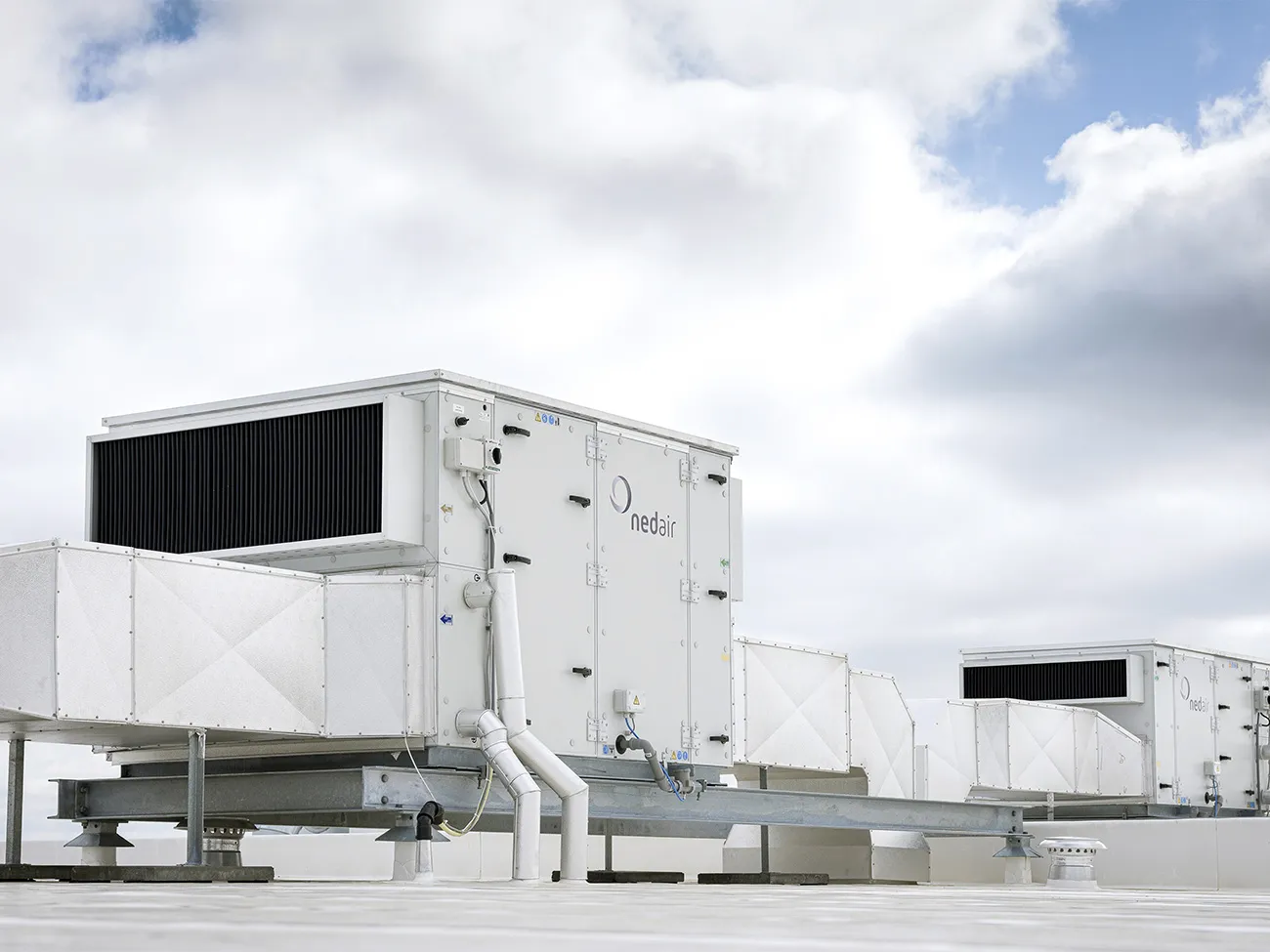
Ned Air’s EveryLine heat recovery units make it quick and easy to create a healthy, comfortable indoor climate in any space. The units offer a wide range of options for configuration, control systems, accessories and additional components, and fully comply with the ErP 2021 requirements. “Our RotorLine air handling units with energy-saving rotary heat exchangers are also worth noting, with airflow rates from 2,400 to 44,000 m3/h,” says Wijma. “These units also offer extensive customisation options and can be supplied fully plug-and-play. Depending on the customer’s requirements and the volume of air to be ventilated, both RotorLine and EveryLine units may qualify for the Energy Investment Allowance (EIA).”
Een zakelijke vraag aan Ned Air? Get in touch
Companies in this story

Keep following this
Get an email when a new story is published. No account needed.
- SubjectHVAC
- CompanyNed Air