Maintaining a listed building: what you need to know
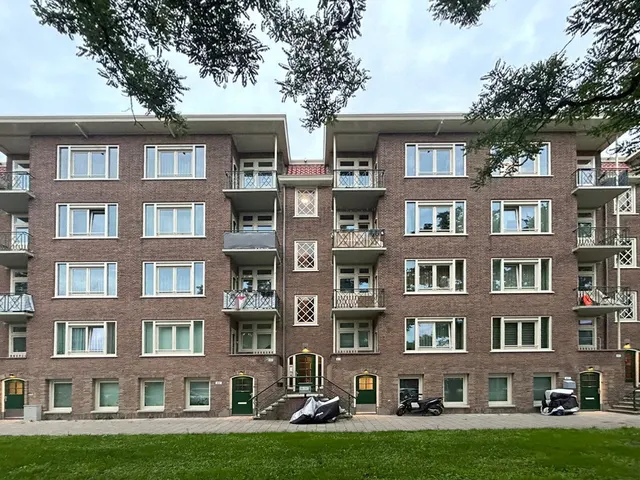
Anyone planning maintenance work on a listed building should make sure they are well informed. Owners of listed buildings must comply with a range of rules and restrictions. These are the general rules. Requirements may vary from one municipality to another, or even from one building to another.
Create an inspection checklist
As a rule, it is best to follow a checklist when carrying out maintenance. In addition to general guidance, there are often restrictions and rules that apply to the listed building itself, as well as local regulations. Find out which rules apply to the building and turn them into a checklist.
Owners of listed buildings can also carry out their own inspections, broadly following the same process as a professional inspector. Owners and inspectors can, for example, use the Incontrol Inspection app.
Finding a specialist in building archaeology
Maintaining listed buildings is a specialist job. Not every contractor or tradesperson has the skills to do it. It is important to hire a contractor with specific expertise in the restoration of listed buildings.
Some of these companies can be found in the ‘Kennis&Kunde register’. Choosing a company from this register gives you the assurance that the work will be carried out correctly and in compliance with the rules for listed buildings.
A building archaeology survey may be needed to establish what can and may be done. A building archaeologist will then investigate the property and advise on which parts should be retained and which are less significant.
Maintaining floors, roofs and façades
Anyone carrying out maintenance on floors should bear in mind that the original floor must be retained as far as possible. Any alterations should also be reversible. If you choose to install an entirely new floor, consider the rest of the building too: will the floor and the building still form a coherent whole?
Many people in the Netherlands are keen DIY enthusiasts and think they can repair or maintain a roof themselves. In practice, this is often difficult, because roof maintenance must take account of the condition of the listed building. Insulating historic roofs, for example, is complicated, as it can have unforeseen effects on the building’s moisture balance. It is therefore advisable to have work on a listed roof carried out by a professional.
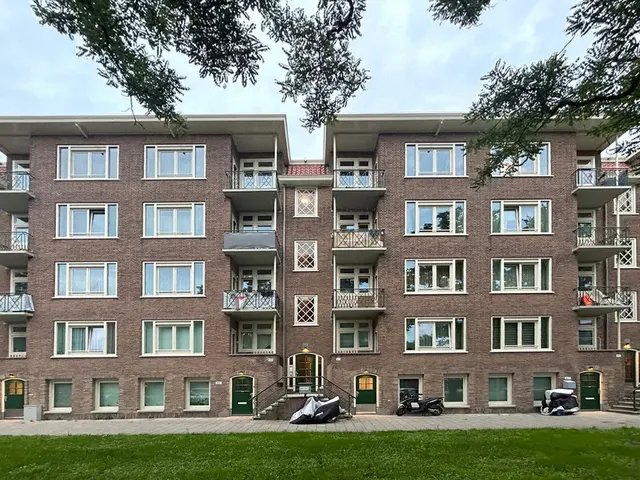
The façade may be the most important part of a listed building: it is its face, its calling card. Work on the façade must be carried out with care. Cleaning it, removing graffiti or making it watertight can cause damage. Bear in mind that changes to its appearance are not automatically permitted. In some cases, for example, historic window frames must be retained.
When carrying out maintenance, keep the building’s character in mind. For example, do not glue wooden window frames, but use a tried-and-tested historic joint that can be dismantled, allowing the building to be restored to its original condition. And while we are on the subject of window frames, steel frames should not be replaced with thicker profiles. This almost always detracts from the architecture.
Developing a long-term maintenance plan
Carrying out maintenance on a listed building every now and then is not enough. Develop a long-term plan and have a specialist draw up the maintenance schedule. This plan provides the basis for preventative maintenance.
One advantage of a long-term plan is that maintenance work on related elements can be coordinated. Of course, the plan itself will also need updating. Owners of listed buildings can review and revise it annually.
Regular inspections
Listed buildings are inspected regularly. Inspections follow the procedures set out in the Inspectie Handboek Monumentenwacht. What does an inspector look for?
An inspector first looks at the exterior of the building: what condition are the masonry, paintwork, gutters and downpipes in? Inspectors sometimes also discover leaks. They also check the surrounding grounds, including garden walls, fences, vegetation and paving.
The roof also receives particular attention during an inspection. Inspectors check for leaks, damage caused by mould and wood-boring insects. Some minor repairs, such as clearing a blocked gutter, are carried out straight away.
The inspector also checks the interior. Are there damp patches, small cracks or piles of wood-boring dust? Are the characteristic features still visible? What condition are the stairwells, plaster ceilings, wall paintings and tiled floors in? Monumentenwachten inspect every property with a critical eye.
Question about this story? Ask your question
Keep following this
Get an email when a new story is published. No account needed.
- SubjectRenovation & conversion