









Towards a greener image for concrete
Text Lieke van ZuilekomPhotography Decomo NV
Concrete is strong, stable and wear-resistant. It also offers excellent thermal mass, sound insulation and fire resistance. “It is no coincidence that concrete is widely used in new-build and renovation projects,” says Werner Hulstaert, Account Manager Netherlands at Decomo NV. “Yet its use is under fire. Concrete is said to be neither sustainable nor environmentally friendly. We want to challenge this perception by promoting better production methods and optimal reuse of the original raw materials.”
Less cement in concrete
Producers are urgently seeking ways to improve the composition of cement, Hulstaert notes. “Simply reducing the clinker content significantly cuts CO2 emissions. There is also a deliberate move to add blast-furnace slag, a by-product of steel and magnesium production in blast furnaces. In addition, calcined clay looks promising as a cement substitute.”
He explains that the cement content of concrete can be reduced through better (mechanical) compaction. “High-frequency vibrators, among other things, help us achieve optimum strength development. They are supported by various admixtures.” In recent years, the chemical industry has developed numerous admixtures that ensure equivalent concrete quality despite the lower cement content. “Various fillers have also been developed that can partially or fully replace cement, without compromising the high fineness required for hydration and strength development.”
Jeux Olympiques
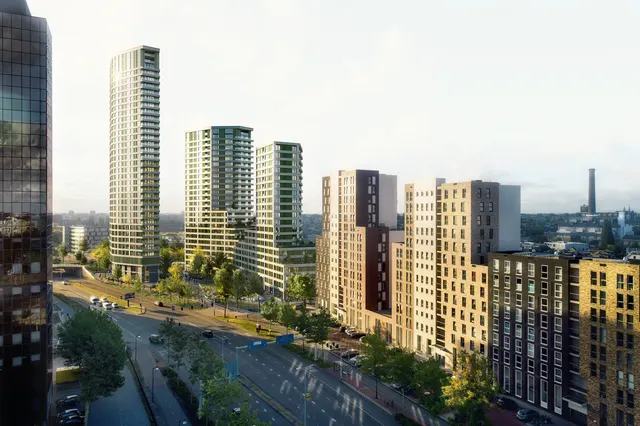
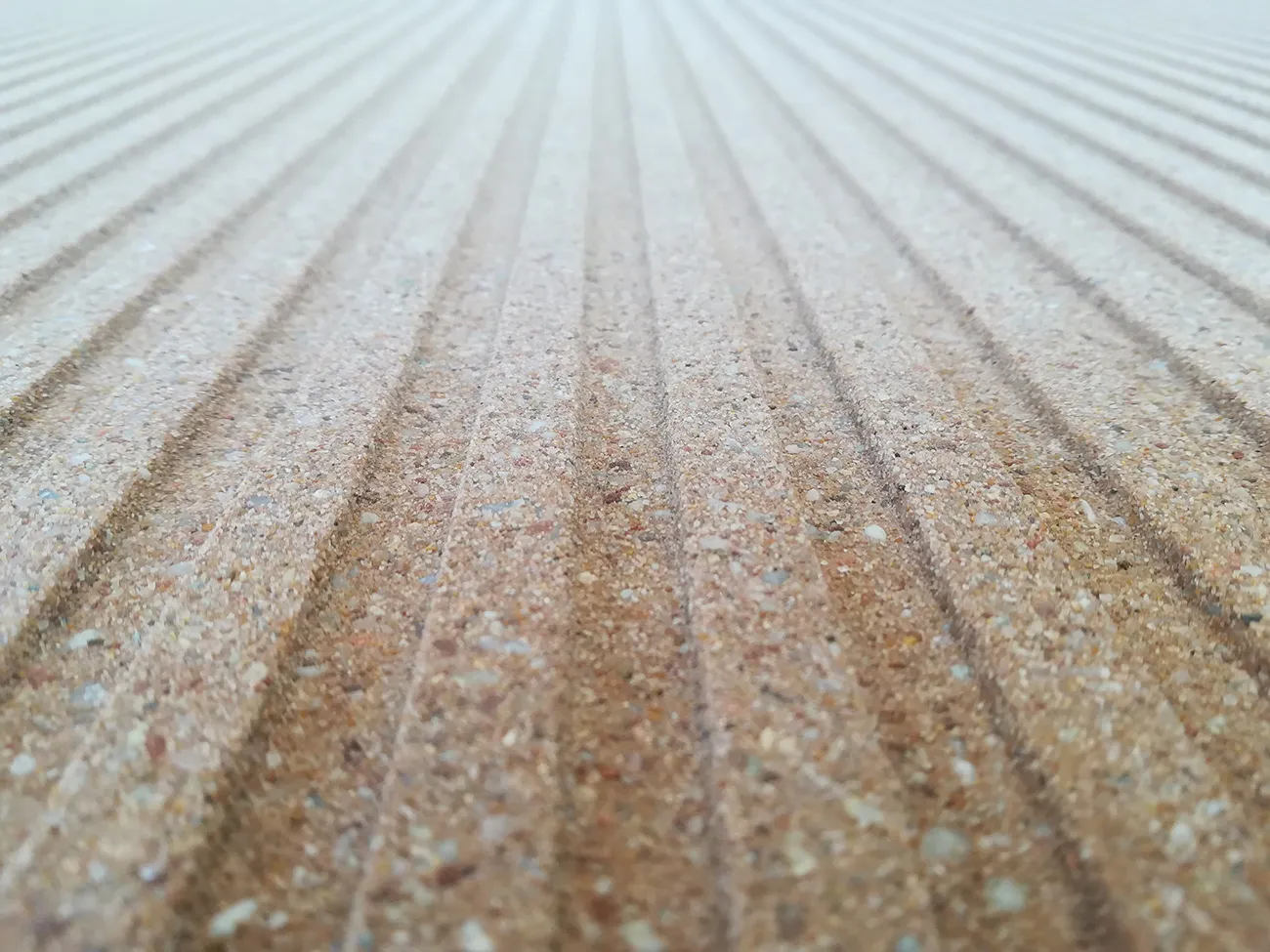
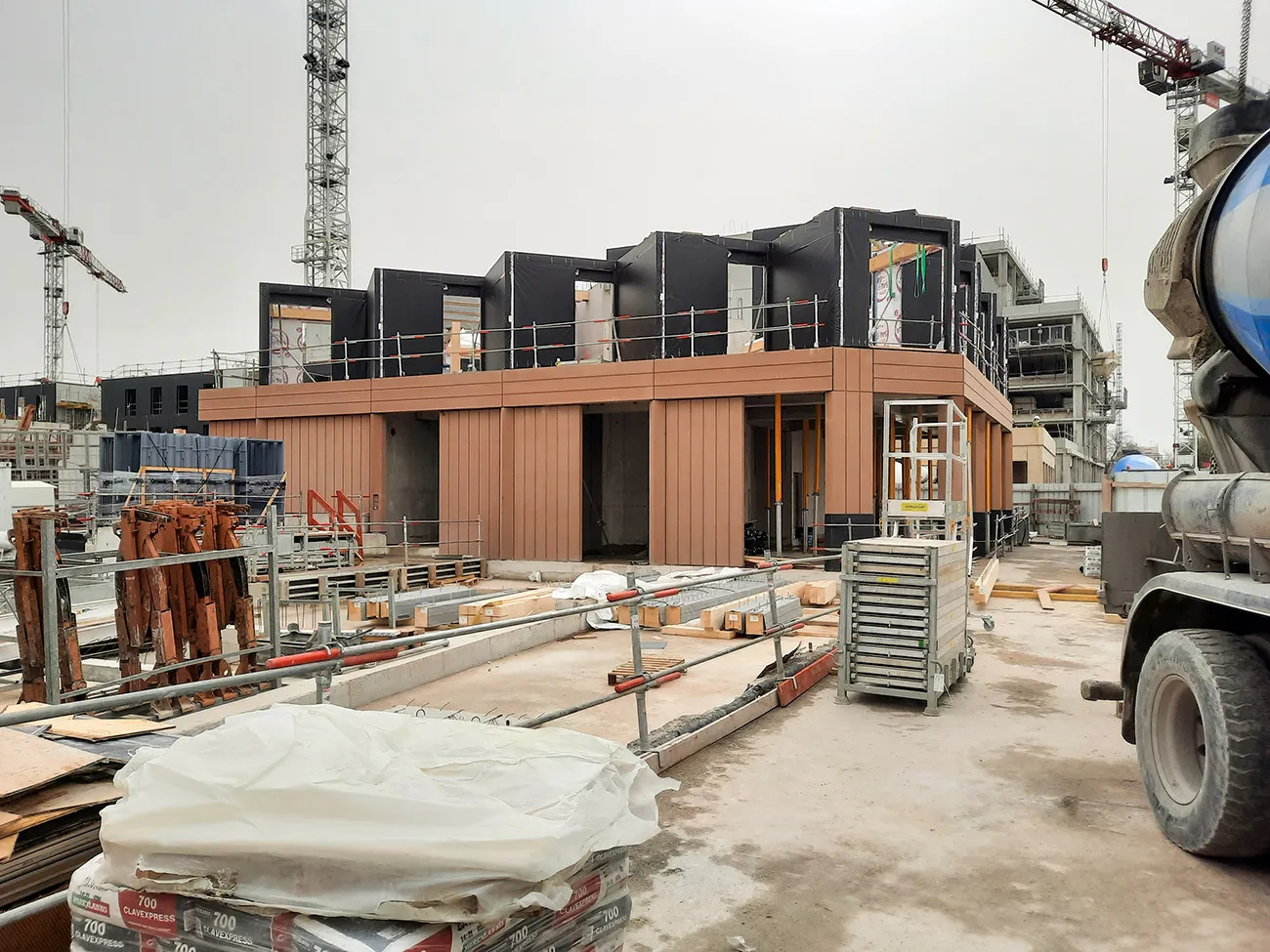
A good example of a project using low-carbon cement is Jeux Olympiques in Paris. “For this project on the right bank of the Seine, we supplied 270 m3 of acid-etched concrete, in the form of 267 load-bearing columns and beams. Together, they form the sturdy, robust and attractive cladding for the plinths of six buildings, which will house Olympic athletes in 2024.” Hulstaert says the Paris city authorities set clear environmental performance requirements in their tender. “The choice of low-carbon cement was decisive in the contract award. Once the Games are over, the buildings will be converted into permanent housing. The building structure and façade finish will therefore remain in use sustainably.”
Less concrete in buildings
A further step towards sustainability is to use less concrete in our buildings, for example by making more efficient use of the volume of concrete. Hulstaert says there is still much to learn from the steel industry. “Concrete beams still tend to have a rectangular cross-section and be solid, filled with reinforcing steel and concrete, whereas steel construction routinely uses H-sections or I-sections. A design with top and bottom flanges and a web could also make a big difference in the concrete industry. Until now, however, this has received too little attention. One reason is that such innovations entail development costs. Complex reinforcement also has to be assembled. For years, the small volume of concrete saved was not worthwhile. But in today’s context of sustainability and CO2 reduction, these savings suddenly do make sense. Making better use of concrete volumes is at least as interesting and relevant as reducing the carbon footprint of production. Instead of a solid beam, consider designing a hollow beam or an I-section. And consider investing in prestressed reinforcement rather than traditional mild steel reinforcement. Prestressing the strands means you need considerably less steel. It also allows you to control deflection much more effectively.”
Modular and demountable construction
According to Hulstaert, sustainability also encompasses reuse, recycling and downcycling, as well as production and construction. “We are actively exploring ways to build modularly and design for disassembly, using a fixed standard so that concrete elements can be replaced like for like in the future. In this way, we are taking gradual steps towards a greener image for concrete.”
The go-to address for architectural concrete
Decomo NV has been the go-to address for architectural concrete for over 50 years. In Moeskroen, more than 150 employees design, engineer and manufacture bespoke precast concrete elements. Their distinctive character comes from their concrete mix, combined with an extensive range of shapes, colours and textures.
Question about this story? Ask your question
Keep following this
Get an email when a new story is published. No account needed.
- SubjectYearbook